When a pet growls, hisses, snaps, or ignores us, it’s easy to feel frustrated or even rejected. But modern behavior science shows that what we often label as “bad behavior” is usually a coping strategy—your pet’s attempt to handle fear, pain, or confusion.
Looking Beyond the Label of “Bad Pet”
By learning to see the emotion underneath the action, you can respond with empathy instead of punishment, and guide your pet toward safer, calmer ways to cope.
The Emotion-Behavior Connection
Animals—like humans—behave in ways that help them:
- Gain access to something they want (attention, food, play)
- Avoid something they find scary or uncomfortable
Common underlying emotions include:
- Fear: “I think something bad might happen.”
- Anxiety: “I’m not sure what will happen, and that worries me.”
- Frustration: “I can’t get what I want, and it feels awful.”
- Over-arousal: “I’m so excited I can’t think straight.”
When we address these emotions instead of just the outward behavior, our training becomes kinder and much more effective.
Explainer: Common Behavior Issues and Their Roots
1. Growling and Hissing
What you see: A dog growling over a bone, a cat hissing when picked up.
What might be underneath:
- Fear of losing a valuable resource (food, safe space)
- Pain when touched
- Past experiences with rough handling
Why this matters: Growling and hissing are early warning signs. Punishing them can shut down these warnings and leave only the next step—biting or scratching.
Supportive response:
- Thank your pet quietly for the warning by backing off.
- Note the context (what were you doing, where were you touching?).
- Consult a vet to rule out pain.
- Work with a behavior professional on desensitization and counter-conditioning if guarding or handling issues persist.
2. Leash Reactivity (Barking, Lunging at Dogs or People)
What you see: Your dog explodes at the end of the leash when another dog appears.
Likely emotional mix:
- Frustration (wanting to greet but being held back)
- Fear (other dogs feel unpredictable or threatening)
- Learned response (over time, barking has successfully made scary things go away)
Kind strategies:
- Increase distance: Stay far enough away that your dog can notice the trigger without exploding.
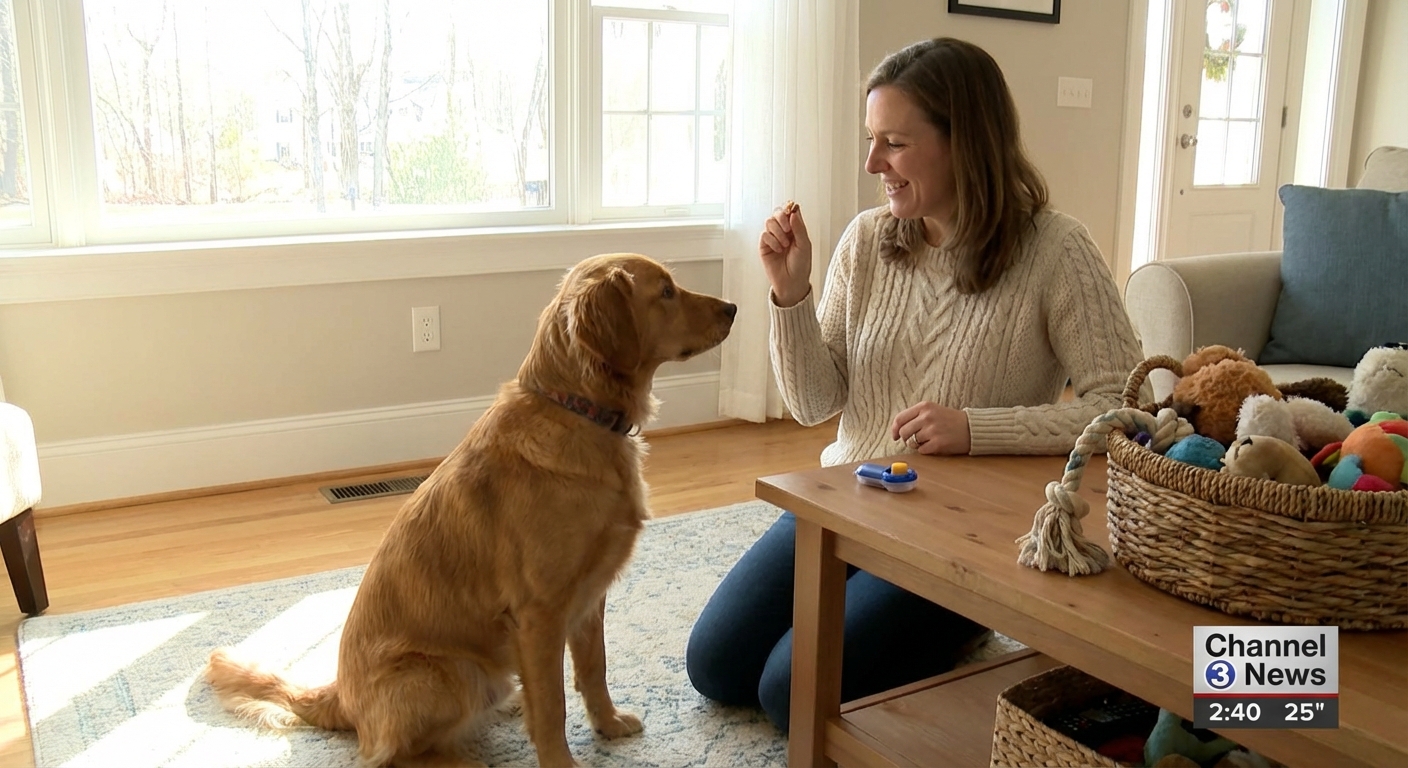
- “Look at that” game: When your dog sees another dog and remains under-threshold, mark and reward. You’re teaching them that seeing dogs predicts good things.
- Change direction early if your dog is already too aroused.
Punishing the outburst may quiet the sound but increase internal fear, worsening the problem long-term.
3. Destruction and House-Soiling
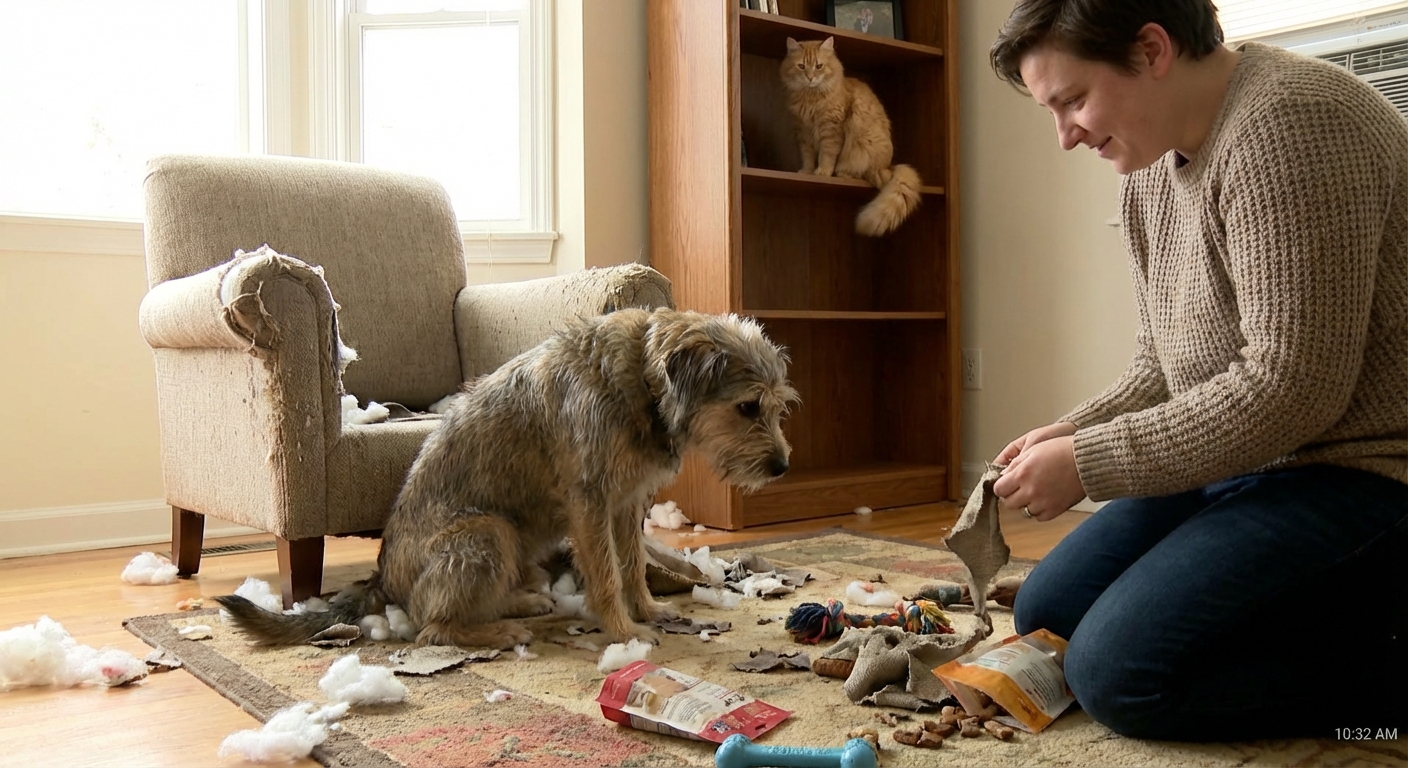
What you see: Chewed furniture, shredded blinds, accidents indoors.
Possible roots:
- Separation-related stress
- Boredom or lack of mental stimulation
- Incomplete house-training
- Medical issues (especially with sudden changes in litter box habits or urination)
Supportive response:
- Rule out medical problems with a vet visit, especially for sudden changes.
- Enrich the environment (puzzles, chew toys, climbing spaces for cats).
- Revisit house-training with management and positive reinforcement.
4. “Stubbornness” or Ignoring Cues
What you see: Your pet “ignores” sits, recalls, or other cues.
Likely explanations:
- They don’t fully understand the cue in that context.
- The environment is too distracting or scary.
- The reward isn’t meaningful enough compared to competing stimuli.
- They’re tired, stressed, or in pain.
Kind strategies:
- Train in easier environments first, then slowly add distractions.
- Use higher-value rewards in challenging situations.
- Check for signs of stress or discomfort before labeling them as defiant.
A Gentle Framework: Ask Yourself These 4 Questions
When your pet does something distressing, pause and ask:
Is my pet physically okay?
- Sudden behavior changes always warrant a vet check. Pain can look like aggression or irritability.
What does my pet get or avoid with this behavior?
- Do they gain distance from something scary (like a stranger)? - Do they gain attention, even negative?
What emotion might they be feeling?
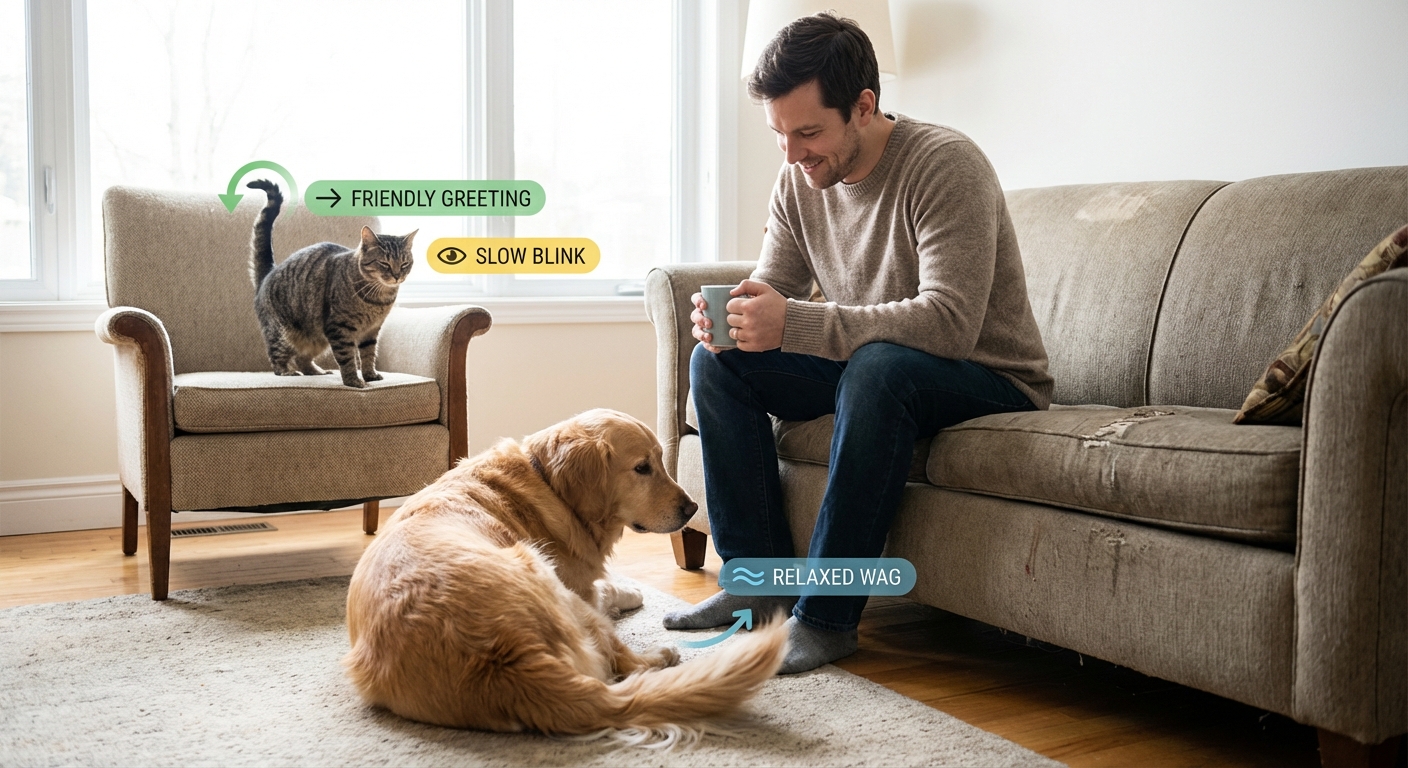
- Look at body language: tension, tail position, ears, eyes.
How can I make them feel safer and set them up for success next time?
- More distance, clearer cues, or better management.
This framework shifts you from blame to problem-solving.
Tools and Products That Support Emotional Well-Being
Comfortable harnesses and equipment (dogs)
- Prevent pain from collars or aversive devices that can trigger fear. - Look for padded, Y-shaped designs that don’t restrict shoulders.
Safe spaces
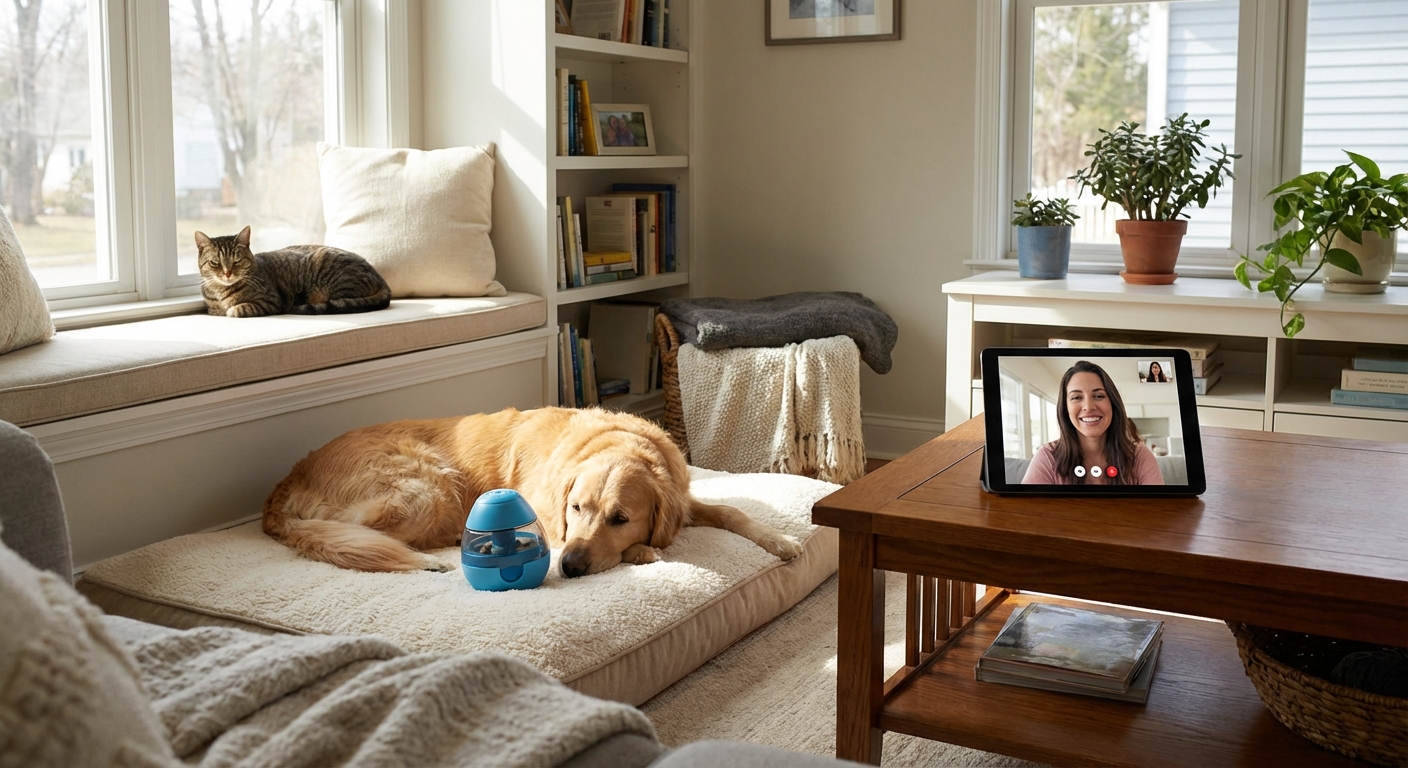
- Dogs: Cozy beds in a quiet corner, away from heavy traffic. - Cats: Cat trees, hidey boxes, and access to high perches.
Enrichment toys
- Puzzle feeders, chew toys, snuffle mats, and scent games. - For cats: wand toys, puzzle feeders, and rotating toys to mimic prey.
Pheromone products
- Diffusers or sprays may help some pets feel more secure in multi-animal or busy homes.
Pet cameras
- Allow you to see what triggers behaviors while you’re away so you can adjust the environment.
Simple Behavior-First Changes You Can Make This Week
Replace punishment with information
- Instead of “No!”, calmly show and reward what you do want (sit, go to mat, scratch the post).
Add one daily enrichment activity
- A 10-minute sniff walk for your dog or a 10-minute play-hunt session for your cat.
Respect early warnings
- When you see stiff posture, lip licking, turning away, or a low growl, give space and reassess.
Short, positive training sessions
- Just 3–5 minutes, one or two times per day, focusing on easy wins.
A Compassionate Reframe for You and Your Pet
Your pet isn’t giving you a hard time—they’re having a hard time.
You don’t need to be a perfect trainer or behaviorist. By staying curious—asking what your pet is feeling, what they’re trying to achieve, and how you can help—you’re already on the right path.
Every time you meet a challenging behavior with patience instead of anger, you teach your pet something powerful: in moments of fear or frustration, you are a safe, steady place to turn.
That trust is the foundation for any behavior change—and it’s the most beautiful part of being a dedicated pet parent.
Key Takeaway
The most important thing to remember from this article is that this information can change how you think about Pet Behavior.