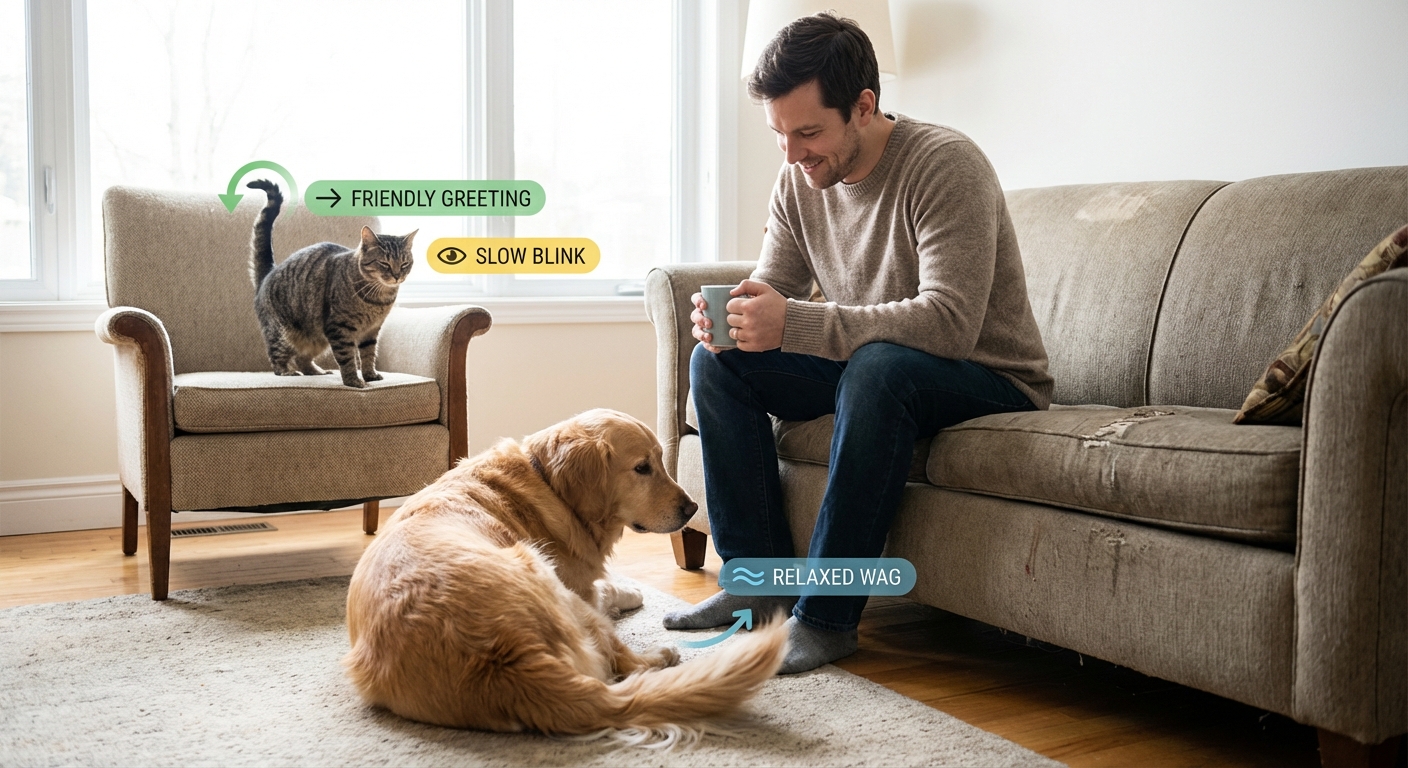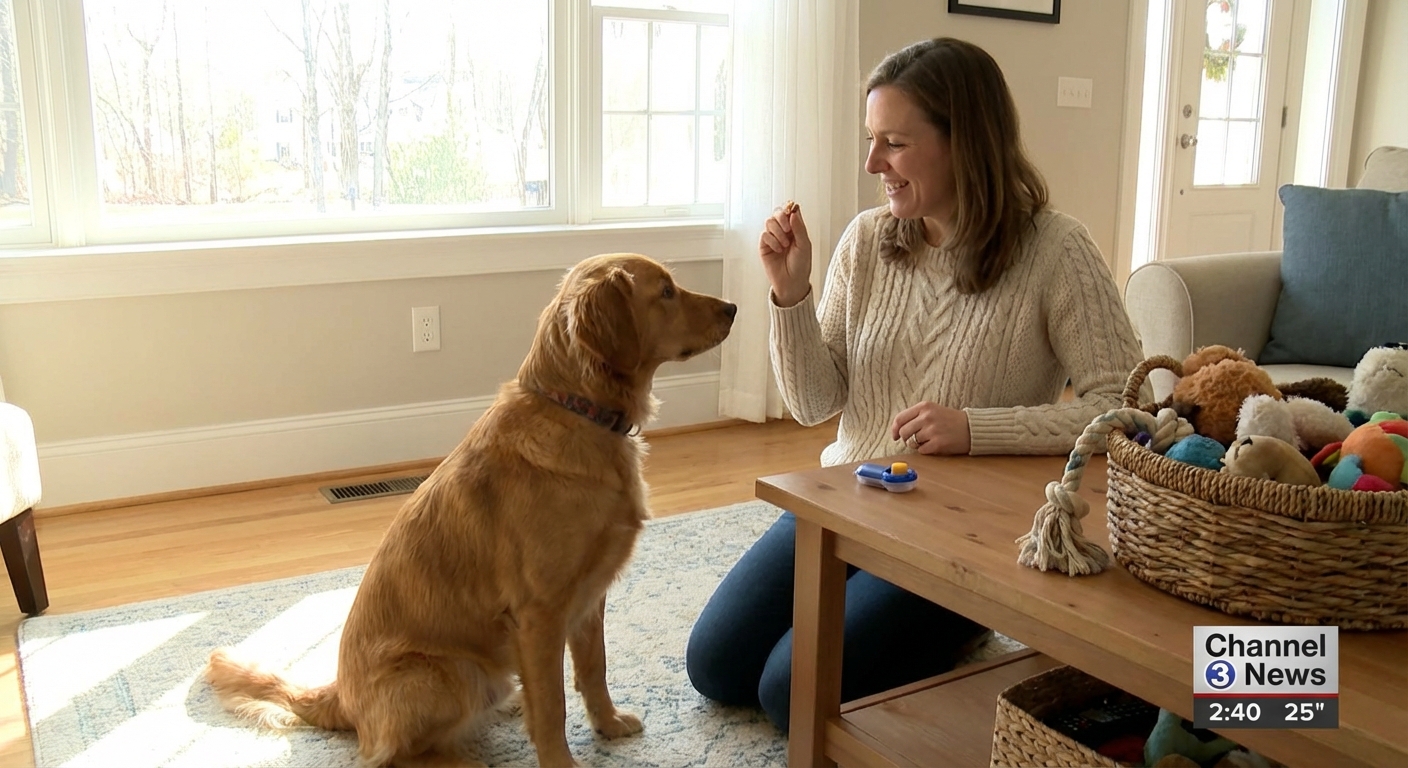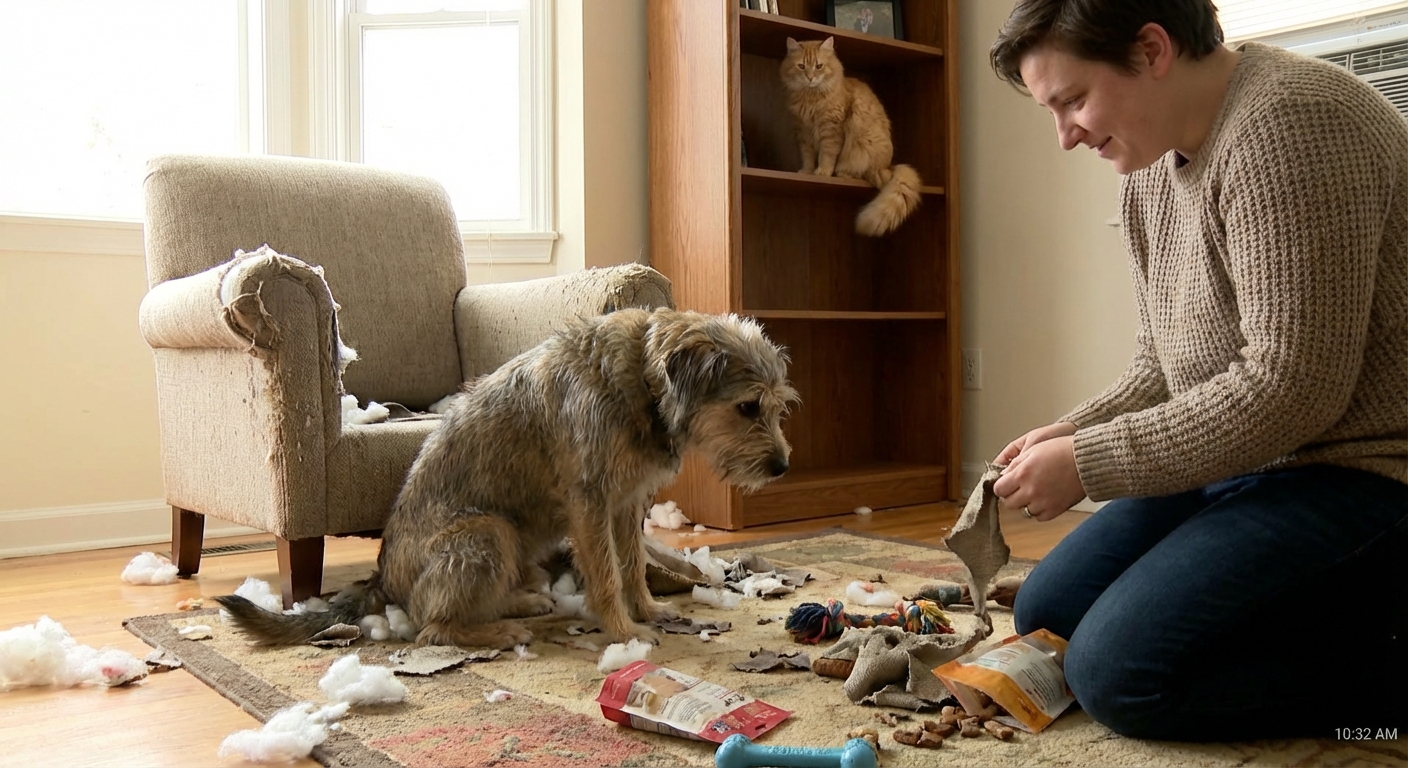
Some pets nap contentedly while you’re out. Others pace, cry, scratch at doors, or chew furniture the moment you leave. These behaviors aren’t “spite” or “bad manners”—they’re often signs of separation-related stress.
When Goodbyes Are Hard on Your Pet
Understanding the why behind these big feelings is the first step to helping your pet feel safe, even when you’re not home.
What Separation Anxiety Really Is (and Isn’t)
Separation anxiety refers to intense, often panic-like distress when a pet is left alone or separated from their primary person. Research shows that dogs are more commonly diagnosed, but cats can struggle too.
Common signs include:
- Vocalizing (barking, howling, crying) after you leave
- Destructive behavior near doors or windows
- House-soiling only when alone
- Pacing, drooling, extreme clinginess when you’re home
What it’s not:
- Revenge: Pets don’t act out of spite. Destruction and accidents are stress signals.
- Just boredom: Bored pets may chew or get into trash, but true separation anxiety includes clear distress.
If you suspect severe anxiety (injury, extreme destruction, nonstop vocalizing), consult your veterinarian or a certified behavior professional. Medication or additional support may be needed.
Step 1: Create a Calm, Predictable Goodbye Routine
Sudden, emotional exits can heighten anxiety. A gentle, consistent routine can do the opposite.
Keep departures low-key
- Avoid long, dramatic goodbyes. - Practice calmly walking to the door and back throughout the day without leaving, so door movements lose their emotional charge.
Introduce a departure cue
- A specific phrase like “Be right back” or “See you soon.” - Say it in a calm tone before every actual departure.
Over time, this cue predicts a routine your pet can understand.
Step 2: Pair Absence With Something Comforting
You want your departure to predict something your pet genuinely enjoys.
For Dogs
- Long-lasting food toys: Stuff a Kong or similar toy with a mixture of kibble, canned food, and a bit of xylitol-free peanut butter or pumpkin. Freeze for longer-lasting enjoyment.
- Snuffle mats: Scatter part of their meal in a fleece or fabric mat to encourage natural foraging.
For Cats
- Food puzzles or treat balls: Encourage hunting instincts while you’re gone.
- Window perches: Watching birds or the street can provide gentle mental stimulation.
Important: Only give these special items when you’re leaving, and pick them up once you’re home. This builds a positive association with alone time.
Step 3: Gradual Alone-Time Training (Desensitization)
This is the most powerful, evidence-based approach: teaching your pet that your absence is safe by increasing it in tiny, tolerable steps.
Preparation
- Use a baby monitor, pet camera, or recording device to observe your pet when you’re gone.
- Note the time point when they begin to show stress (pacing, vocalizing, intense watching of the door).
The Process
- Start at a duration they can handle without visible distress—even if that’s 5–30 seconds.
- Practice walking out the door for that short interval.
- Return calmly, without a big party.
- Repeat multiple times a day. Only increase the duration when your pet remains fully relaxed at the current step.
Increase in small increments: 15 seconds, 30 seconds, 1 minute, 2 minutes, etc. If your pet struggles, drop back to an easier duration.
This can take weeks to months for severe cases. It’s okay to move slowly—going at your pet’s emotional pace is kinder and more effective.
Step 4: Make the Environment Feel Safe
Comfort-First Setup
- Safe space: A room or gated area with your pet’s bed, water, toys, and a familiar scent (like an unwashed t-shirt of yours).
- Background sound: Soft music or audiobooks can buffer sudden noises; some studies suggest classical music may be mildly soothing for some dogs.
For Dogs
- Avoid long-term crating for anxious dogs unless the crate is truly a safe den they choose willingly.
- If confinement increases panic, consider puppy-proofing a room instead.
For Cats
- Provide vertical spaces, hiding spots, and multiple litter boxes (especially in multi-cat homes).
- Ensure they can access their preferred resting areas while you’re out.
Gentle Product Support (Alongside Training)
These products don’t “fix” anxiety, but can be helpful pieces of a caring plan:
Pheromone diffusers
- Dog-appeasing or cat pheromone products can provide a familiar, calming scent signal.
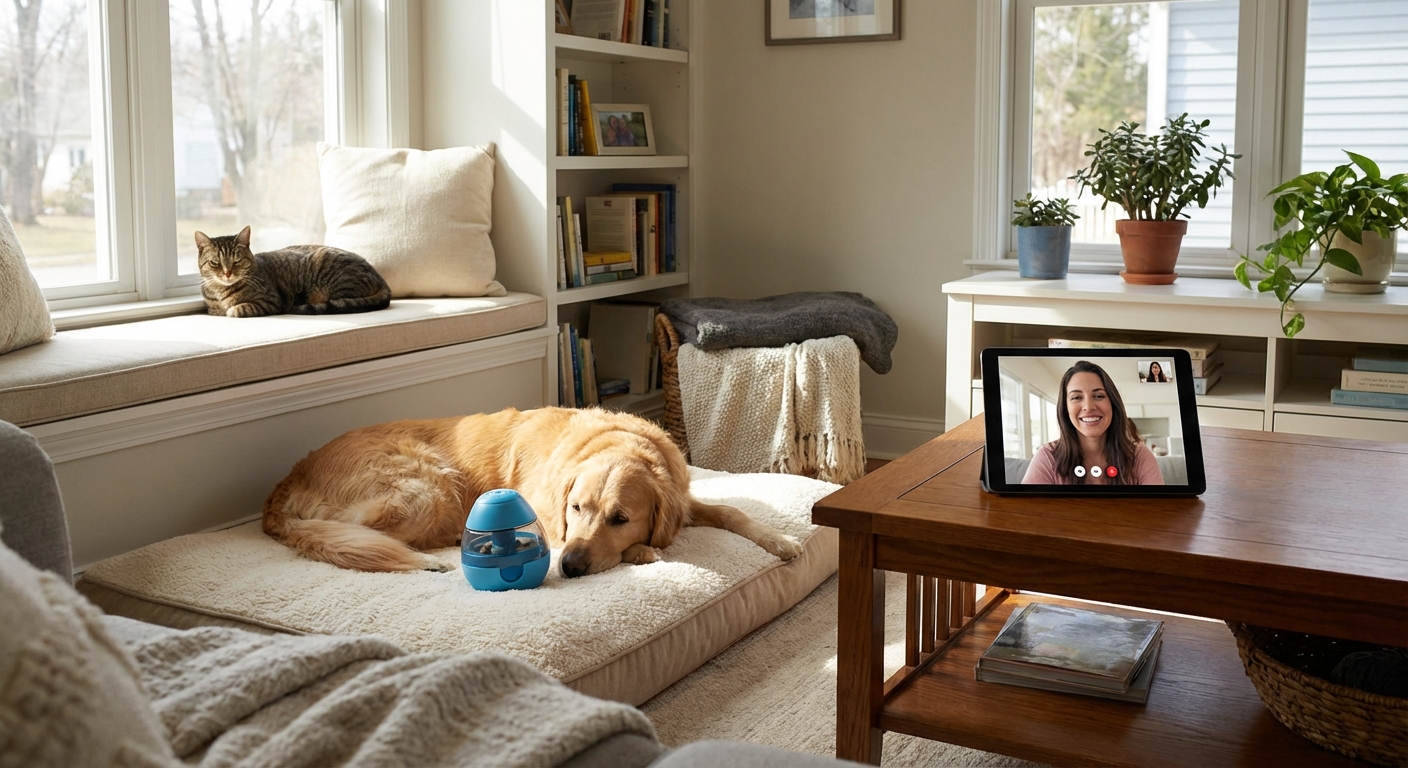
Interactive cameras with treat dispensers
- Allow you to check in, speak softly, and deliver a treat if your presence over audio doesn’t trigger more distress.
Weighted or snug garments (for some dogs)
- Anxiety wraps or snug shirts may provide gentle pressure that some dogs find reassuring. - Introduce gradually and pair with positive experiences.
High-quality chew options (for dogs)
- Chewing is self-soothing. Select vet-approved, size-appropriate chews.
Always consult your vet before introducing supplements. Some pets benefit from prescription-level help as part of a comprehensive behavior plan.
Special Considerations for Newly Adopted Pets
Shelter transitions are huge. It’s common for new adoptees to experience:
- Fear of being left again
- Clinginess or shadowing your every move
Support them by:
- Taking time off or working from home during the first week or two if possible.
- Starting alone-time training with very short absences from day one.
- Keeping routines—feeding, walks, and sleep—predictable and gentle.
Your patience now can prevent deeper anxiety later.
When to Seek Professional Help
Reach out to your veterinarian and a certified behavior consultant or veterinary behaviorist if:
- Your pet injures themselves trying to escape
- Neighbors report prolonged howling, barking, or crying
- Your pet refuses to eat or drink when alone
These signs indicate significant distress, and professional guidance can make the process safer and kinder for both of you.
A Loving Perspective for Worried Pet Parents
It can be heartbreaking to see your pet panic when you leave. Remember:
- Their behavior is rooted in fear, not stubbornness or manipulation.
- Every small success—a quiet minute, a relaxed nap while you step out—is real progress.
- You are not alone; many caring owners walk this path.
With slow, thoughtful training, a comforting environment, and, when needed, professional help, your pet can learn that your return is certain and your absence is survivable.
You are teaching them a profound lesson: even in the quiet moments without you, they are still safe, still loved.
Key Takeaway
The most important thing to remember from this article is that this information can change how you think about Pet Behavior.