Our pets are constantly communicating. Even when they’re quiet, their tails, ears, eyes, whiskers, and posture are telling a detailed story about how they feel. Learning to “read” this language turns everyday routines—feeding, walks, cuddles—into opportunities to deepen your bond.
Understanding the Silent Conversation Your Pet Is Having With You
This guide blends animal behavior science with practical, heart-led advice so you can confidently understand what your dog or cat is really saying.
Why Body Language Matters More Than Words
Dogs and cats rely heavily on nonverbal communication. Research in applied animal behavior shows that:
- Dogs use a combination of facial expressions, tail carriage, ear position, and full-body posture to signal arousal, fear, playfulness, and aggression.
- Cats communicate primarily through subtle shifts in ear position, whiskers, eyes, tail, and tension in the body.
When we misread signals, we may:
- Push a pet into situations where they feel unsafe
- Accidentally punish early warning signs of fear or stress
- Miss chances to reinforce calm, confident behavior
Learning body language is an act of kindness: it allows you to respect your pet’s boundaries, anticipate their needs, and help them feel truly understood.
Dog Body Language: From Head to Tail
1. The Tail: Not Always a “Happy” Wag
Science-backed insight: Studies show that tail position and speed matter more than the wag itself.
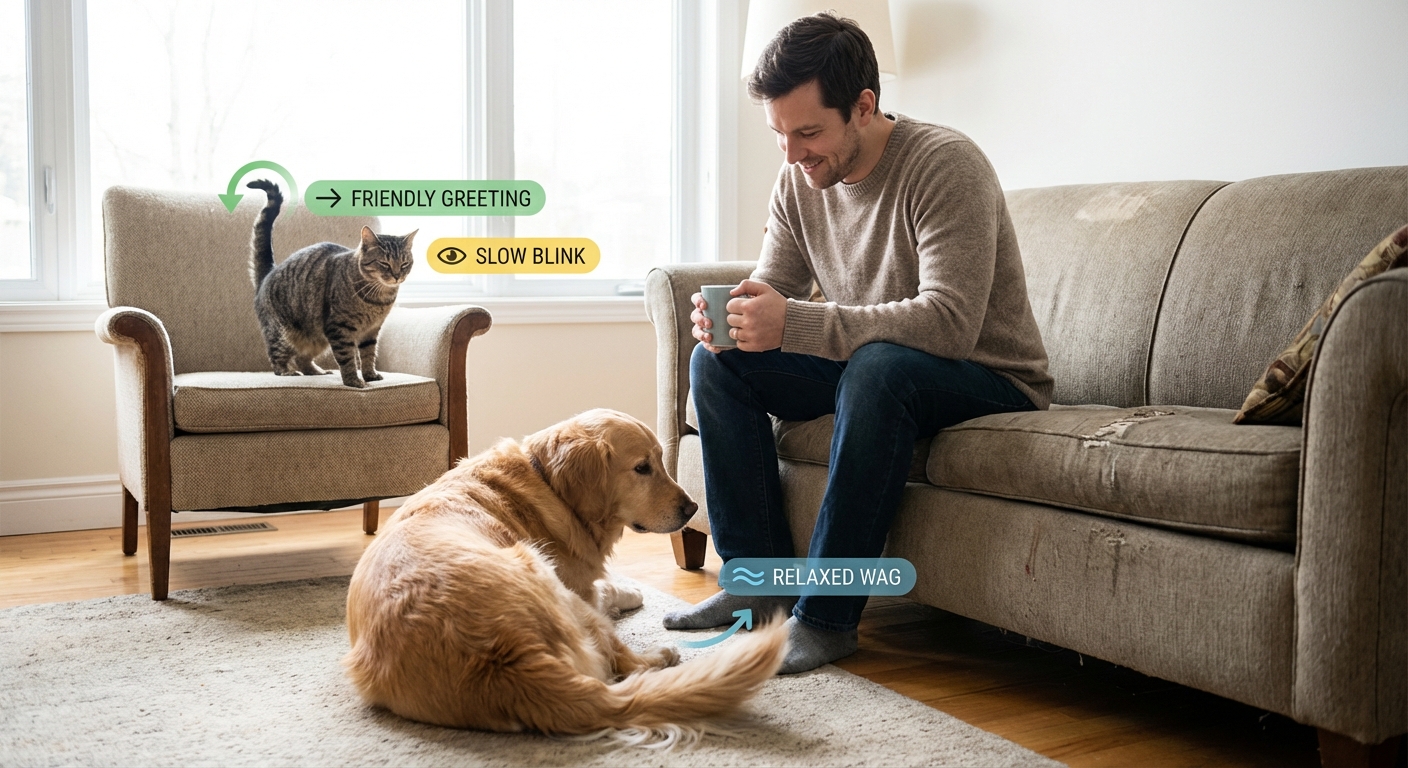
- Loose, mid-level wag: Relaxed, generally friendly
- Fast, whole-body wag: Excited, often positive but potentially over-aroused
- Low, tucked tail: Fear, anxiety, or discomfort
- High, stiff tail: Arousal; could be alert, on-guard, or about to react
Tip: Look at the whole dog, not just the tail. A stiff body + wagging tail can signal stress, not happiness.
2. Ears and Eyes: Windows Into Emotion
- Soft eyes, relaxed eyelids: Calm, content
- Whale eye (seeing the whites): Stress or unease
- Pinned back ears: Fear, anxiety, or appeasement
- Forward, stiff ears: Focused, alert, potentially tense
Heartwarming habit: Say your dog’s name in a gentle voice when you see soft eyes and relaxed ears, then reward with a small treat. You’re teaching them that calmness earns attention.
3. Mouth and Face
- Soft mouth, slightly open: Relaxed
- Lip licking, yawning (out of context): Displacement behaviors that often signal mild stress
- Tense lips, corners pulled back: Fear or stress
- Raised lips + growl: Warning—your dog is uncomfortable.
Never punish growling. It’s a critical communication tool. Instead, thank your dog silently for the warning and calmly give them space.
Cat Body Language: Tiny Movements, Big Meanings
1. The Tail: The Cat Mood Barometer
- Tail upright with a soft curve at the top: Friendly, confident, happy to see you
- Tail puffed up: Frightened or startled
- Tail low, tucked: Fearful or uneasy
- Quick, sharp end-of-tail flicks: Irritation or overstimulation
Nurturing tip: When your cat approaches with a tail held high, greet them gently at their level and offer your hand for a sniff. This respects their choice to interact.
2. Ears, Eyes, and Whiskers
- Forward ears, soft eyes: Curious and relaxed
- Flattened ears: Fear, anger, or intense stress
- Slow blink: Friendly, trusting—this is your cat’s version of a kiss
- Forward whiskers: Highly focused or aroused
Try the “slow blink game”: Look at your cat, slowly close your eyes, and keep them closed for 1–2 seconds before opening. If they slow-blink back, they’re returning your affectionate gesture.
3. Body Posture
- Loaf position (paws tucked under): Relaxed, resting but comfortable
- Side-sprawl, belly partially up: Content and secure (but not always an invitation to touch their belly)
- Crouched, muscles tense: Wary or ready to flee
Step-by-Step: How to Observe Your Pet Like a Behaviorist
Step 1: Choose a Calm Time
Pick a moment when life is quiet—maybe during an evening cuddle or a lazy afternoon. Sit near your pet without interacting.
Step 2: Scan From Nose to Tail
Quietly notice:
Facial muscles – relaxed or tight?
Eyes – soft or wide?
Ears – forward, sideways, back?
Body – loose, wiggly, or tense?
Tail – position, movement speed, tension
Write down your observations.
Step 3: Link Behavior to Context
Ask:
- What was happening right before this posture?
- Is there a pattern (e.g., always tense when guests arrive)?
This helps you identify triggers and predict how your pet may feel in similar situations.
Step 4: Reward Calm States
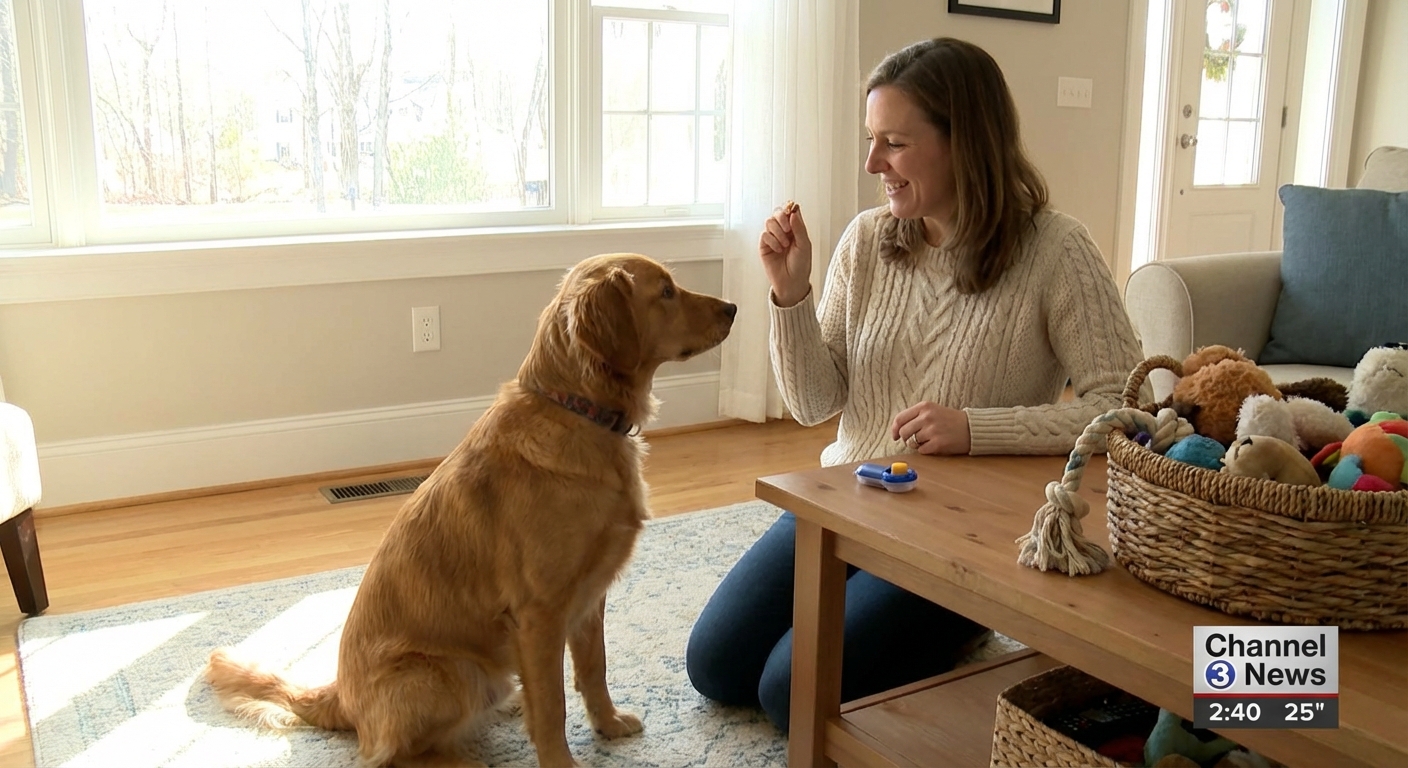
When your pet displays relaxed body language—loose body, soft eyes, normal breathing—quietly say a gentle marker word like “Good” and offer a treat or affection.
Over time, you’re reinforcing relaxation as their default emotional state.
Gentle Product Recommendations to Support Better Communication
These tools support your understanding and your pet’s comfort:
Clicker or marker word
- Helps you “capture” calm body language instantly. - Look for a quiet, soft-click model for sound-sensitive pets.
High-value, easy-to-chew treats
- Use tiny pieces to reward relaxed or confident posture. - Choose single-ingredient treats for sensitive stomachs.
Comfort-focused gear for dogs
- Front-clip harness to reduce pulling and avoid neck pressure that can add stress. - A well-fitted harness allows you to observe shoulders and neck tension better.
Cat-friendly environment enhancers
- Vertical spaces (cat trees, shelves) so cats can choose distance and height—key for their sense of safety. - Hiding spots (covered beds, cardboard boxes) to reduce chronic stress.
Calming aids (when appropriate)
- Pheromone diffusers for dogs or cats can support relaxation in multi-pet or high-traffic homes. - Always combine with behavior strategies; products alone are not a cure.
Common Misunderstandings to Gently Unlearn
- “A wagging tail always means happy.”
Context and whole-body posture matter more.
- “He bit with no warning.”
In most cases, there were signals—subtle tension, avoidance, lip licking or whale eye—that went unnoticed.
- “She’s being stubborn.”
What looks like stubbornness is often fear, confusion, or stress. Body language helps you see the real emotion.
Turning Knowledge Into Daily Love
You don’t need to be perfect at reading every signal. What matters is your willingness to listen and adjust.
Try choosing one daily ritual—like feeding time or bedtime—and spending 30 seconds just observing your pet’s body language. Over weeks, you’ll start noticing patterns and emotional shifts you never saw before.
This quiet attention is one of the most loving gifts you can give: a clear message to your pet that their feelings matter, even when they can’t use words.
Key Takeaway
The most important thing to remember from this article is that this information can change how you think about Pet Behavior.