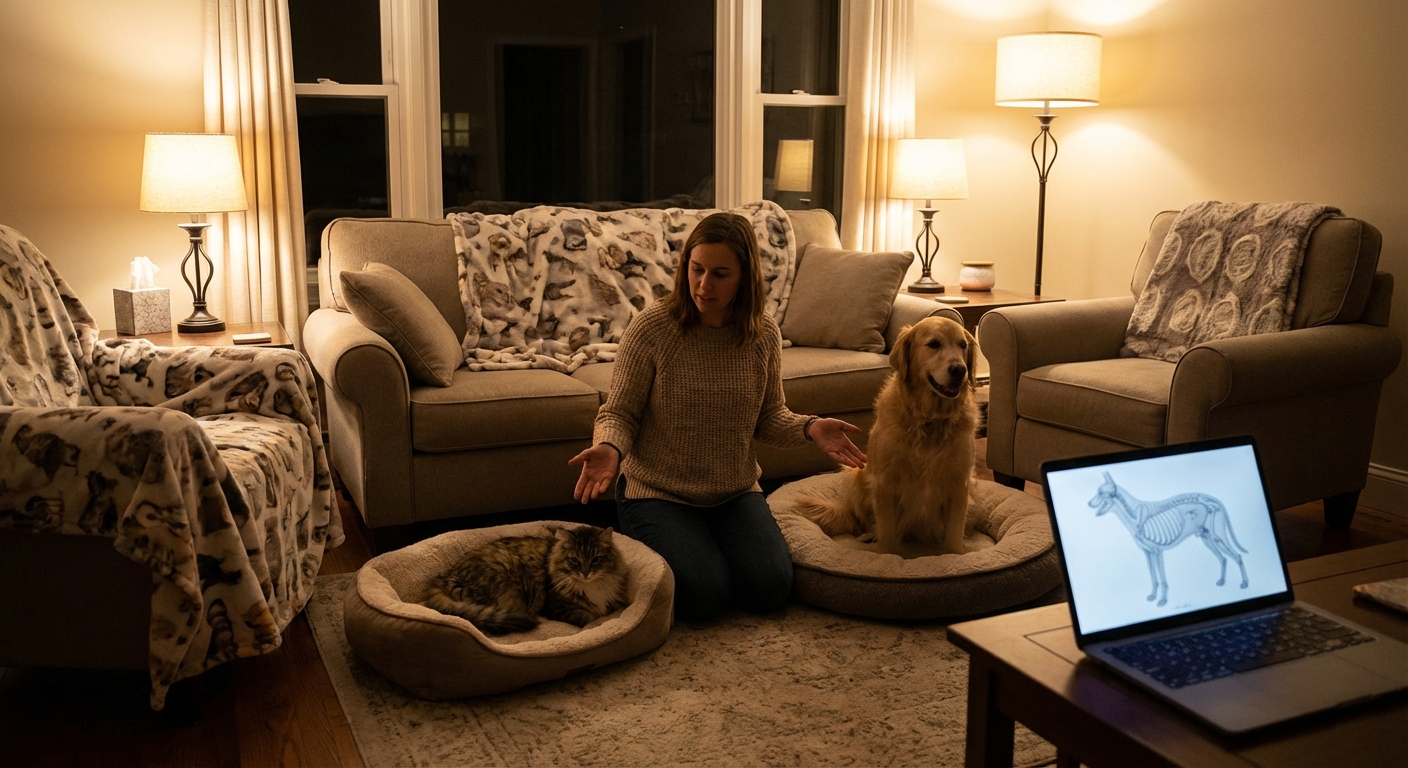
Most pets sleep far more than humans. Adult dogs average 12–14 hours per day; cats can sleep 15–20 hours. Small mammals, like rabbits and guinea pigs, take frequent short naps, while reptiles depend on temperature and light cycles.
Understanding Your Pet’s Sleep Needs
Sleep isn’t just rest; it’s when tissue repairs, memories consolidate, and the immune system resets. Research in canine and feline behavior shows that animals with predictable, comfortable sleep spaces show fewer stress behaviors such as pacing, vocalizing, or inappropriate elimination.
A thoughtfully chosen bed or blanket isn’t a luxury—it’s a wellness tool.
Step 1: Match the Bed to Your Pet’s Body and Age
1. Observe Their Natural Sleeping Position
Spend a few days quietly noting how your pet prefers to sleep:
- Curled up in a tight ball → They often want Bolster or donut beds that support the spine and provide a sense of den-like security.
- Stretched out on their side or back → They need flat, spacious mattresses that allow full extension.
- Leaning against furniture or walls → They may feel safer with high bolsters or wraparound sides.
- Frequently changing spots → Consider multiple resting areas with different textures and firmness levels.
2. Consider Age and Joint Health
Joint and muscle support is backed by veterinary orthopedic science:
- Puppies and kittens need supportive surfaces to help developing joints. Memory foam can distribute weight more evenly than thin, lumpy bedding.
- Senior pets or those with arthritis/hip dysplasia benefit from orthopedic foam (high-density, at least 3–4 inches thick). Studies show that pressure-relieving surfaces reduce joint pain and encourage longer, deeper sleep.
- Underweight or bony pets (rescues, some sighthounds) need thicker cushioning to prevent pressure sores.
Science-backed tip: Look for beds that explicitly state density (e.g., 3–4 lb memory foam) rather than just “orthopedic.” This is more meaningful than marketing language alone.
Step 2: Choose the Right Materials for Comfort and Safety
1. Fabric and Cover
For most pets, ideal bed covers are:
- Tightly woven, durable fabrics like upholstery-grade polyester blends or heavy-duty cotton.
- Removable and machine-washable to reduce allergens (dust mites, dander) and bacteria.
- Low-snag for long-haired pets so fur doesn’t knot into the fabric.
Avoid cheap beds made with thin fabric that pills or tears quickly; exposed foam can be a chewing hazard if ingested.
2. Fillings and Support
Common types of support:
- Solid memory foam: Excellent weight distribution; ideal for seniors and large breeds.
- Egg-crate foam: Lightweight and breathable, often more economical but may compress faster.
- Stuffed/loose filling (polyfill): Soft, cuddly, but can clump and provide uneven support.
- Mixed foam and fiber: A compromise between structure and softness.
For rabbits, guinea pigs, and other small mammals, flat fleece pads with absorbent layers underneath are often safest—fluffy stuffing can be ingested or nails can get caught.
3. Temperature Regulation
Thermoregulation is critical:
- Heat-retentive beds (memory foam, plush fabrics) suit short-coated or older pets and those in cooler climates.
- Cooling beds or gel mats help brachycephalic breeds (e.g., Bulldogs, Pugs), long-haired pets, and those in warm climates.
- Breathable mesh cots keep pets off hot or cold floors and reduce pressure points.
Evidence-based note: Overheating worsens breathing issues in flat-faced breeds and can exacerbate heart conditions. A cooler sleep surface is not just comfort—it can be protective.
Step 3: Select the Right Size and Shape
A simple formula for dogs and cats:
- Measure your pet from nose to base of tail while sleeping stretched out.
- Add 8–12 inches (20–30 cm) to that measurement.
This gives enough room to change positions without hanging off the edge.
- Donut and bolster beds should allow your pet to fully curl without being compressed.
- Crate pads should fit snugly inside the crate but not curl up at the edges.
For bonding pairs (bonded cats, rabbits, or small dogs), choose beds large enough for both to lie comfortably side by side.
Step 4: Hygiene, Allergies, and Sensitivities
1. Washability and Allergen Control
Clean bedding reduces:
- Dust mites
- Environmental allergens (pollen, dust)
- Odor-causing bacteria and yeast
Try this routine:
- Vacuum beds weekly using a vacuum with a pet-hair or upholstery attachment.
- Machine wash covers every 1–2 weeks in hot water (if fabric allows), using fragrance-free detergent.
- Air-dry foam in a well-ventilated area; don’t machine wash solid foam unless the manufacturer specifically says it’s safe.
For pets with environmental allergies, look for hypoallergenic covers and consider an extra washable sheet on top of the bed for easier, more frequent cleaning.
2. Chewers and Ingesters
For dogs who chew or shred:
- Choose chew-resistant fabrics (ripstop nylon, ballistic nylon) and rolled seams.
- Avoid beds with zippers or piping in easily accessible spots.
- Supervise at first to ensure they don’t ingest stuffing or foam.
If your pet has a history of eating fabric or non-food items, discuss safe options with your vet; sometimes a raised cot with a tightly pulled fabric platform is safest.
Recommended Bed Types by Pet Profile
These are general categories rather than specific brands, so you can adapt them to your budget and local options.
For Senior or Arthritic Dogs
- Type: High-density memory foam mattress (at least 3–4 inches thick)
- Features: Non-slip bottom, waterproof liner, removable cover
- Why: Reduces pressure on joints and helps them stand up more easily.
For Anxious or Velcro Dogs and Cats
- Type: Donut-shaped or bolster bed with high sides
- Features: Soft faux fur or plush, supportive but soft sides
- Why: Mimics the feeling of being snuggled or in a den, which can lower cortisol and heart rate in anxious pets.
For Cats Who Love High Perches
- Type: Window hammocks or wall-mounted shelves with padded covers
- Features: Strong suction cups/brackets, washable pads
- Why: Elevation provides security and stimulation (bird-watching!), which supports emotional well-being.
For Rabbits and Small Mammals
- Type: Flat fleece pads over absorbent liners, low-profile beds
- Features: No loose stuffing; chew-safe
- Why: Protects hocks (heels), maintains cleanliness, and reduces ingestion risks.
For Large and Giant Breeds
- Type: Oversized orthopedic mattress or raised cot
- Features: Sturdy framework, thick cushion, non-slip
- Why: Prevents elbow calluses, supports heavy joints, improves airflow.
Heartwarming Ways to Make the Bed Feel Safe
Beyond structure and science, emotional comfort matters:
- Scent association: Place a worn T-shirt of yours in or near the bed at first. Familiar scent can reduce separation distress.
Positive introduction routine:
- Guide your pet to the new bed. - Sit nearby and offer calm praise. - Reward any voluntary interaction—sniffing, stepping on, lying down—with treats. 3. Never use the bed as punishment. If you send a dog "to bed" in anger, that space may become associated with stress.
Bed placement:
- For social pets, place beds where the family spends time (living room, bedroom) rather than isolating them. - For shy or overwhelmed pets, provide an additional bed in a quiet corner.
This combination of physical comfort + emotional safety turns a bed into a true sanctuary.
Simple Step-by-Step Bed Selection Checklist
- Assess your pet’s age, weight, and joint health.
- Watch how they sleep (curled, stretched, against something?).
- Decide on support type: Foam mattress, donut, cot, or pads.
- Measure your pet and add 8–12 inches for bed size.
- Pick washable, durable materials suited to chewing and shedding levels.
- Consider climate: Cooling, neutral, or warming fabrics.
- Introduce the bed positively with treats, praise, and your scent.
Encouragement for Pet Parents
If your pet doesn’t love the first bed you choose, it doesn’t mean you’ve failed them. Just like people, animals have individual preferences. Use their feedback—where they choose to nap, what textures attract them—as information, not criticism.
By thinking through comfort, support, and emotional safety, you’re already doing something profoundly kind: giving your companion a place where their body can heal and their heart can rest. That’s the quiet foundation for all the joyful play, walks, and cuddles you share.
Key Takeaway
The most important thing to remember from this article is that following these steps can lead to great results.