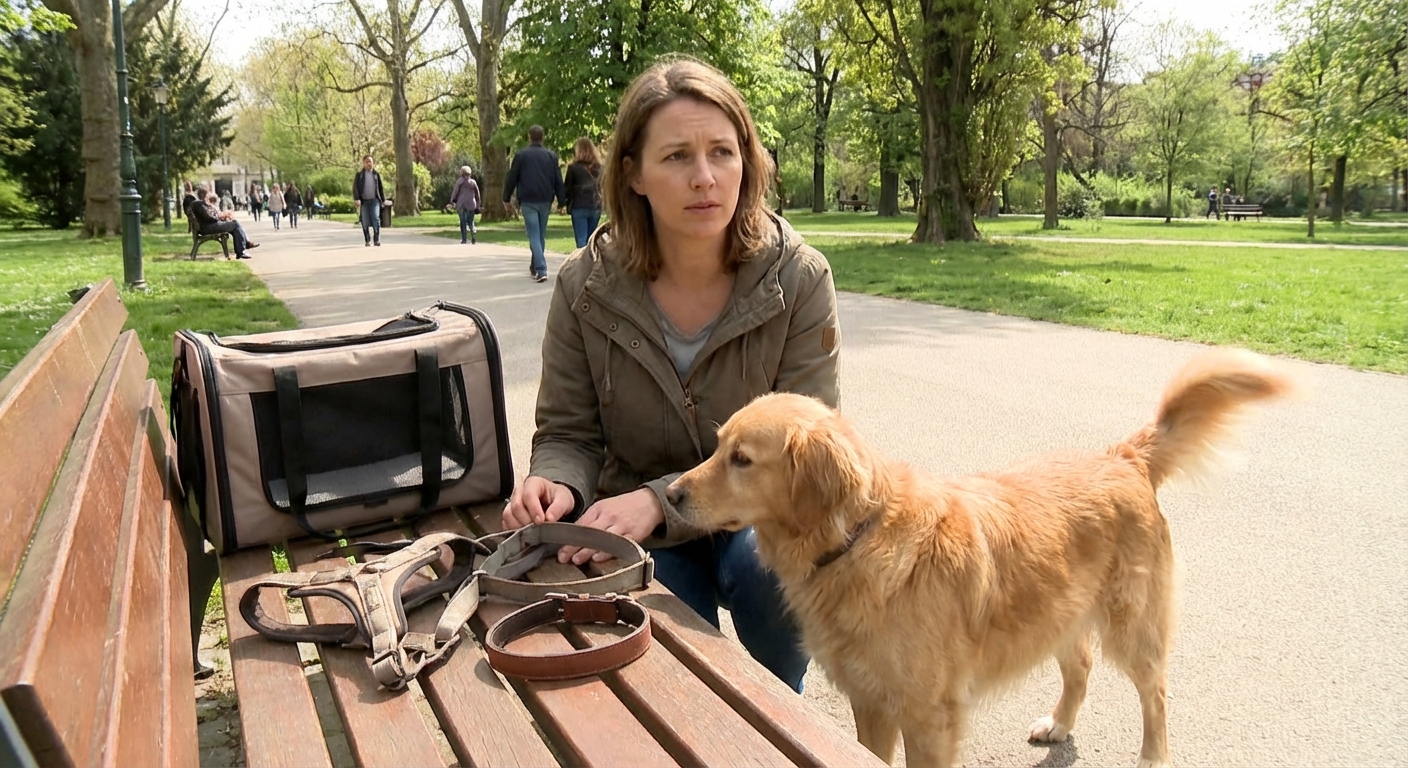
Walks, vet visits, car rides, and park trips are more than errands. They’re windows to the wider world—new smells, sights, and experiences that can:
Outings as Emotional and Physical Enrichment
- Improve cardiovascular health
- Support joint mobility
- Build social confidence
- Strengthen your bond
The right harness, collar, or carrier transforms outings from stressful to secure. This guide compares major options so you can choose what truly supports your pet’s body and mind.
Collars vs. Harnesses for Dogs and Cats
Collars: Pros and Cons
Best use: Identification, low-tension leash walking in calm, trained dogs; breakaway collars for cats.
Pros:
- Always-on ID (tags, contact info)
- Simple and quick to put on
- Suitable for dogs with excellent leash manners
Cons:
- Pressure on the neck can affect the trachea and thyroid area
- Particularly risky for small breeds, brachycephalic breeds, and pullers
- Can contribute to eye pressure in some dogs when they lunge
For cats, breakaway collars are essential to prevent strangulation if the collar gets snagged.
Harnesses: Pros and Cons
Best use: General walks, training, and for dogs with any tendency to pull; secure walking for cats.
Pros:
- Spread pressure across chest and shoulders instead of neck
- Reduce strain on trachea and neck structures
- Back-clip styles are comfortable and easy; front-clip can assist with training pullers
Cons:
- Poorly fitted harnesses can rub behind elbows or restrict shoulder movement
- More straps and buckles can be confusing at first
Science note: Studies on canine biomechanics show that some harnesses can alter gait if they restrict shoulder extension. Look for designs that stay clear of the shoulder joint and allow a full, natural stride.
Choosing the Right Harness: A Step-by-Step Guide
Step 1: Measure Carefully
You’ll typically need:
- Girth/chest: Around the widest part of the ribcage
- Neck: Where a collar would sit (for some designs)
- Weight: To confirm you’re in the right size range
Use a soft measuring tape and compare with the manufacturer’s size chart—don’t guess based on breed alone.
Step 2: Match Design to Your Dog’s Behavior
Back-clip harness
- Clip located on the back. - Great for: Calm walkers, senior dogs, small breeds. - Pros: Simple to use, reduces leash tangles.
Front-clip or dual-clip harness
- Clip on chest, sometimes also on back. - Great for: Moderate pullers; training polite leash manners. - Pros: Gently redirects pulling toward you rather than opposing it.
Y-front harness (strap creates a Y shape on chest)
- Designed to avoid restricting shoulders when properly fitted. - Often preferred by trainers and canine physiotherapists.
Avoid harnesses that cross directly over the front of the shoulders in a straight horizontal bar; they can limit shoulder extension.
Step 3: Fit and Comfort Check
Once the harness is on:
- You should be able to fit two fingers between each strap and your dog’s body.
- The chest piece should lie flat without gaping.
- Straps should not chafe behind the elbows or dig into the armpits.
- Ask your dog to walk and trot a few steps; watch for restricted movement or discomfort.
Adjust and re-check after a few walks—straps often settle and may need minor tweaks.
Safe Collar Choices for Everyday Wear
For Dogs
- Prefer flat, wide collars over thin ones to distribute pressure.
- Avoid prong, choke, and shock collars; these can increase stress, anxiety, and risk of injury.
- Opt for soft, padded materials for sensitive skin.
Collars should be snug but not tight: two fingers should fit comfortably underneath.
For Cats
- Always choose breakaway (quick-release) collars.
- Check fit regularly; kittens grow quickly.
- Attach an ID tag and consider reflective materials for visibility.
Carriers and Crates: Creating a Mobile Safe Space
Carriers are especially important for cats, small dogs, rabbits, and small mammals—for vet visits, moves, and emergencies.
1. Choosing a Carrier Type
- Hard-shell plastic carriers
- Sturdy, easier to sanitize
- Good for car travel and vet visits
- Soft-sided carriers
- Lighter, more flexible
- Often approved for in-cabin airplane travel (check airline rules)
- Backpack or sling-style carriers (for small dogs and some cats)
- Great for short outings and public transport
- Ensure good ventilation and posture
2. Sizing the Carrier
Your pet should be able to:
- Stand up fully without crouching
- Turn around comfortably
- Lie down in a natural position
Too large can feel unsafe to some pets; a slightly cozy, den-like size is often more relaxing.
3. Making the Carrier a Happy Place
Instead of only bringing out the carrier on “scary” days:
- Leave it open in a quiet corner with a soft blanket.
- Place treats or a sprinkle of catnip inside for cats.
- Feed occasional meals in or near the carrier.
- Practice short, positive sessions: close the door briefly, offer treats, and release.
Over time, the carrier becomes a familiar safe space, not a signal of stress.
Travel Safety: Car and Public Transport
Dogs and Cats in Cars
- Never travel with pets loose in the car. In sudden stops, even a small pet can be thrown with great force.
- Best options:
- Crash-tested harnesses that attach to seat belts (for dogs)
- Secured carriers or crates strapped with seat belts or tie-downs
Look for products that have undergone independent crash testing (some brands publish test results).
Small Pets (Rabbits, Guinea Pigs, etc.)
- Use a small, secure carrier lined with grippy bedding or a towel.
- Keep carriers partially covered (leave front open) to reduce visual stress.
- Place on the floor behind a seat, never on the passenger seat under an airbag.
Product Comparison Checklist
When comparing harnesses, collars, and carriers, ask:
Anatomical fit: Does it respect my pet’s natural movement and breathing?
Adjustability: Can I fine-tune fit as their weight or coat changes?
Materials: Are fabrics soft yet strong? Hardware rust-resistant?
Ease of use: Can I put it on and take it off calmly without wrestling?
Cleanability: Is it machine-washable or easy to wipe down?
Visibility: Is there reflective stitching or space for lights in low light?
Take your pet’s personality into account too. Shy, sound-sensitive pets may prefer simpler designs with quiet buckles and minimal Velcro sounds.
Heart-Centered Tips for Stress-Free Outings
- Practice at home first. Let your pet wear the harness, collar, or carrier for short periods indoors with lots of praise and small treats.
- Move at their pace. For fearful animals, tiny steps (like simply approaching the carrier) deserve rewards.
- Pair outings with good things. Sniffing sessions, calm petting, and exploration help outings feel enriching rather than overwhelming.
If walks or travel feel like a struggle now, that doesn’t mean they always will. The right gear, introduced kindly, can transform “scary outside” into “shared adventure.”
Encouragement for Thoughtful Pet Parents
It’s easy to feel intimidated by the rows of gear at the pet store. But you don’t need the fanciest harness or carrier—you need the one that fits your pet’s body, temperament, and lifestyle.
By taking a little extra time to measure, compare designs, and introduce new gear gently, you’re doing something deeply compassionate: you’re listening to your animal’s unspoken needs and making the world beyond your front door feel safe and inviting.
That care accompanies them on every walk, every vet visit, every small adventure. And they feel it, even if they can’t say it in words.
Key Takeaway
The most important thing to remember from this article is that this information can change how you think about Pet Products.