Many behavior issues—chewing furniture, barking, overgrooming, pacing—are not signs of a “bad” pet but symptoms of boredom and unmet needs. In nature, animals spend much of their day searching for food, exploring, and solving little problems. Domestic life, while safe, can be…quiet. Too quiet.
Why Enrichment Toys Are Emotional Care, Not Extras
That’s where enrichment toys come in. They’re not just entertainment; they:
- Lower stress and anxiety
- Support healthy brain aging
- Reduce destructive behaviors
- Build confidence and resilience
Studies in shelter animals show that even simple puzzle feeders and scent games reduce stress behaviors and can improve adoptability. Your home can benefit from the same principles.
The Five Types of Enrichment (and Matching Toys)
To build a truly satisfying toy collection, think in categories rather than individual products.
1. Food-Based Enrichment
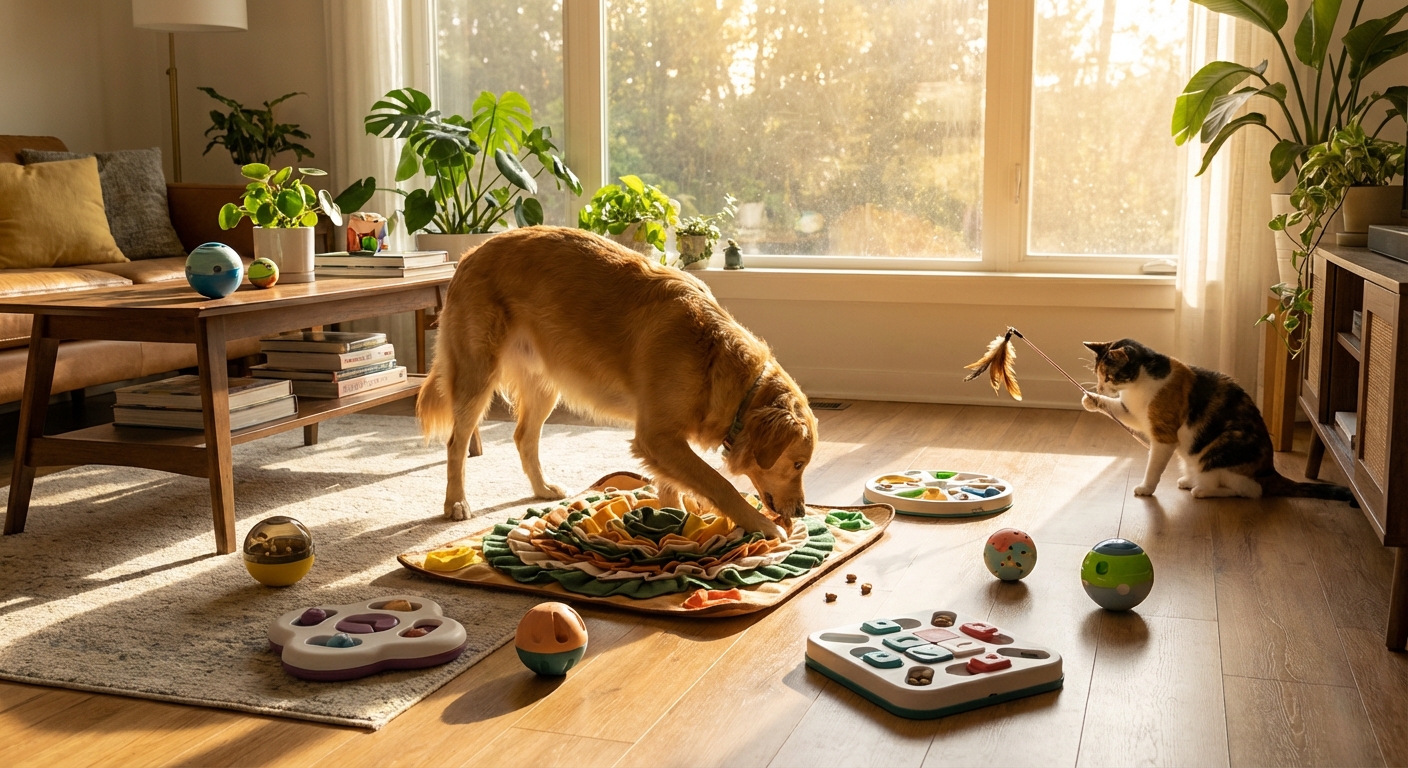
These toys make pets work gently for their meals or treats, mimicking natural foraging.
Examples:
- Puzzle feeders with sliding panels or compartments
- Kibble-dispensing balls or cubes that roll and release food
- Stuffable toys (e.g., rubber cones) filled with wet food and frozen
Benefits:
- Slows eating, supporting digestion
- Burns mental energy
- Gives anxious pets a calming, focused task
2. Scent and Foraging Enrichment
Especially powerful for dogs, cats, and small mammals whose primary world is made of smells.
Examples:
- Snuffle mats (fabric strips layered to hide kibble)
- Scatter feeding in safe, clean grass or a foraging tray
- Cardboard boxes or paper bags with hay and herbs for rabbits and guinea pigs
Benefits:
- Engages the brain’s olfactory centers
- Encourages natural seeking behaviors
- Builds calm confidence in shy or nervous pets
3. Physical Play and Chase
These toys tap into your pet’s hunting or herding instincts.
Examples:
- Flirt poles (a lure on a string and pole) for dogs
- Wand toys with feathers or strings for cats
- Rolling tunnels and paper bags for cats and small mammals
Benefits:
- Healthy energy outlet
- Helps manage weight
- Builds your bond through interactive play
4. Chewing and Oral Enrichment
For species that naturally chew (dogs, rabbits, guinea pigs, rodents), appropriate outlets prevent damage elsewhere.
Examples:
- Rubber chew toys sized to your dog’s mouth and strength
- Natural wooden chews and hay-based toys for rabbits and small mammals
- Dental chews (vet-approved) for dogs
Benefits:
- Satisfies natural chewing instincts
- Can support dental health
- Provides self-soothing for some pets
5. Cognitive and Problem-Solving Toys
These toys ask pets to think: lift, slide, paw, or nudge pieces to access food.
Examples:
- Multi-step puzzle boards with varying difficulty
- DIY puzzles with muffin tins and tennis balls
- Stackable discs or drawers that must be opened
Benefits:
- Builds frustration tolerance in a safe way
- Supports brain health, especially in seniors
- Tires out high-intelligence breeds (Border Collies, Shepherds, many working dogs, and clever cats)
Step-by-Step: Building a Weekly Enrichment Plan
Instead of offering all toys at once, create a simple rotation. This keeps items “fresh” and exciting.
Step 1: Take Inventory
List what you already own under the five categories above. You might be pleasantly surprised at how much you have.
Step 2: Fill the Gaps
If you’re missing a category, consider adding one product there before buying more of what you already own.
- No puzzle feeder? Start with a simple, easy toy.
- No scent toys? A snuffle mat is a versatile first step.
Step 3: Design a Gentle Routine
For most healthy adult pets, aim for:
- Daily: One food-based or scent activity
- 3–5 times per week: Interactive play with you (chase, wand, tug)
- 1–2 times per week: Short sessions with a higher-level puzzle
Example weekly outline for a dog:
- Mon: Breakfast in a slow-feeder bowl; evening tug game
- Tue: Dinner scattered on a snuffle mat; 10 minutes of training with treats
- Wed: Frozen stuffed rubber toy while you work; short puzzle board session
- Thu: Walk with allowed sniffing time; flirt pole play
- Fri: Kibble in a rolling dispenser ball; new cardboard box to explore
- Sat: Longer walk or hike; food puzzle activity indoors
- Sun: Quiet chew time; gentle nose-work games at home
Adapt this schedule to your pet’s energy level and health.
Safety First: Choosing Appropriate Toys
1. Size and Durability
- Toys should be too large to swallow or lodge in the throat.
- For strong chewers, look for heavy-duty rubber, not thin plastic or fabric.
- For cats and small animals, avoid toys with tiny parts that can break off.
2. Material Considerations
- Avoid toys that smell strongly of chemicals or dyes.
- Look for BPA-free plastics and non-toxic dyes.
- Rope toys can be safe under supervision, but some pets swallow strands—always monitor.
3. Supervision Guidelines
- Supervise new toys the first few sessions.
- Remove toys if they become damaged, exposing stuffing, squeakers, or sharp edges.
- Don’t leave string, yarn, or wand toys with long cords accessible to unsupervised cats—these can cause dangerous intestinal blockages.
Evidence-Informed Toy Recommendations by Pet Type
These are example categories so you can look for similar options in your region or budget.
For High-Energy Dogs
- Durable ball launcher-compatible balls for fetch
- Flirt pole for bursts of chase (with controlled, brief sessions)
- Complex puzzle feeders to challenge their minds
For Senior Dogs
- Soft but supportive chew toys that are gentle on older teeth
- Simple puzzle feeders (fewer steps) to avoid frustration
- Scent games (hide-and-seek with treats) that don’t require intense physical effort
For Indoor Cats
- Wand toys with different attachments
- Interactive feeders that make them “hunt” kibble or treats
- Vertical spaces with scratching posts and climbable platforms
For Rabbits and Guinea Pigs
- Hay-stuffed cardboard tubes for chewing and foraging
- Willow or apple-wood sticks (untreated)
- Tunnels and hideouts to explore and dash through
Always match complexity to your individual pet; frustration should be brief and solvable, not overwhelming.
DIY Enrichment: Low-Cost, High-Value Ideas
You don’t need an overflowing toy bin or expensive gear to enrich your pet’s day.
- Towel roll-up: Spread a thin layer of kibble on a towel, roll it up, and let your pet unroll to find food.
- Muffin tin puzzle (for dogs and cats): Place kibble in the cups and cover with tennis balls or safe toys.
- Paper foraging bag (for rabbits and small animals): Fill a paper bag with hay and a few herbs; fold the top loosely.
- Cardboard castle for cats: Stack boxes with doorways cut between them for climbing and hiding.
Always supervise at first to ensure your pet doesn’t consume unsafe materials like large pieces of cardboard or cloth.
Heartwarming Ways Enrichment Deepens Your Bond
- Shared problem-solving: Sit on the floor while your pet works on a puzzle. Offer calm encouragement, the occasional hint, and gentle praise when they succeed.
- Reading your pet’s joy signals: Look for loose body language, wagging tails, bright eyes, and relaxed ears. Learning your pet’s “happy cues” turns enrichment time into a conversation.
- Confidence building for shy pets: Start with very easy puzzles so they experience quick success. Celebrate small steps—sniffing the toy, touching it, then finally using it.
These moments tell your pet, over and over: “You are capable. You are safe. I’m here with you.”
Encouragement for Overwhelmed Pet Parents
If you’re busy or exhausted, adding “play sessions” to your to-do list may feel heavy. Remember, enrichment doesn’t have to be elaborate or time-consuming.
- 5–10 intentional minutes a day can make a meaningful difference.
- Simple switches—like feeding meals via a slow feeder instead of a bowl—add stimulation without extra time.
- Rotating a few carefully chosen toys is more impactful than buying many and leaving them all out.
When you offer enrichment, you’re doing more than preventing boredom. You’re helping your pet’s brain stay flexible, their body stay active, and their heart feel engaged with you and their world. That’s a gift that quietly pays off every single day.
Key Takeaway
The most important thing to remember from this article is that this information can change how you think about Pet Products.