As a devoted pet parent, you may wonder: should I groom my pet at home, rely on a professional groomer, or do a mix of both?
Grooming Choices: You Don’t Have to Pick Just One
The truth is, the best grooming plan is usually a partnership. Some tasks are perfect for home, while others are safer and more effective in a professional setting—especially for complex coats, medical needs, or anxious pets.
This guide compares DIY and professional grooming across common tasks, helps you decide what fits your pet and lifestyle, and offers practical tips to build a balanced, nurturing routine.
What Falls Under “Grooming,” Exactly?
Grooming includes:
- Brushing and deshedding
- Baths and blow‑dries
- Haircuts and sanitary trims
- Nail trims and paw pad care
- Ear cleaning and plucking (when advised by a vet)
- Basic anal gland care (by pros or vet)
Some of these are simple to learn at home; others require training and specialized tools.
DIY Grooming: Pros, Cons, and Best Fits
Benefits of At‑Home Grooming
- Bonding: Regular, gentle handling builds trust and connection.
- Frequent monitoring: You’ll spot changes in skin, weight, or comfort quickly.
- Cost savings: Especially important for high‑maintenance coats.
- Less travel stress: Ideal for pets who find car rides or salons overwhelming.
Challenges of At‑Home Grooming
- Learning curve for tools and techniques
- Physical demands (lifting, bending, restraining gently)
- Harder with very thick, matted, or complex coats
- Risk of accidental injury (nicks, quicking nails, clipper burns) if rushed or untrained
Great DIY Candidates
- Short‑haired dogs and cats
- Pets who are fearful in new environments but calm at home
- Routine tasks: brushing, basic bathing, toothbrushing, simple nail trims
Professional Grooming: Pros, Cons, and Best Fits
Benefits of Professional Groomers
- Technical expertise: Groomers are trained in breed‑specific trims and safe handling.
- Specialized tools: High‑velocity dryers, grooming tables, professional clippers, and shears.
- Time‑saving: Particularly valuable for busy families.
- Support with tricky tasks: De‑matting, full haircuts, and heavy deshedding.
Many groomers also pursue Fear Free® or low‑stress handling certifications, which can be especially reassuring for sensitive pets.
Potential Drawbacks
- Cost, especially for frequent visits
- Transportation and time
- Stress for anxious, elderly, or medically fragile pets
Pets Who Often Benefit Most from Pros
- Curly or wool‑coated breeds (Poodles, Doodles, Bichons)
- Long‑haired breeds requiring regular trims
- Double‑coated dogs in heavy shed or with severe undercoat buildup
- Pets with severe matting or impacted anal glands (in partnership with a vet)
Comparison by Grooming Task
1. Brushing & Deshedding
DIY:
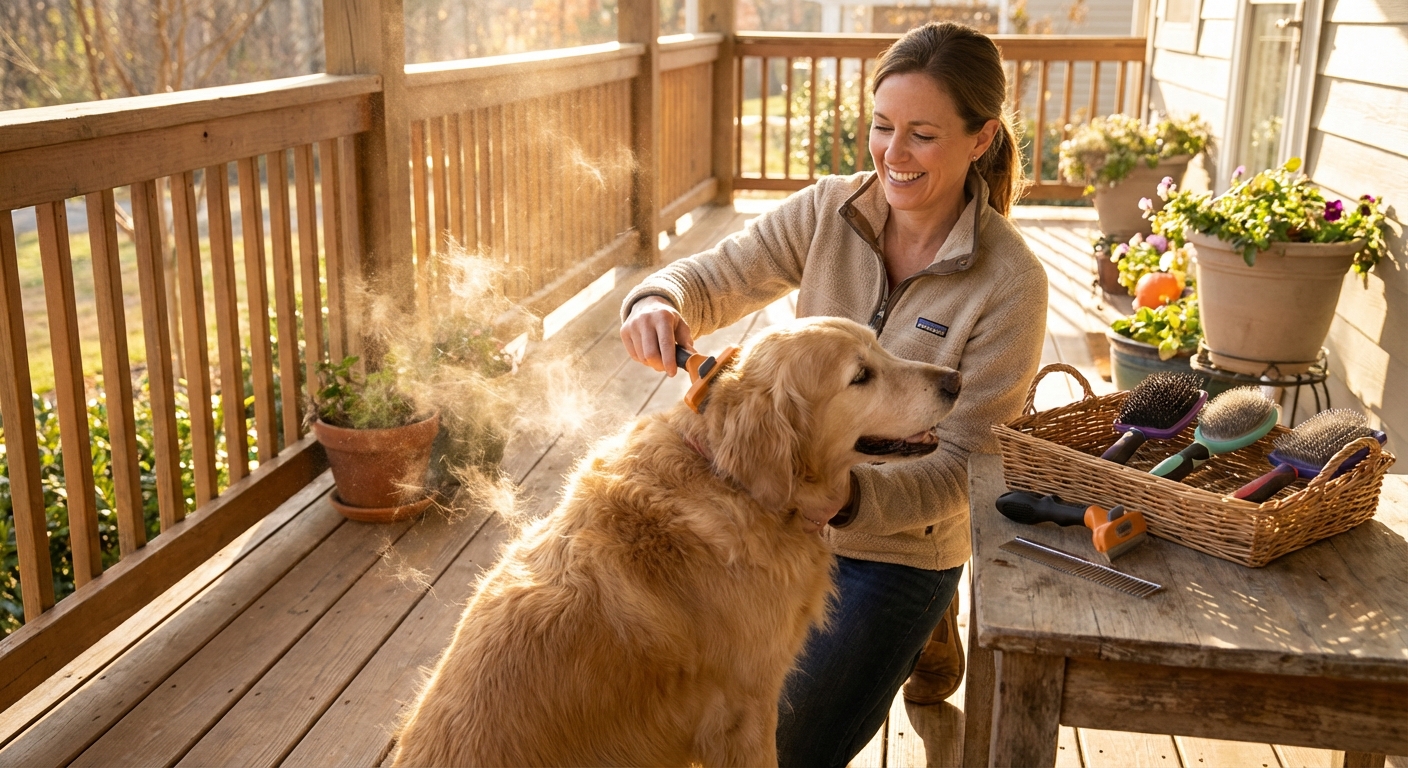
- Perfect for at‑home care; aim for daily to weekly depending on coat.
- Science supports frequent, gentle mechanical removal of loose hair to prevent matting and hot spots.
Pro:
- Useful for seasonal heavy shedding (e.g., a full deshed service for Huskies, Shepherds, etc.).
Best approach: Daily or weekly brushing at home + occasional professional deshed during big shed seasons.
2. Baths
DIY:
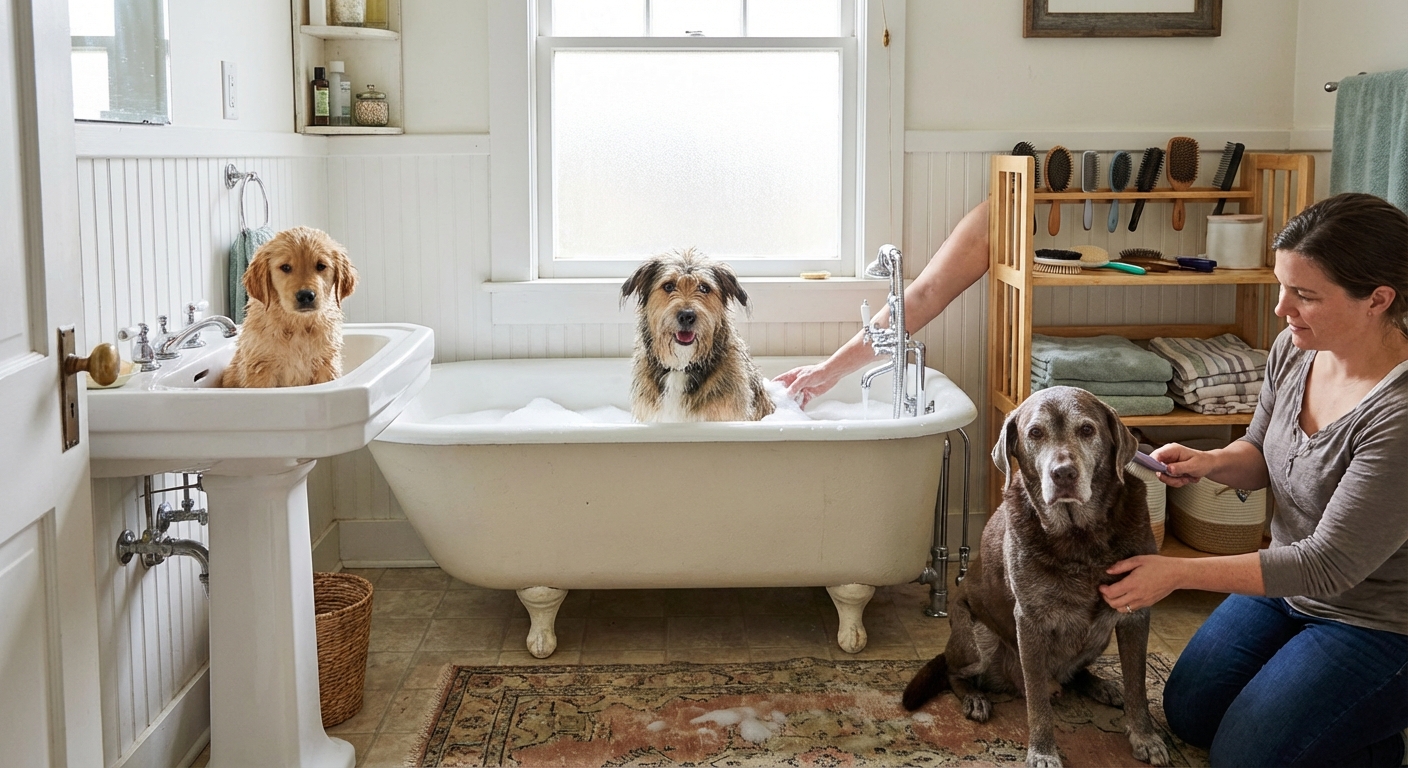
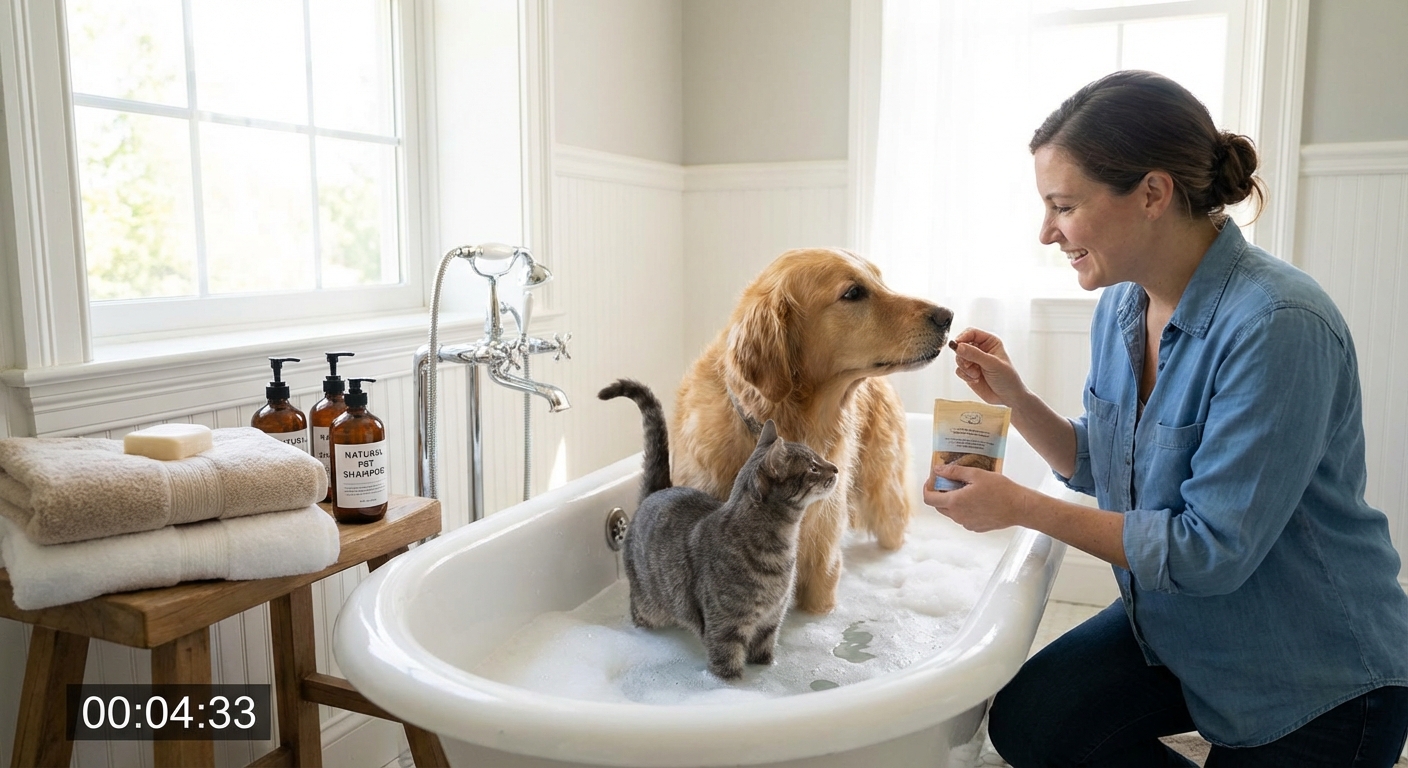
- Manageable for many pets with the right setup and pet‑specific shampoos.
- Ideal for quick cleanups (muddy paws, mild odor).
Pro:
- Recommended for pets with dense coats that are hard to fully rinse and dry.
- Safer when medicated baths require precise timing and thorough application.
Best approach: Routine, simple baths at home + professional bathing if your pet has skin conditions, very thick coats, or if drying is difficult.
3. Haircuts & Trims
DIY:
- Basic face, paw, and sanitary trims are possible with practice and safe, blunt‑tipped scissors.
- Full haircuts are very challenging without training and the right equipment.
Pro:
- Strongly recommended for curly/wool coats and most full‑body clips.
- Groomers are trained to avoid clipper burns, scissor injuries, and uneven cuts that can affect coat health.
Best approach: Let a professional handle full haircuts and major style changes. Use gentle at‑home maintenance trims between appointments if you feel confident and your pet is calm.
4. Nail Trims
DIY:
- Many pet parents can learn safe trimming or grinding with patience.
- Allows more frequent, tiny trims—which can help recede long quicks over time.
Pro:
- Helpful if your pet strongly resists paw handling.
- Essential for pets needing sedation for nail care.
Best approach: Learn basic trims at home for maintenance; enlist your vet or groomer if your pet is fearful or has black, thick nails that make you uneasy.
5. Ears & Anal Glands
Ears:
- At home: Routine checks and gentle cleaning with vet‑approved products.
- Pro/Vet: Hair plucking (only if medically indicated) and treatment for recurrent infections.
Anal glands:
- Should be addressed by a vet or trained professional. Recurrent issues may signal underlying problems (allergies, infections, diet).
A Hybrid Grooming Plan: Example Schedules
Example 1: Curly‑Coated Dog (Doodle)
At home:
- Daily brushing and combing
- Weekly ear checks and toothbrushing
- Monthly nail trims
Professional:
- Full groom (bath, blow‑dry, haircut) every 4–8 weeks
Example 2: Short‑Haired Dog (Beagle)
At home:
- Brushing 1–2× weekly
- Monthly bath
- Nail trims every 3–4 weeks
- Weekly ear checks, dental care
Professional:
- Optional seasonal deshed
- Nail trims if you’re uncomfortable doing them
Example 3: Long‑Haired Indoor Cat
At home:
- Brushing 3–7× weekly
- Regular nail trims
- Spot cleaning of rear and eyes as needed
Professional:
- Occasional sanitary trim
- Help with mats, especially in seniors or cats with mobility issues
How to Choose a Kind, Qualified Groomer
Look for signs of professionalism and compassion:
- Clean, well‑ventilated salon with non‑slip flooring
- Proof of training, certifications, and ongoing education
- Transparent policies about drying methods and handling
- Willingness to answer questions and discuss your pet’s needs
- Positive methods—no harsh restraints or punishment
Ask:
- How do you handle anxious or senior pets?
- Can I tour the facility?
- Do you offer breaks for nervous animals?
Groomers are invaluable partners; when you find a good one, you’re building part of your pet’s care team.
Building Confidence with DIY Grooming
If you’d like to do more at home:
- Start with the easiest, least invasive tasks (brushing, simple baths, toothbrushing).
- Watch vet and groomer‑produced tutorial videos.
- Ask your groomer for a “demo session” to show you safe handling and tool use.
- Go slowly—short, positive sessions beat long, stressful ones.
Remember: grooming is not a test you pass or fail. It’s a collection of caregiving skills you can learn gradually, at your own pace, with support.
The Heart of the Decision: Your Pet’s Comfort
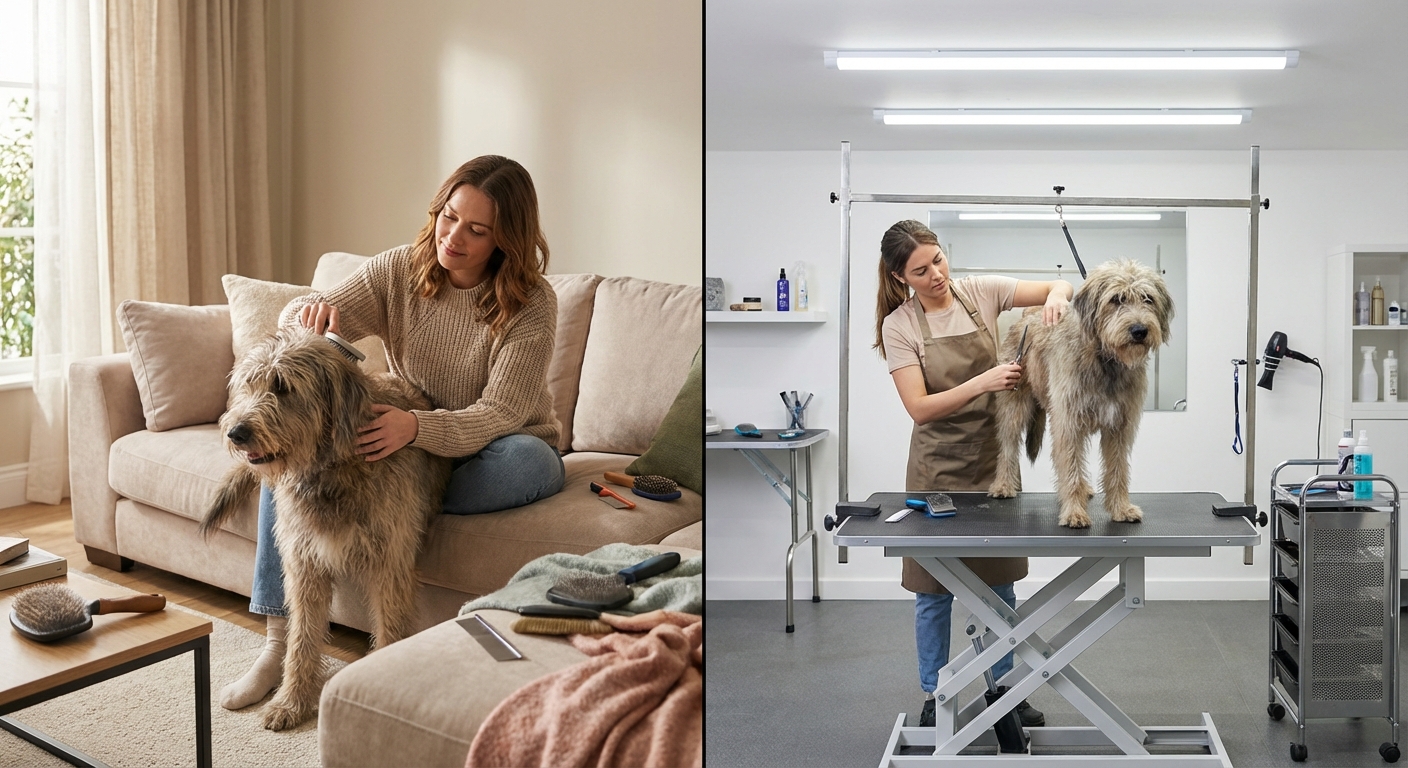
Whether you choose the salon, your sofa, or a mix of both, the guiding question is always:
What choice keeps my pet safest, most comfortable, and most relaxed?
It’s perfectly okay to let professionals handle the tough parts while you focus on daily bonding tasks. Every gentle brush stroke, careful nail trim, and thoughtfully chosen appointment tells your pet: your comfort and well‑being matter deeply to me.
That message—the feeling of being cherished and cared for—is the real essence of grooming, no matter where it happens.
Key Takeaway
The most important thing to remember from this article is that this information can change how you think about Grooming Guides.