Grooming is far more than keeping your pet "looking nice." It’s a cornerstone of preventive health care that supports skin, coat, nails, ears, teeth, and even emotional well‑being.
Understanding Grooming as Health Care, Not Just Beauty
Veterinary dermatologists estimate that up to 20–30% of vet visits are related to skin or ear problems—many of which are easier and cheaper to prevent with regular, gentle grooming.
Think of grooming as:
- A daily health check – You’ll notice lumps, bumps, parasites, or sore spots early.
- A bonding ritual – When done kindly and patiently, grooming builds trust and security.
- Stress management – Familiar handling reduces anxiety at the vet and professional groomer.
This roadmap will walk you through grooming at different life stages—puppy/kitten, adult, and senior—so you can support your pet at every step.
Stage 1: Puppies & Kittens – Building Positive Associations
Early grooming is less about “perfect” results and more about gentle exposure.
Step 1: Start with Touch Training
Goal: Your pet learns that being handled is safe.
Do this daily for 3–5 minutes:
- Choose calm moments – After play or a meal, when your pet is relaxed.
- Touch key areas – Ears, paws, tail, under the chin, around the mouth.
- Pair with rewards – Soft praise and tiny treats for calm behavior.
- Keep it short – Stop before your pet loses patience.
Over time, extend how long you hold a paw, open the lips, or gently lift the ear flap.
Step 2: Introduce Tools Gradually
Bring tools out before you need them so they aren’t scary. Allow sniffing and exploration.
Helpful starter tools:
- Soft rubber curry brush (dogs & short‑haired cats)
- Fine grooming comb (long‑haired breeds)
- Puppy/kitten‑safe shampoo (pH‑balanced, fragrance‑light)
- Cotton rounds (for wiping eyes, not ears canal)
Desensitization steps:
- Show the brush, let them sniff, treat.
- Touch the brush to their body without brushing, treat.
- Give one or two strokes, treat.
- Build up over days, always staying under their fear threshold.
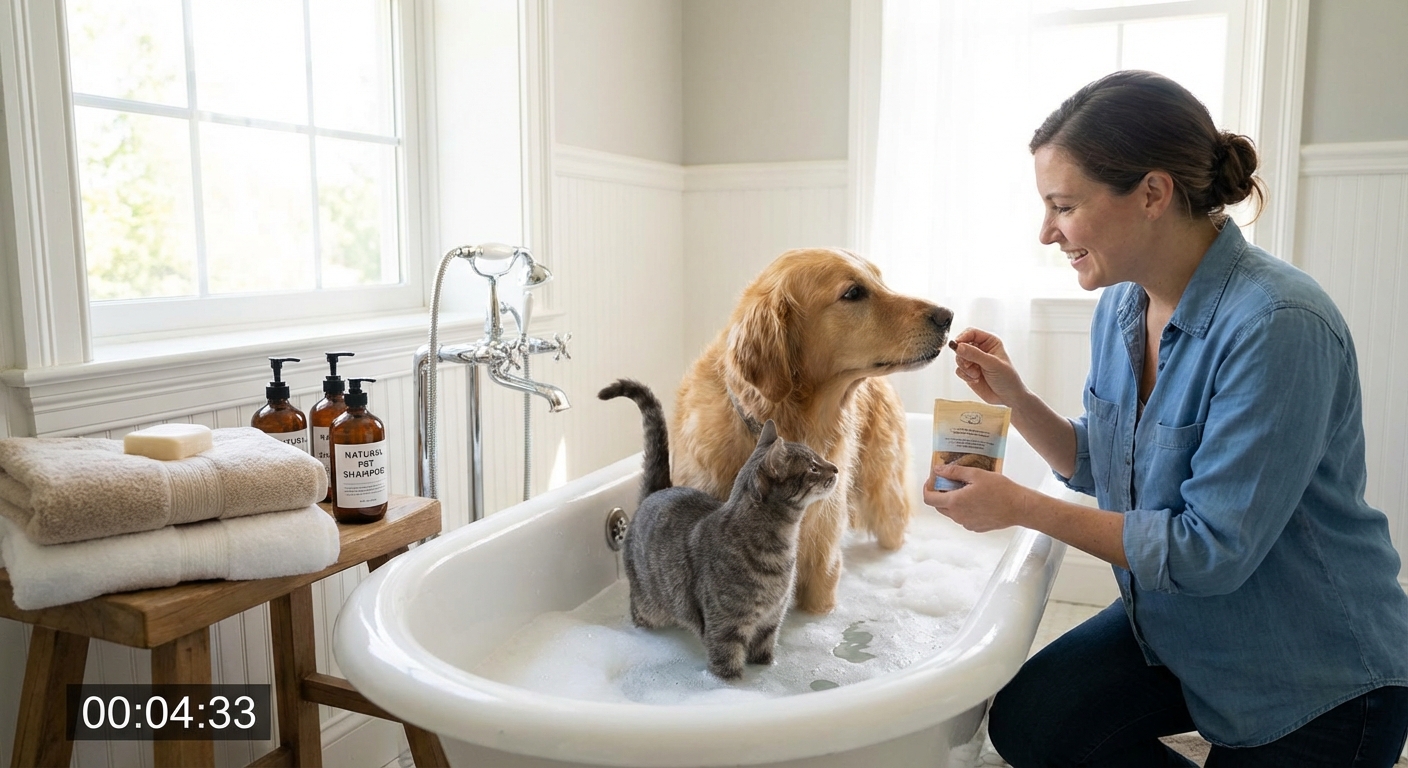
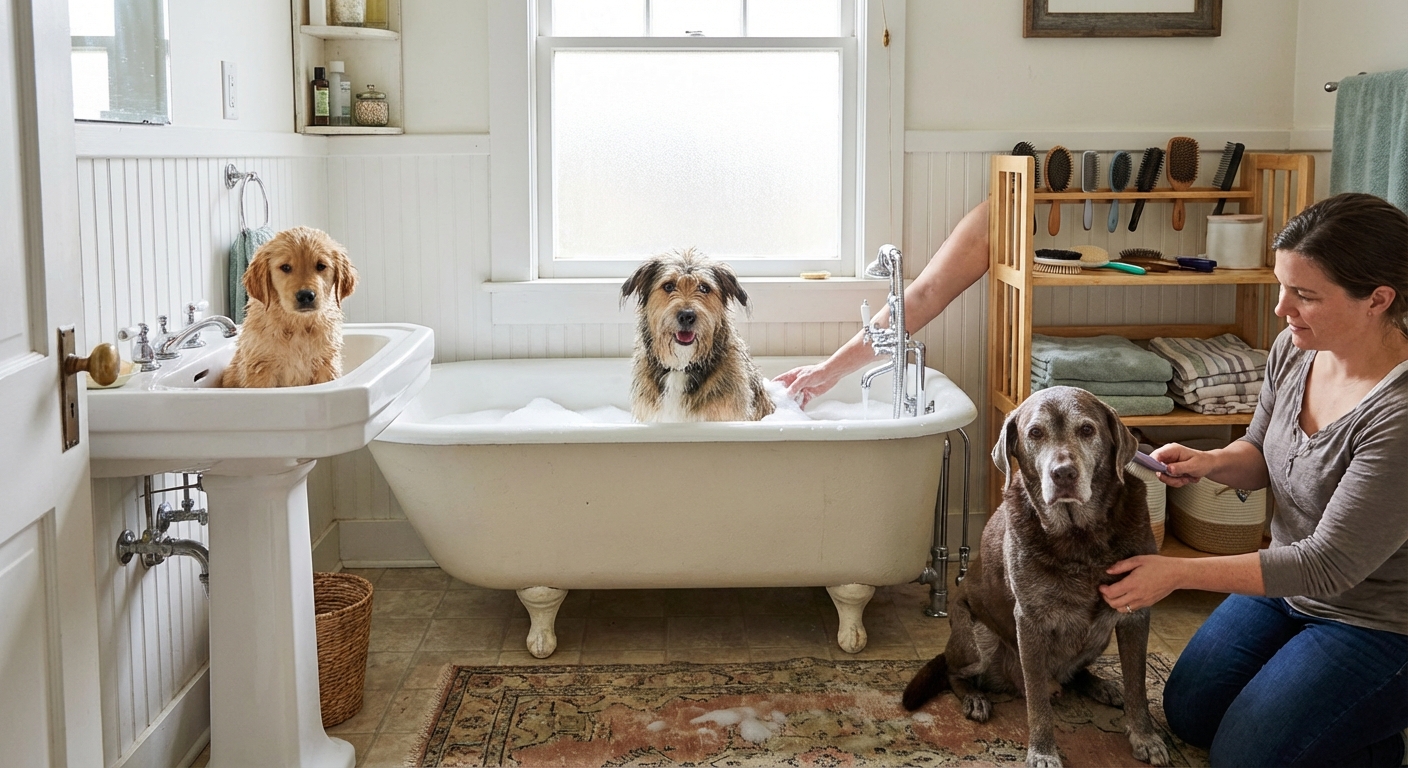
Step 3: First Bath (If Needed)
Not all cats need routine bathing and some dogs only need baths every 4–8 weeks, but early positive experiences help.
- Use lukewarm water (too hot or cold increases stress).
- Place a non‑slip mat in the sink or tub.
- Wet the body first, avoiding the face.
- Dilute shampoo with water in a squeeze bottle; it rinses more easily and reduces residue.
- Rinse thoroughly—leftover shampoo can irritate skin.
Keep the first bath under 5 minutes and end with a warm towel rub and treat party.
Stage 2: Adult Pets – Creating a Sustainable Routine
Adult pets thrive on predictable rhythms. Consistency helps reduce anxiety and keeps coats and skin healthy.
How Often Should You Groom?
Frequency depends on species, coat type, lifestyle, and skin health:
Dogs (general guidelines):
- Brushing:
- Short coat (Beagle, Boxer): 1–2× weekly
- Double coat (Husky, GSD): 3–4× weekly, daily during shed season
- Long/silky (Shih Tzu, Maltese): Daily
- Curly/wool (Poodle, Doodle): Daily to every other day
- Baths: Every 4–8 weeks (more if very active or muddy, less if skin is dry)
Cats:
- Short‑hair: 1–2× weekly brushing
- Long‑hair (Persian, Ragdoll, etc.): 3–7× weekly brushing
- Baths: Only as needed (oily coats, skin conditions) or per vet advice
The Adult Grooming Checklist
Use this as a weekly framework and adjust to your pet.
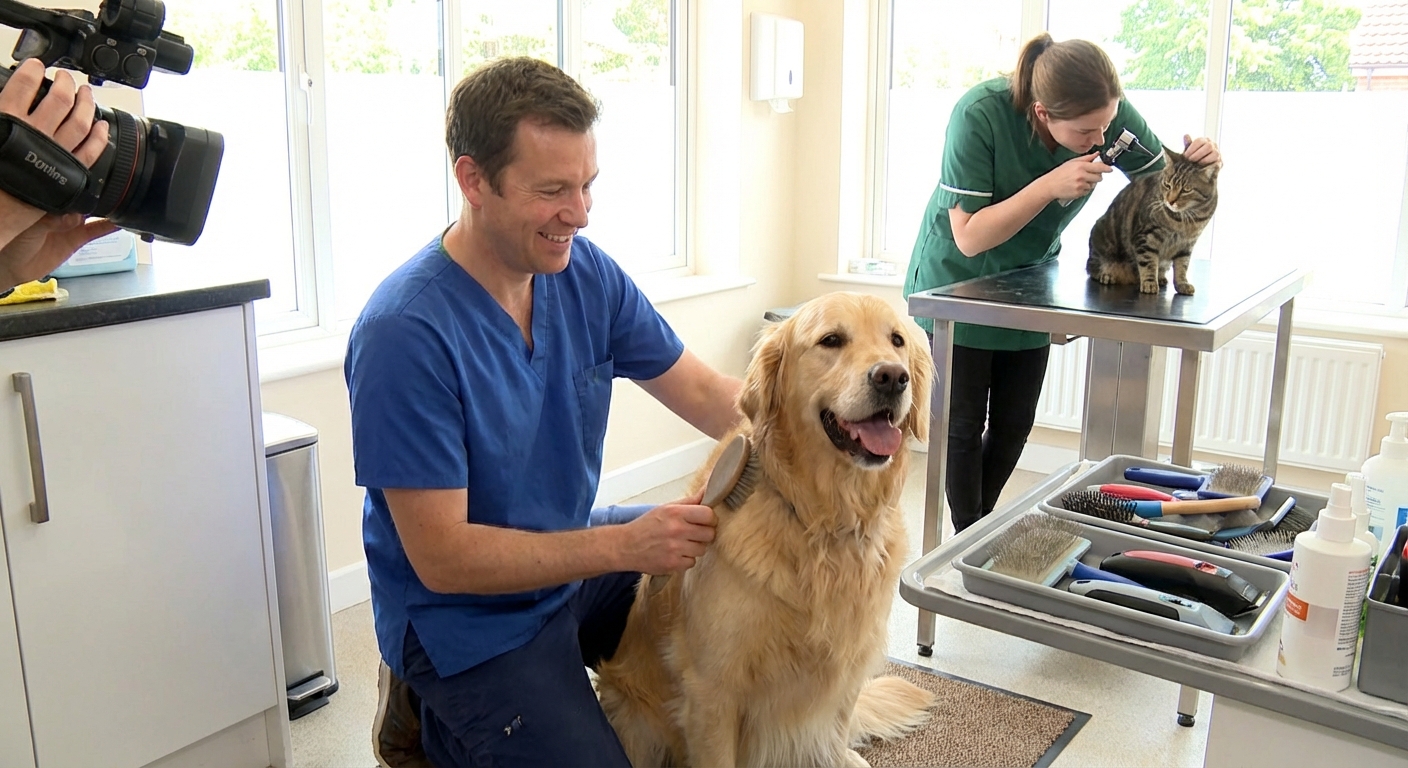
1. Brushing & Combing
Brushing removes loose hair and distributes natural oils. It also reduces hairballs in cats.
Tools to consider:
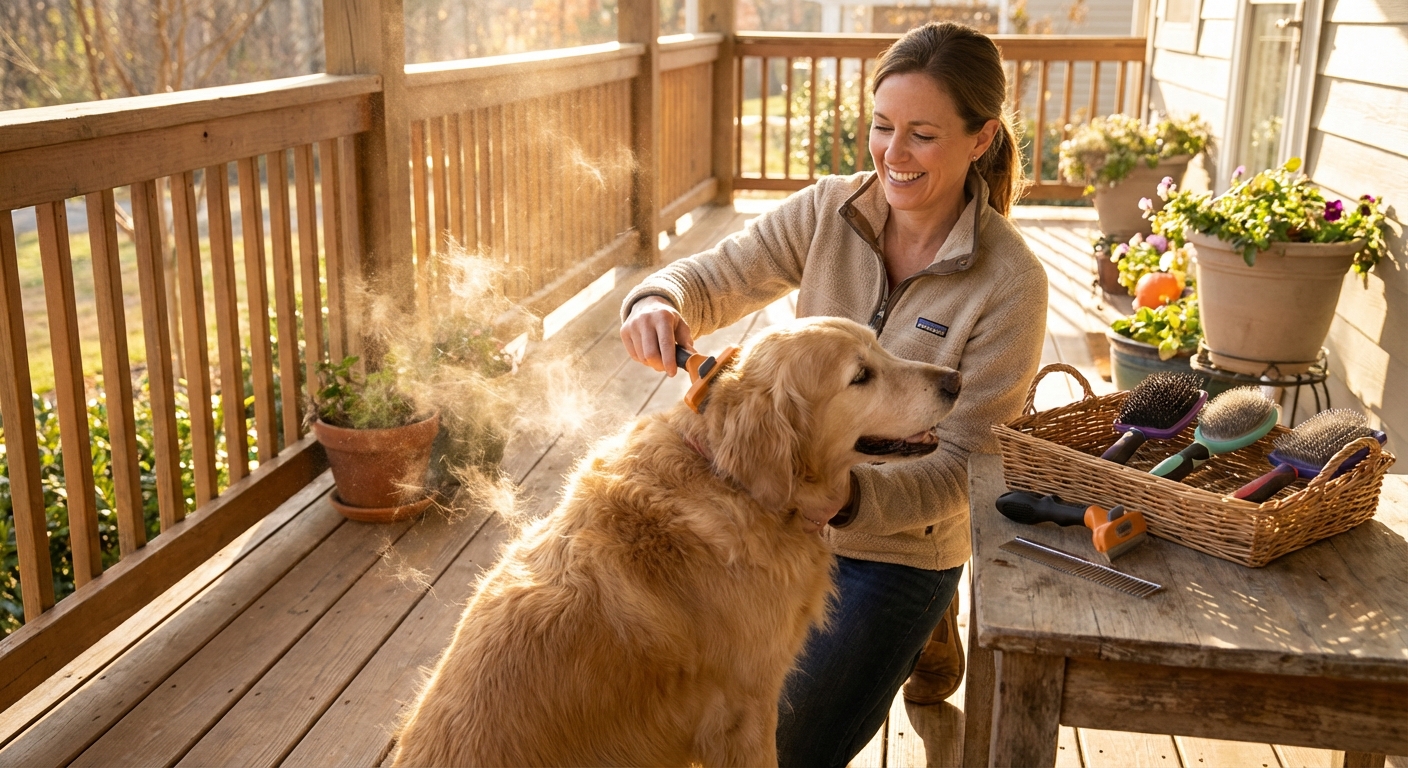
- Slicker brush – for detangling longer coats
- Pin brush – for gentle everyday brushing
- Rubber curry – for short‑coated dogs
- Stainless steel comb – to find hidden tangles near the skin
Science‑backed tip: Gentle mechanical stimulation from brushing can improve microcirculation in the skin, potentially supporting healthier hair growth.
2. Nail Care
Overgrown nails can cause joint stress and painful posture changes.
- Frequency: Every 2–4 weeks for most dogs; many indoor cats need trims every 4–6 weeks.
- Use sharp clippers or a pet nail grinder.
- Look for the quick (pink area in light nails). In dark nails, trim small amounts and look for a pale dot in the nail center.
If you nick the quick, stay calm. Apply styptic powder or cornstarch and gentle pressure.
3. Ear Hygiene
Routine ear checks can prevent painful infections.
- Lift the ear flap and look for redness, swelling, dark discharge, or odor.
- Clean only the outer ear canal with a vet‑approved ear cleaner.
- Never insert cotton swabs deep into the canal.
Dogs with floppy ears or allergies (Cocker Spaniels, Labs, Poodles) need especially consistent ear care.
4. Oral Care
Dental disease is extremely common and often silent until advanced.
- Brush teeth 3–4× per week with pet‑safe toothpaste.
- Use a soft brush or finger brush.
- Dental chews approved by the VOHC (Veterinary Oral Health Council) can help reduce plaque.
Stage 3: Seniors – Gentle, Adaptive Grooming
Aging pets may have arthritis, vision/hearing changes, or thinner skin. Grooming must adjust to keep them comfortable.
Adapting Your Approach
- Shorter sessions: Aim for 5–10 minutes, multiple times a week.
- Support joints: Groom on a padded mat or low table; let your pet lie down.
- Softer tools: Use soft bristle brushes rather than harsh de‑shedding tools.
Watch for signs of pain: panting, lip licking, trembling, turning away, or growling. If present, ask your vet about pain management.
Special Senior Considerations
- Mat prevention: Older cats and dogs may groom themselves less. Focus on gentle daily detangling in "friction areas" (armpits, behind ears, inner thighs).
- Skin checks: Seniors are more prone to growths and pressure sores. Note any changes and report them to your vet.
- Hygiene trims: For long‑haired pets, sanitary trims around the rear and paws can prevent urine/scald and matting.
Science‑Backed Product Recommendations (By Category)
Always introduce products slowly and consult your vet if your pet has allergies or skin disease.
Shampoos
Look for:
- pH‑balanced for dogs or cats
- Free from harsh sulfates and strong synthetic fragrance
- Containing mild surfactants (e.g., cocamidopropyl betaine) and soothing ingredients like oatmeal or aloe
Brushes & Tools
- Short coats: Rubber curry, soft bristle brush
- Double coats: Undercoat rake + slicker brush (used gently)
- Long/silky coats: Pin brush + wide‑tooth comb
- Curly coats: Slicker brush with rounded tips + metal comb
Ear & Dental Care
- Vet‑formulated ear cleaners with drying agents like lactic or salicylic acid for dogs prone to infection
- Pet‑specific toothpaste—never human toothpaste (xylitol and fluoride can be toxic)
Heartwarming Tips to Make Grooming a Bonding Ritual
Grooming doesn’t have to be a chore. With patience, it can become one of the sweetest parts of your routine together.
- Create a “grooming word.” Say something like “spa time” in a cheerful voice so your pet associates the phrase with gentle attention.
- End on a high note. Quit while your pet is still calm, even if you’re not fully finished. Small wins build trust.
- Use calm body language. Slow movements and soft speech help your pet mirror your relaxation.
- Pair with comfort. Some pets relax more with soft music or a lick mat smeared with a pet‑safe treat during brushing.
Always remember: perfection isn’t the goal—comfort, trust, and health are. If you feel overwhelmed, partner with your veterinarian and a reputable groomer who uses fear‑free handling techniques.
Your dedication to learning and adapting your grooming routine over your pet’s lifetime is one of the quietest, kindest expressions of love you can offer.
Key Takeaway
The most important thing to remember from this article is that this information can change how you think about Grooming Guides.