Your pet doesn’t just live in your home—they experience it as their entire world. Every room, texture, sound, and object shapes their physical comfort and emotional state.
Your Home as a Wellness Habitat
Thoughtfully chosen pet products can turn ordinary spaces into supportive habitats that:
- Protect joints and muscles
- Support healthy digestion and hydration
- Reduce stress and anxiety
- Respect natural instincts for rest, play, and privacy
This room-by-room guide helps you design a home that quietly says to your pet, all day long: “You are safe. You are cared for.”
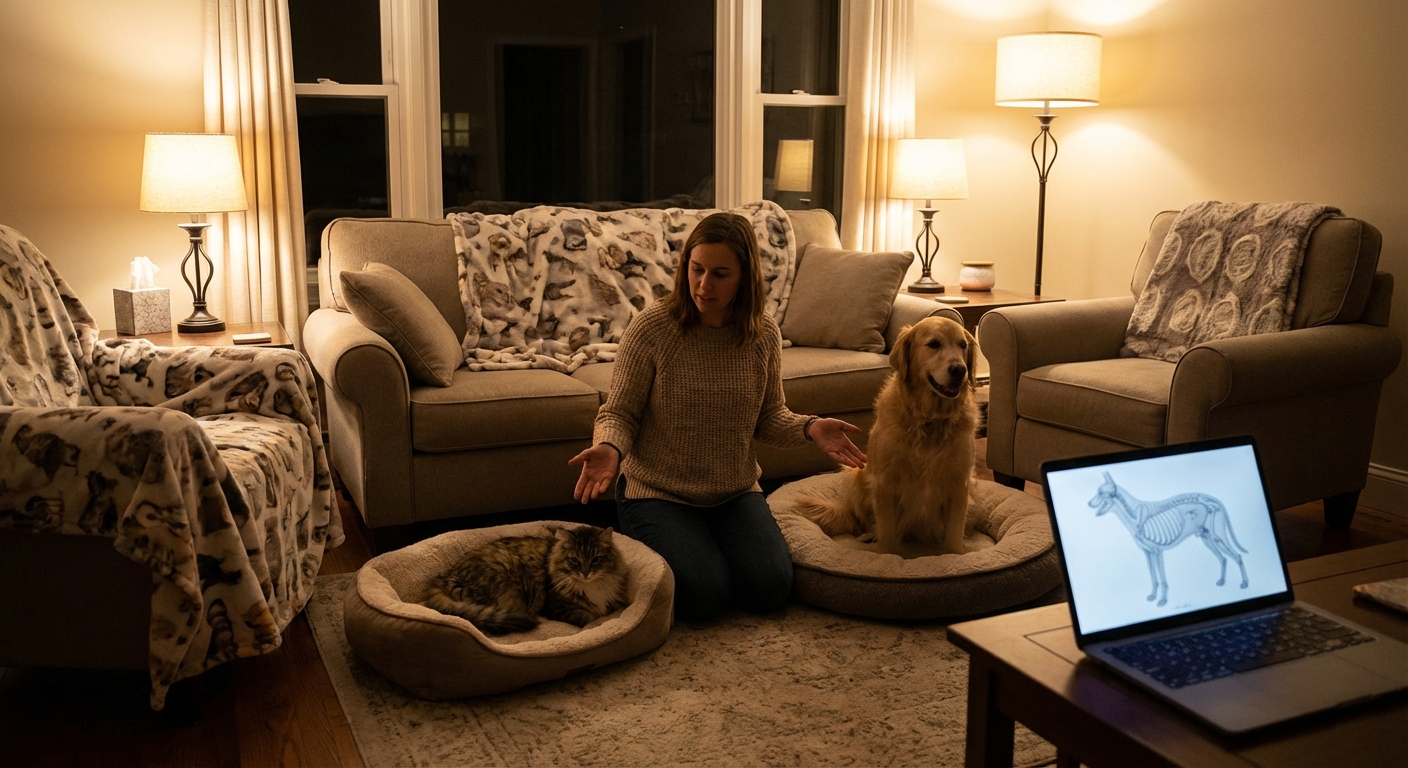
The Living Room: Rest, Observation, and Together Time
This is often the heart of the household—the place where your pet watches your routines and joins the family.
Essential Products
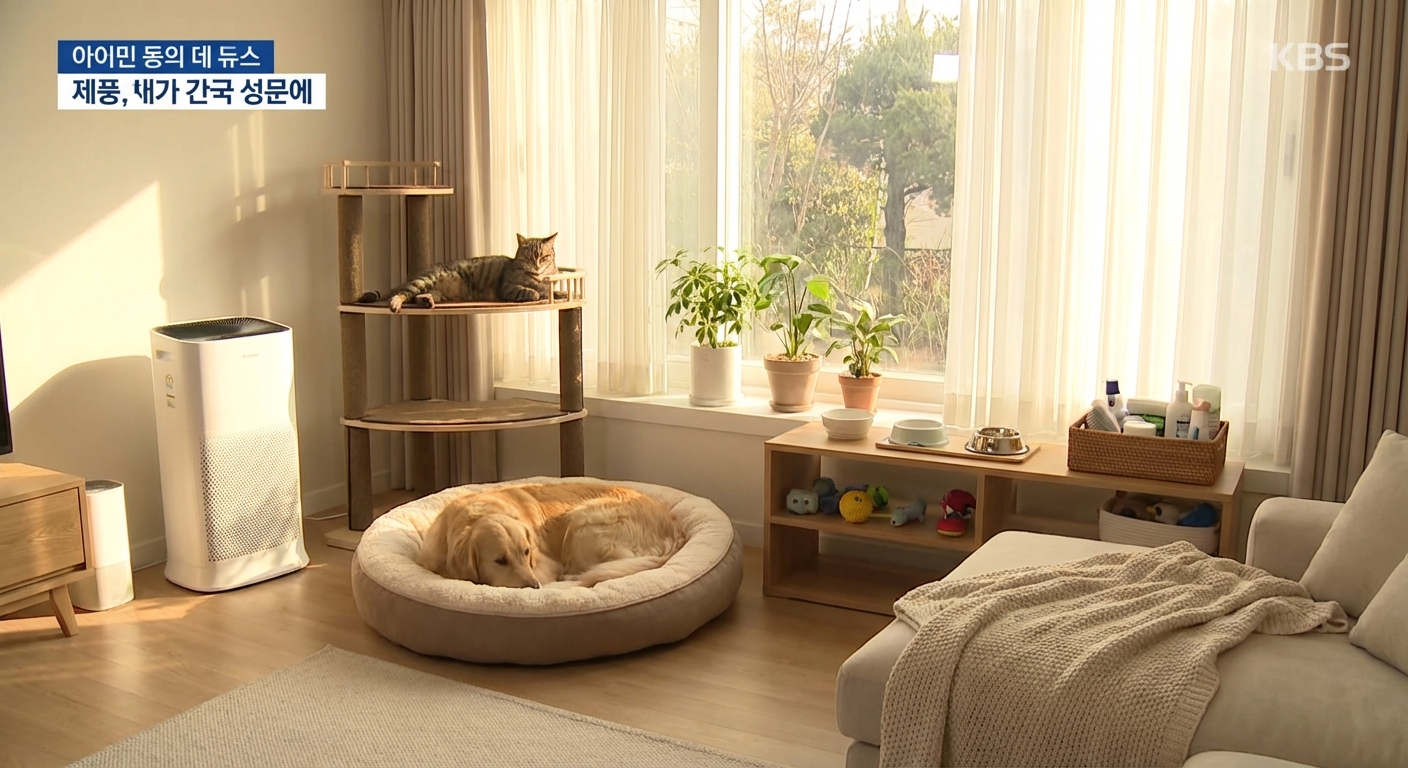
Supportive Bed or Mat
- Place it near where you sit, not isolated. - Choose orthopedic support for seniors; washable covers for all.
Calm-Corner Rest Spot
- A second, quieter bed, crate, or covered hideaway in a low-traffic corner. - For cats and small animals, consider a covered cave bed or box with a soft blanket.
Gentle Grooming Tools
- Soft brushes or combs chosen for coat type. - Nail trimmers or grinders to maintain comfortable, safe nails.
Science-Backed Tips
- Joint health: Soft but supportive surfaces reduce joint stress, especially on hardwood or tile floors.
- Stress reduction: Animals offered choice (two resting spots with different qualities) show more relaxed body language than those with only one.
Heartwarming Touches
- Keep a small grooming basket nearby. Short, positive grooming sessions in the living room build trust and allow for regular health checks (lumps, mats, sore spots).
- Use a soft blanket that smells like you on one of their beds to deepen the sense of security.
The Kitchen: Food, Water, and Routine
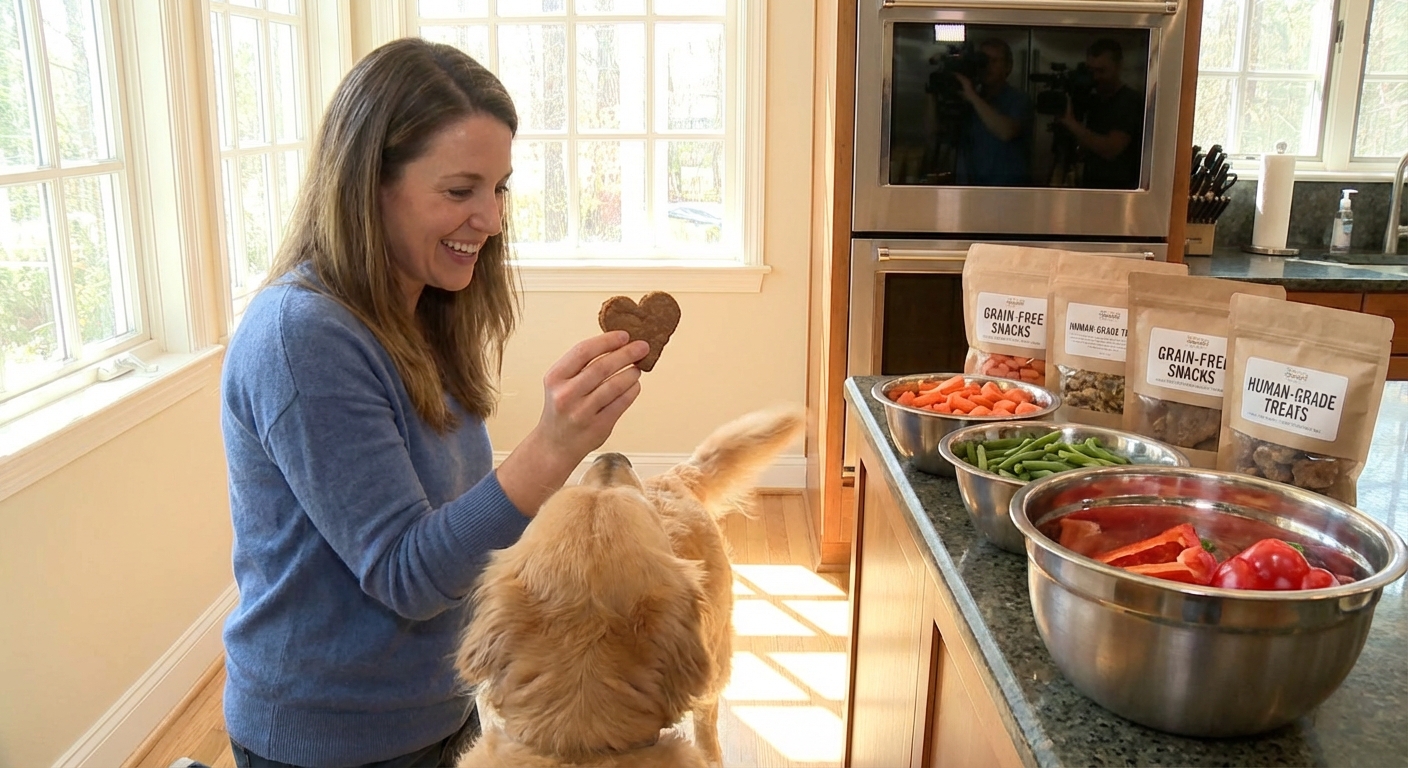
Meals aren’t just nutrition—they’re daily rituals that create a sense of predictability and comfort.
Essential Products
Right-Sized Food and Water Bowls
- Stainless steel or heavy ceramic are easiest to clean and resist bacteria. - Shallow, wide bowls for cats to avoid whisker stress.
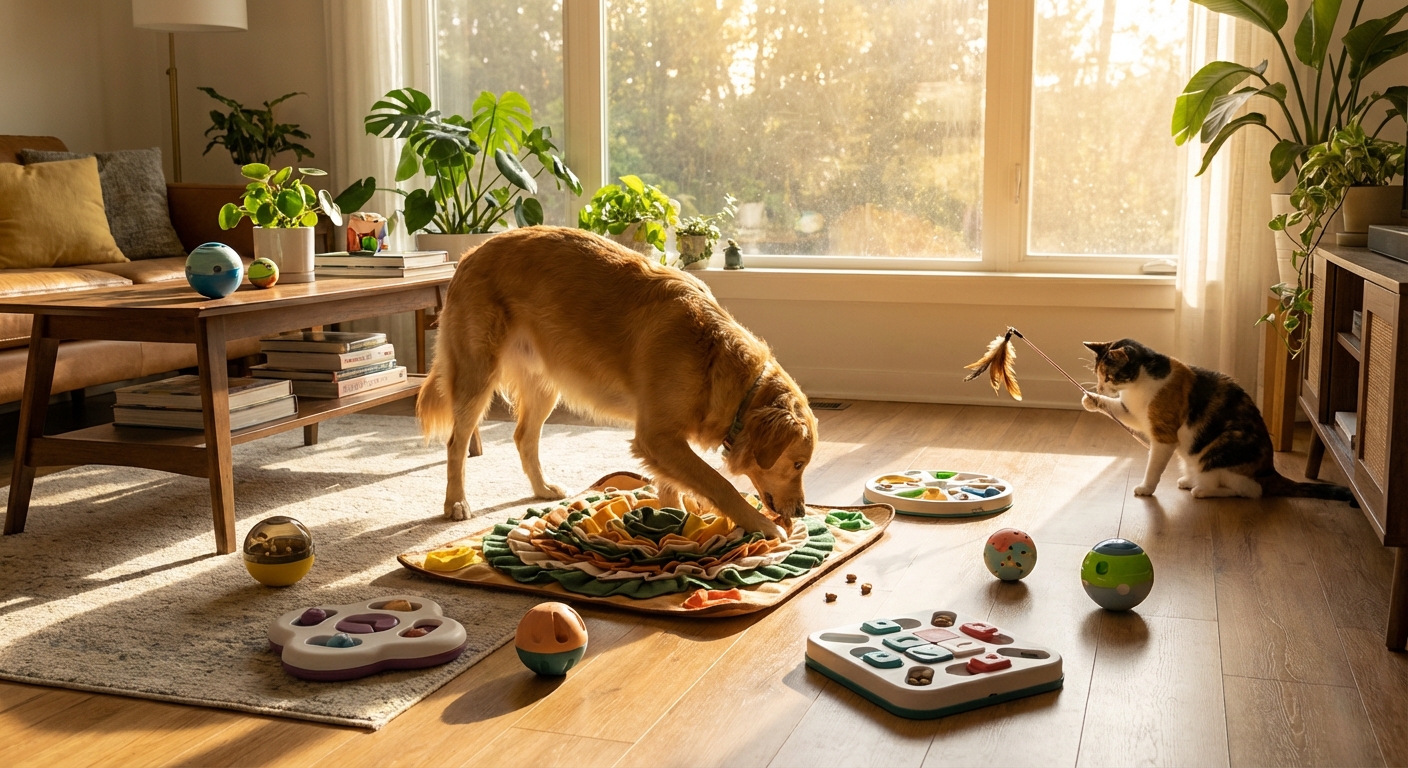
Slow Feeder or Puzzle Feeder
- For fast-eating dogs and some cats. - Helps prevent gulping, vomiting, and—especially in large-breed dogs—may reduce risk factors for bloat.
Elevated Feeder (When Appropriate)
- Can help some large or arthritic dogs eat more comfortably. - Discuss with your vet, as research on elevated feeders and bloat is mixed.
Fresh Water Solutions
- Cat and small-dog water fountains can encourage increased drinking. - Multiple water stations in multi-pet homes reduce crowding and social stress.
Step-by-Step Mealtime Upgrade
- Check bowl cleanliness. Wash food bowls after every meal, water bowls at least daily.
- Assess feeding location. Place bowls away from loud appliances and heavy foot traffic.
- Add mental enrichment. Swap one bowl meal per day for a puzzle feeder or scatter feeding.
- Monitor body condition. Use treats and food measuring cups consciously to maintain a healthy weight.
Heartwarming Tip
Use mealtimes as mini check-ins: speak softly, observe posture and appetite, and gently stroke if your pet enjoys it. Consistent, calm mealtimes help sensitive animals feel secure.
The Bedroom: Nighttime Security and Deep Rest
Many pets choose to sleep in or near their humans’ bedrooms. Even if you prefer not to share your bed, you can create comforting options.
Essential Products
Nighttime Bed or Crate
- Firm yet cushioned bed; for crate-trained pets, a well-fitted crate pad. - For anxious pets, a covered crate can function as a den.
Soft, Stable Nightlight
- Helps older pets with vision issues navigate safely.
Calming Aids (if needed)
- Species-appropriate pheromone diffusers (e.g., dog or cat calming diffusers). - Weighted or snug-fitting calming wraps for some dogs (use carefully and introduce slowly).
Science-Backed Tips
- Predictable bedtime routines (last potty break, small treat, gentle words) signal the nervous system that it’s time to power down.
- Proximity to you can reduce separation-related anxiety, even if the pet sleeps on their own bed.
Heartwarming Practices
- End each day with a small, soothing ritual: a soft phrase you always use, a gentle ear rub, or placing a hand on their side for a moment if they enjoy touch.
- For senior pets, keep water and a low-sided bed close so they don’t have to travel far at night.
The Bathroom or Utility Room: Grooming and Health Maintenance
This space often houses litter boxes, cleaning supplies, and grooming tools.
Essential Products
Thoughtful Litter Box Setup (for Cats)
- One box per cat plus one extra in multi-cat homes. - Large, open boxes; many cats prefer uncovered options. - Unscented, fine-grain clumping litter.
Organized Grooming Kit
- Species- and coat-appropriate brushes/combs. - Pet-safe shampoo (pH balanced for dogs or cats; small pets have specific needs). - Ear cleaner and cotton pads (vet-recommended).
Pet-Safe Cleaning Products
- Avoid strong ammonia-based cleaners near litter boxes; they can deter use. - Choose enzymatic cleaners for accidents to fully remove odor.
Step-by-Step Litter Area Optimization
- Place litter boxes away from loud appliances and sudden noises.
- Ensure easy access—no steep stairs or tight corners, especially for seniors.
- Scoop at least once daily; fully change litter regularly.
- Offer choices: different litter textures or box styles if your cat is fussy or has begun avoiding the box.
Heartwarming Tip
When grooming, go slow and keep sessions very short at first. Pair each moment with gentle praise and occasional tiny treats. Your calm voice can turn grooming from a chore into a shared care ritual.
Hallways and Entryways: Transitions and Safety
These are liminal spaces—places of leaving and returning, often charged with excitement or stress.
Essential Products
Leash and Harness Station
- Hooks or baskets for leashes, harnesses, and waste bags. - A dedicated mat where your dog learns to sit for gear to go on and off.
Pet Gate or Barrier
- Keeps pets safely away from front doors if they’re prone to dashing.
Paw Care Station
- Towel or gentle paw wipes for after walks.
Step-by-Step Calm Exit Routine
- Ask your dog to sit on the “gear mat.”
- Gently harness and leash them while praising calm behavior.
- Open the door only when they’re sitting or standing politely.
- Release them with a cue (“okay”) and step out together.
This consistent routine, supported by a simple mat and gear station, turns chaotic exits into peaceful transitions.
The “Retreat Room”: Safe Rooms for Sensitive Pets
For nervous animals, newly adopted pets, or during stressful events (guests, renovations, storms), a retreat room is invaluable.
Essential Products
- Comfortable bed or hideout
- Fresh water and, if appropriate, a litter box or indoor potty solution
- A few familiar toys or chew items
- Soft background sound (white noise machine or calm music)
- Pheromone diffuser if helpful for your species
Creating the Retreat
- Choose a quiet room away from main traffic.
- Keep lighting soft—not too bright.
- Teach your pet from day one that this room is always safe and off-limits to rough play or forced interactions.
During storms, fireworks, or parties, calmly escort your pet to this space with treats and soothing words. Over time, they’ll understand it as a sanctuary.
Simple Wellness Product Checklist by Room
Living Room
- Supportive bed(s)
- Gentle grooming kit
- Quiet hideout or crate
- Stainless or ceramic bowls
- Slow or puzzle feeders
- Water fountain (for cats/small dogs)
- Nighttime bed or crate setup
- Nightlight for seniors
- Optional calming aids
- Adequate litter boxes
- Pet-safe cleaning products
- Bathing and nail care tools
- Harness and leash station
- Pet gate (if needed)
- Paw care tools
- Safe bed or hide
- Water, toys, background sound
Kitchen
Bedroom
Bathroom/Utility
Hallways/Entry
Retreat Room
You don’t have to purchase everything at once. Choose one area and make one or two upgrades at a time.
Encouragement for Pet Parents Curating a Calm Home
It’s easy to underestimate how much small environmental changes matter. A bowl moved to a quieter corner, a softer bed for a bony hip, a hidden retreat for a shy cat—these choices ripple through your pet’s day in gentle, profound ways.
You are not aiming for a perfect, magazine-ready home. You’re aiming for a responsive home, one that adapts to your pet’s changing needs over time.
By looking at your rooms through your animal’s eyes and choosing products that support their body and emotions, you’re giving them something priceless: a world where comfort, safety, and love are built into every corner.
Key Takeaway
The most important thing to remember from this article is that this information can change how you think about Pet Products.