Cats find comfort in predictability. A gentle, consistent routine reduces stress, supports healthy habits, and strengthens your bond. This guide walks you through a step-by-step daily schedule that nurtures your cat’s physical and emotional health—from morning to bedtime.
Why a Daily Routine Matters for Feline Wellness
You don’t have to follow it perfectly. Think of it as a menu you can adapt to your lifestyle and your cat’s personality.
Morning: Setting the Tone for a Calm, Confident Day
Step 1: A Peaceful Wake-Up (5 minutes)
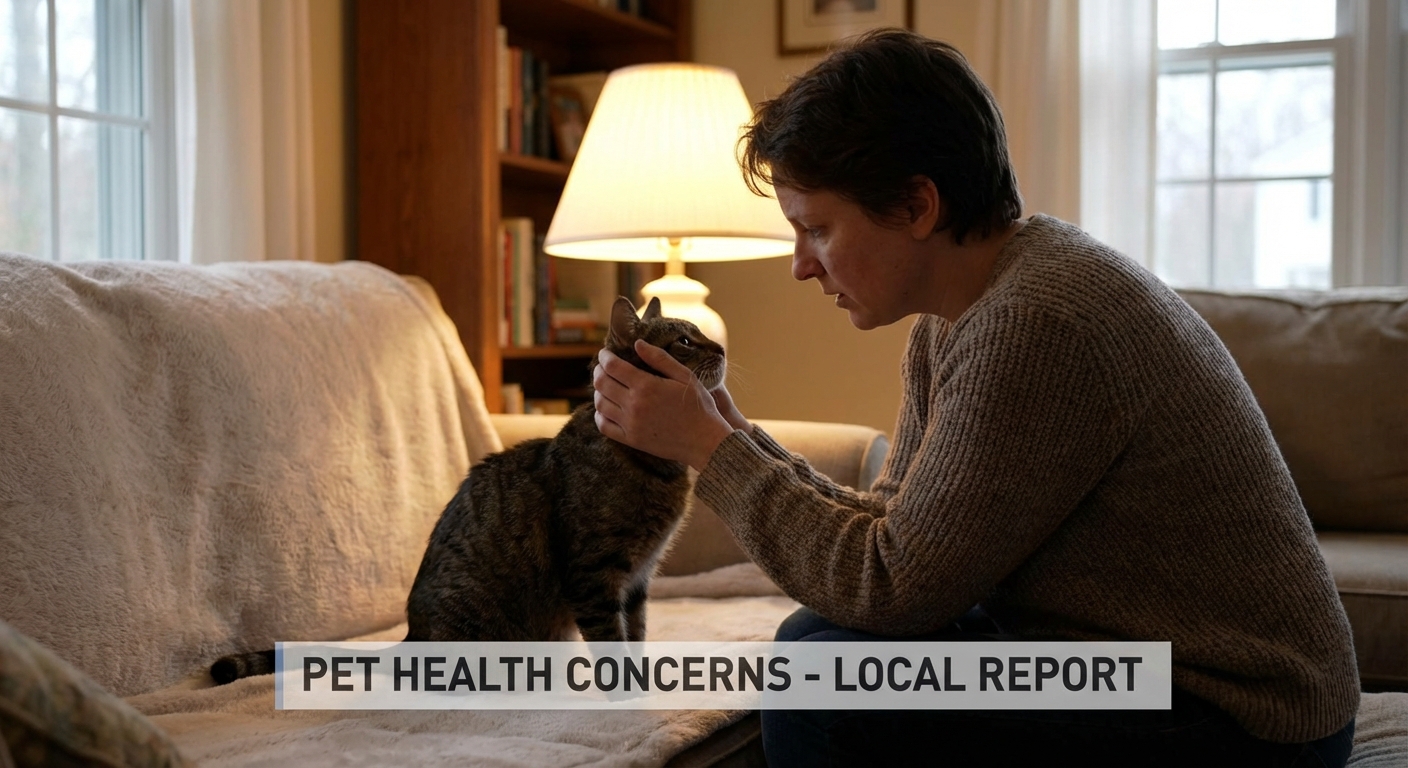
Greet your cat softly
- Use their name and a calm voice. - Offer a few gentle strokes where they like to be touched (often head, cheeks, under the chin).
Wellness Check-In
- Quickly scan: Are their eyes clear? Coat smooth? Any limping or hesitation to move? - Note their energy level compared to usual.
Over time, you’ll spot subtle changes early—one of the keys to preventive care.
Step 2: First Meal with Mindful Feeding (5–10 minutes)
Science-backed goal: mimic the “hunt–eat–groom–sleep” cycle.
How-to:
- Offer a measured portion of high-quality food (wet or wet + dry combo) appropriate for their life stage.
- If possible, serve part of breakfast in a puzzle feeder to encourage natural foraging behavior.
- Feed cats separately (different corners or rooms) to reduce stress and food guarding.
- Ensure each cat can eat at their own pace.
Tips for Multiple Cats
Mid-Morning: Environment & Enrichment Check
Step 3: Litter Box & Water Station Refresh (5 minutes)
Scoop litter boxes
- Aim for at least once daily, twice is ideal. - Quick visual check for blood, diarrhea, or unusual clumps.
Check water bowls/fountain
- Dump and refill water daily, especially with still bowls. - Wash bowls with mild, unscented soap several times a week.
Products that help:
- Large, open-top litter boxes.
- Unscented, clumping litter.
- Ceramic/stainless-steel water bowls or a cat fountain for water-loving felines.
Step 4: Sun and View Time (Optional, 5 minutes)
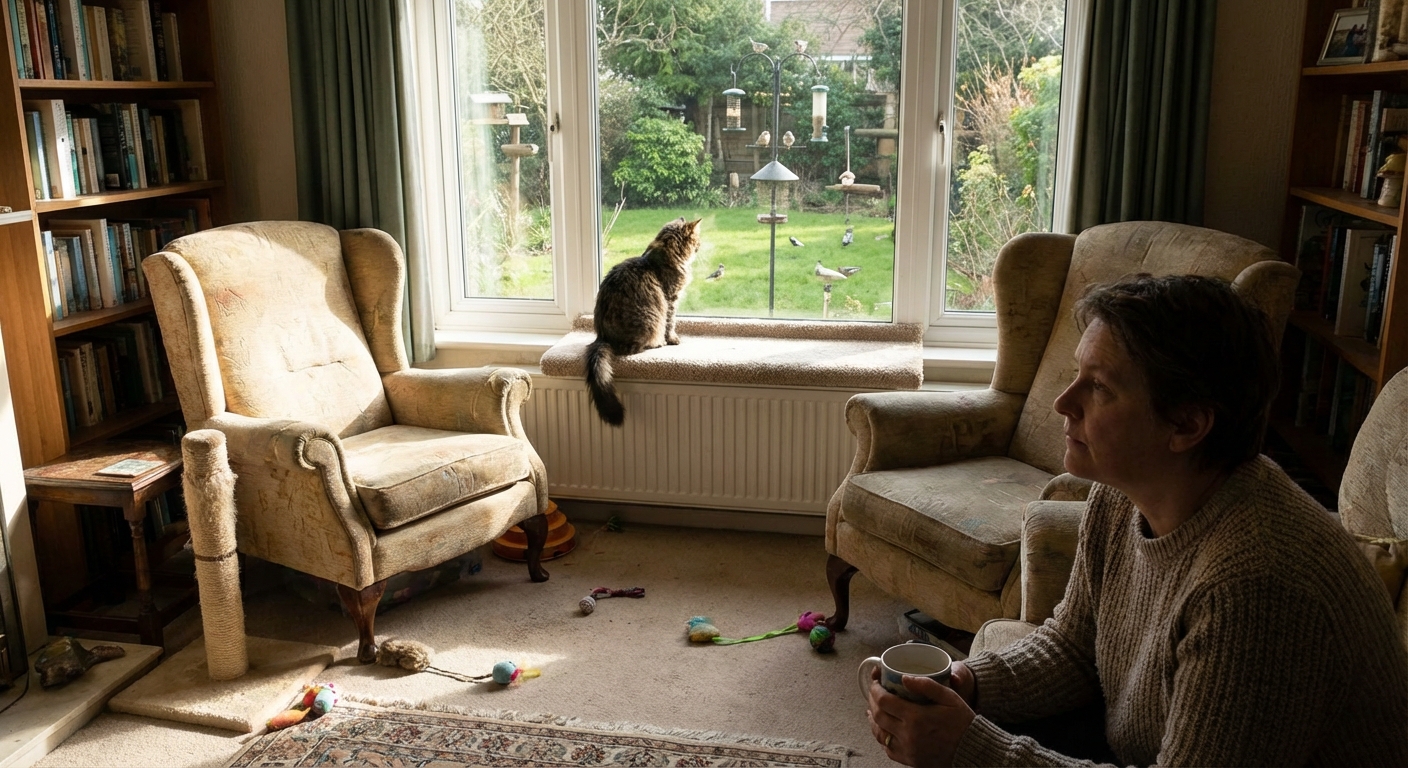
- Open curtains/blinds where it’s safe and not overheated.
- Ensure a window perch or secure cat tree is available.
Natural light exposure can help regulate sleep-wake cycles.
Midday: Gentle Mental Stimulation
Step 5: Solo Play & Foraging Opportunities (5–15 minutes)
If you’re at home:
- Hide a few low-calorie treats around a safe room.
- Rotate 2–3 toys (don’t leave all toys out all the time).
- Prepare puzzle feeders before you leave.
- Leave out one or two interactive toys (e.g., track balls, motion-activated toys) if your cat is safe unsupervised with them.
- Treat balls or rolling food puzzles.
- Cat tunnels and crinkle mats.
- Window-mounted bird feeders outside for visual stimulation.
If you’re away:
Enrichment Product Ideas:
Late Afternoon: Health & Grooming Touchpoint
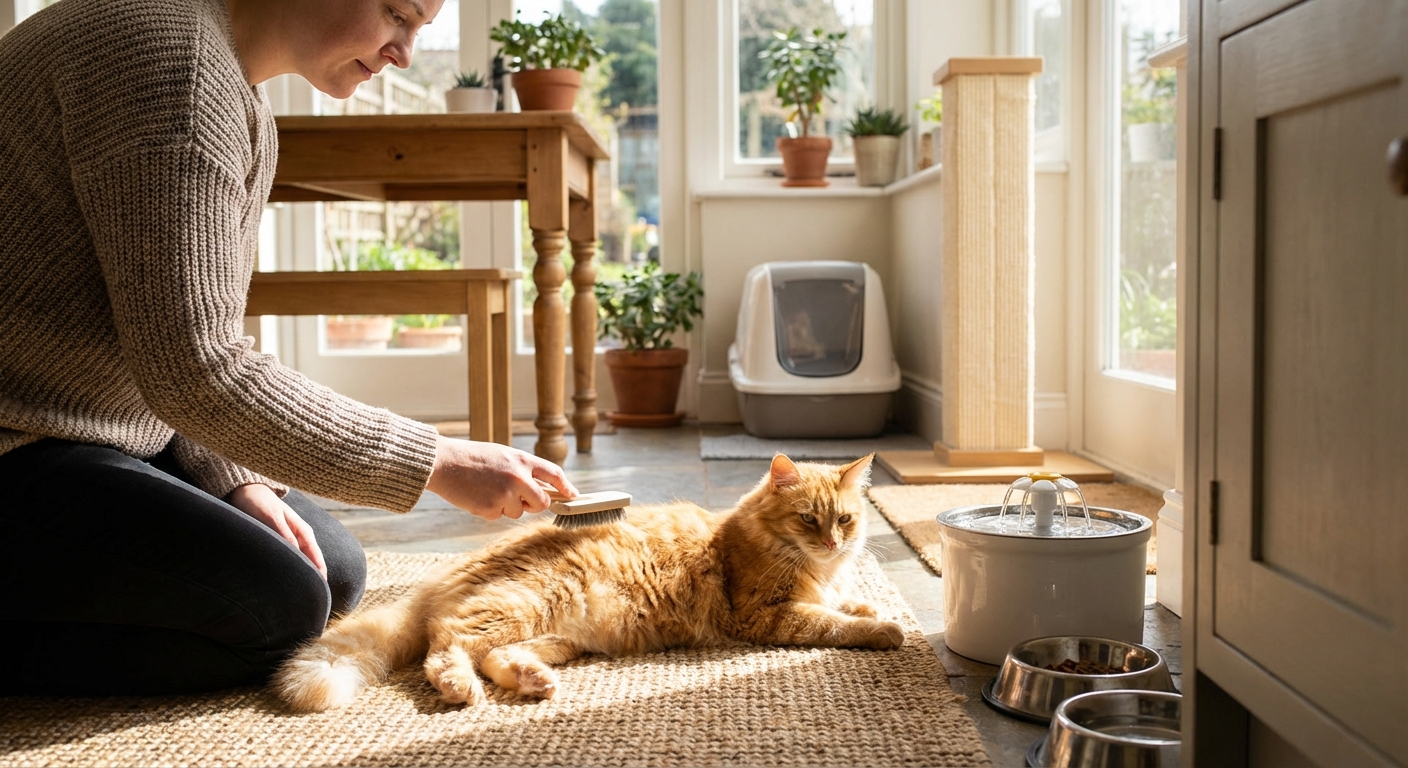
Step 6: Mini Grooming Session (5–10 minutes)
Regular grooming isn’t just for beauty; it’s a health check.
Step-by-step:
- Choose a time when your cat is relaxed.
- Use a brush or comb suited to their coat type.
- Start with short sessions (1–2 minutes) and reward with a small treat.
While grooming, gently check:
- Ears for redness or odor. - Skin for bumps, scabs, or parasites. - Nails for overgrowth.
Frequency Guide:
- Short-haired cats: a few times per week.
- Long-haired cats: many need daily brushing to prevent mats.
Optional: Tooth & Nail Care (3–5 minutes)
- Offer a dental treat approved by your vet.
- Practice touching your cat’s muzzle and gently lifting lips; eventually introduce cat-safe toothpaste.
- Clip 1–2 nails at a time if your cat is comfortable. It’s fine to spread this across several days.
Evening: Play, Bond, and Wind Down
Step 7: Interactive Play Session (10–15 minutes)
Research on feline behavior suggests that play that mimics hunting reduces stress, supports weight management, and decreases unwanted behaviors.
How to structure play:
Choose a prey-type toy
- Feather wand (bird), string or ribbon-style (snake), small plush (mouse).
Move like prey
- Quick, irregular darts and pauses. - Hide behind furniture, let your cat stalk and pounce.
Let them catch it
- End the play with successful captures to avoid frustration.
Follow with food
- Offer dinner right after play to complete the “hunt–eat” cycle.
Step 8: Second Meal (Dinner) with Calm Atmosphere
- Offer the rest of the day’s measured food.
- Keep the space quiet and low-stress.
- For cats prone to gulping, use slow feeder bowls.
Night: Comfort and Security
Step 9: Evening Wellness Scan (3–5 minutes)
Before bed, do a quick mental checklist:
- Eating & drinking: Normal or decreased/increased?
- Litter box: Any straining, accidents, or strong odor changes?
- Behavior: Hiding, clinginess, vocalization out of character?
Jot down anything unusual so you can track patterns over several days; this is incredibly valuable information for your vet.
Step 10: Sleep Routines & Safe Spaces
- Make sure your cat has at least one quiet, cozy sleeping spot (a bed, box, or soft blanket).
- For anxious cats, consider:
- A pheromone diffuser in the main resting area.
- A consistent lights-out routine.
Some cats sleep with their humans; others prefer distance. Respect their choices while ensuring comfort.
Weekly & Monthly Wellness Habits to Layer In
Once a Week
- Weigh your cat if possible (baby scale or stepping on a scale with and without them).
- Deep-clean food and water bowls.
- Rotate toys—put some away, bring out “new” ones.
Once a Month
- Inspect your cat’s nails and trim as needed.
- Check your flea/tick/parasite prevention schedule.
- Do a more thorough check of the home environment (are perches stable, scratching posts intact?).
Building a Routine That Actually Sticks
To make this sustainable:
- Start small: Choose just 2–3 steps (e.g., morning check-in, daily scoop, evening play).
- Stack habits: Attach cat care to existing routines (brush teeth → brush cat; make coffee → refresh water bowl).
- Share responsibilities: In multi-human homes, assign specific tasks to each person.
Remember, perfection isn’t the goal. Consistency over time is what transforms these small acts into powerful wellness support for your cat.
With a gentle routine in place, your cat receives daily messages of safety, care, and love—and that emotional security is as vital to wellness as any diet or supplement.
Key Takeaway
The most important thing to remember from this article is that this information can change how you think about Cat Wellness.