Bringing a puppy home is equal parts joy and overwhelm. Those first 30 days shape your dog’s behavior, confidence, and health for years. This guide blends science-backed advice with practical, nurturing steps so you and your puppy can start strong.
Welcome Home, Little One
Week 1: Setting the Foundation
Create a Safe, Calm Environment
Puppies experience a major life change when they leave their litter. Research on early canine development shows that predictable routines and safe spaces reduce stress hormones like cortisol.
Set up a puppy-safe zone:
- A crate or pen large enough for your puppy to stand, turn, and lie down comfortably
- A washable bed or crate mat (avoid loose stuffing at first)
- A spill-proof water bowl
- 2–3 durable puppy-safe chew toys
- Crate: A wire crate with a divider (e.g., Midwest iCrate) so it can grow with your puppy
- Pen: Sturdy exercise pen (e.g., IRIS Playpen) to keep them contained but comfortable
- Bowls: Stainless steel or ceramic bowls to avoid bacteria build-up
Product recommendations (starter essentials):
Establish a Gentle Routine
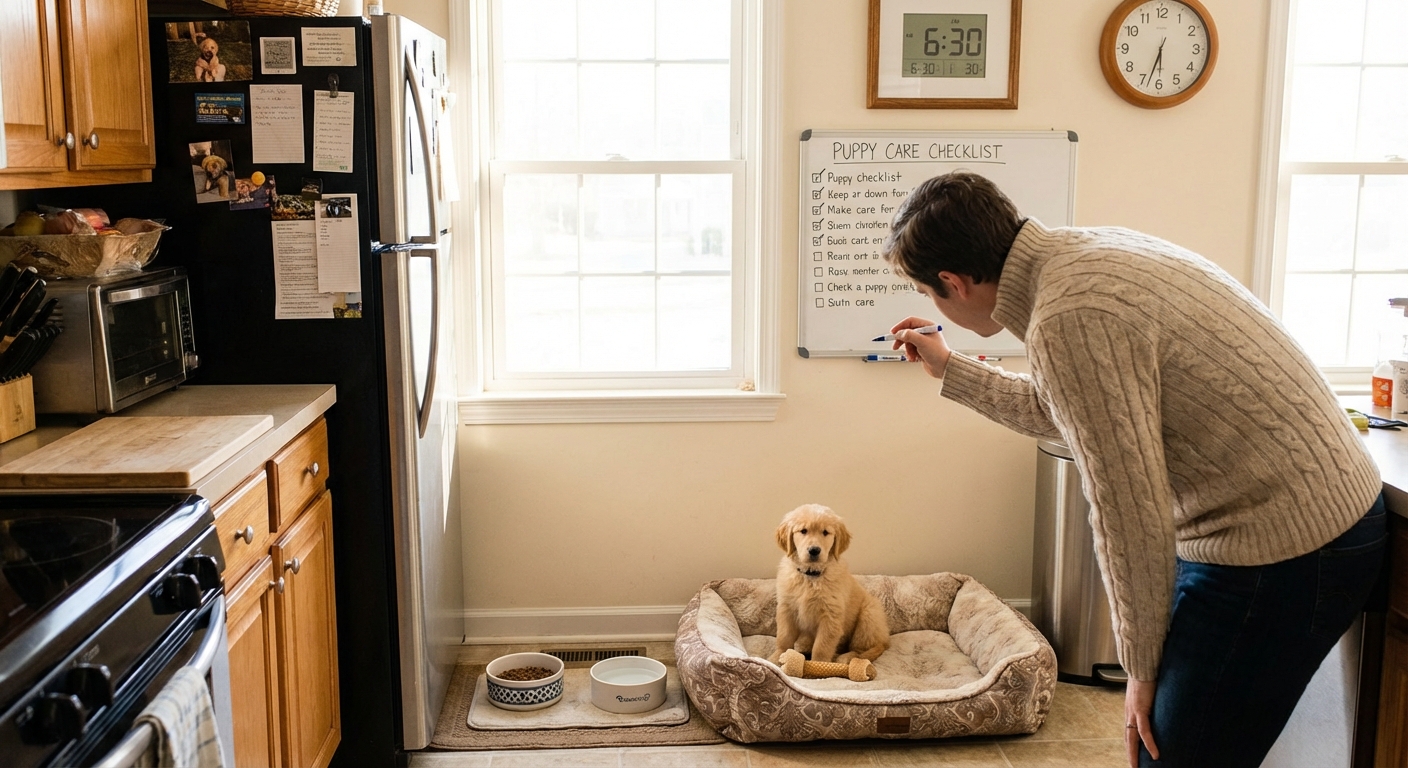
Dogs thrive on predictability. In the first week, build a simple schedule around:
- Sleep: 18–20 hours per day for young puppies
- Potty breaks: Every 1–2 hours while awake, plus after eating, drinking, playing, and naps
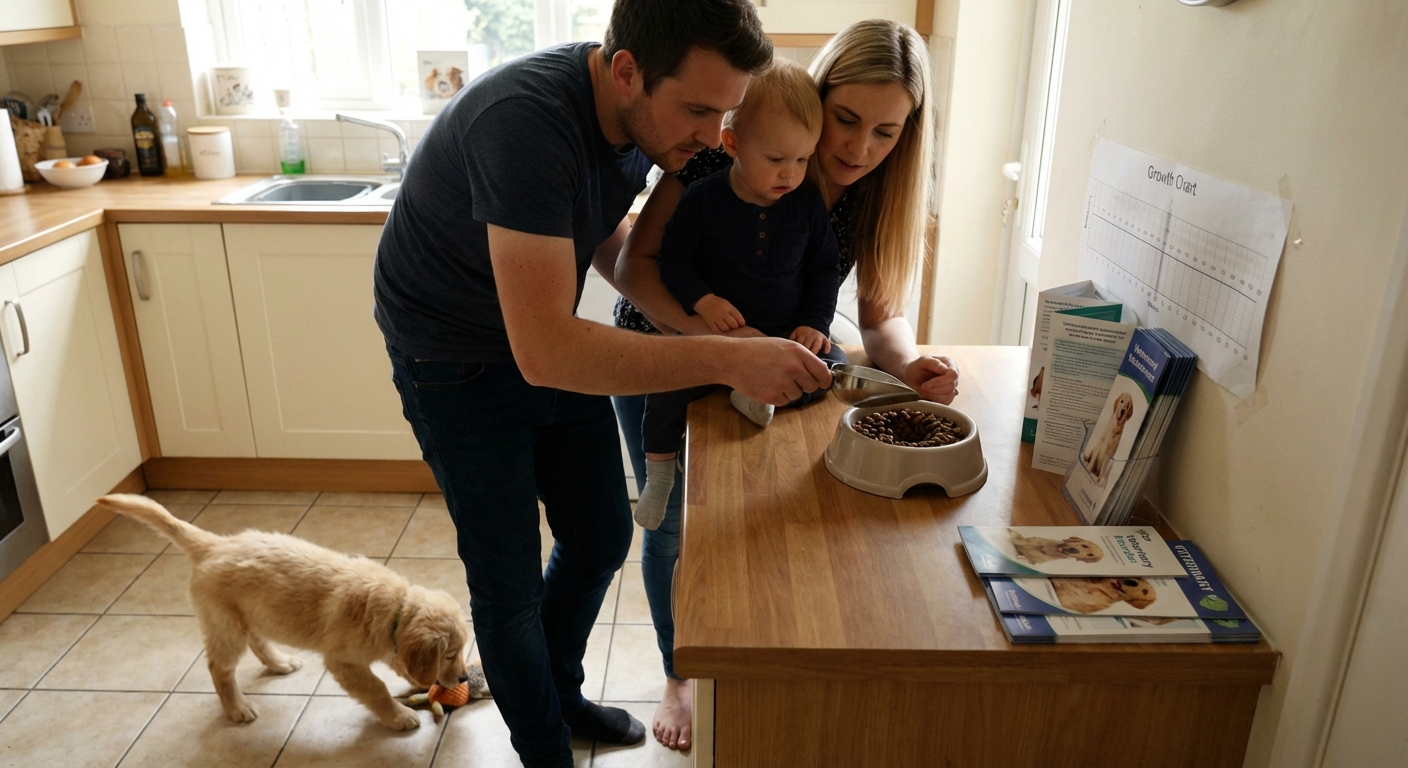
- Meals: 3–4 small meals per day
- Short play sessions: 5–10 minutes of light play, then rest
Use a calm, reassuring voice. You’re building trust long before you teach formal commands.
Potty Training: Step-by-Step
House training is one of the biggest early challenges. Consistency and timing matter more than punishment.
Step 1: Choose a Potty Spot
Pick a specific outdoor area. The scent will cue your puppy to go again.
Step 2: Follow a Potty Schedule
Take your puppy out:
- Immediately after waking
- 5–10 minutes after eating or drinking
- After play sessions
- Before bed
Stay outside for 5–10 minutes. If your puppy doesn’t go, bring them in, supervise closely, and try again in 10–15 minutes.
Step 3: Reward Immediately
The science of operant conditioning tells us that rewards must come within 1–2 seconds of the behavior to be clearly associated.
When your puppy finishes:
- Mark with a happy phrase like “Yes!” or “Good potty!”
- Give a small, high-value treat
- Offer brief praise and affection
Step 4: Prevent Accidents Indoors
- Keep your puppy on a leash near you or in a safe pen
- Block off carpeted areas initially
- If you catch them mid-accident, calmly interrupt (“Outside!”) and take them out immediately—no yelling or punishment
Clean accidents with an enzymatic cleaner to remove odor cues that might encourage repeat accidents.
Crate Training with Compassion
Crate training, when done correctly, taps into a dog’s natural denning instinct and provides a secure resting space.
Step 1: Make the Crate Inviting
- Place it in a low-traffic, family area
- Add a soft blanket or crate mat
- Leave the door open at first
Drop treats inside the crate and feed some meals in the crate so your puppy associates it with good things.
Step 2: Short, Positive Sessions
Day 1–3:
- Encourage your puppy to go in with a cue like “Crate” or “Bed”
- Close the door for 1–5 minutes while you stay nearby
- Gradually increase duration
- Wait for a brief pause in sound, then calmly let them out
- Avoid letting them out while they are crying, which can reinforce the behavior
If your puppy whines:
Step 3: Nighttime Routines
Keep the crate in your bedroom or nearby. This lessens anxiety and allows you to hear nighttime potty cues. Many puppies need 1–2 nighttime potty breaks in the first weeks.
Nutrition: Feeding for Healthy Growth
Puppies grow rapidly; their nutritional needs differ from adult dogs.
What to Look for in Puppy Food
Choose a food that is:
- Labeled “Complete and Balanced” for growth by AAFCO or your country’s equivalent
- Formulated for your puppy’s size category (small, medium, large breed)
Large-breed puppies especially need careful calcium and energy balance to prevent skeletal problems.
Recommended categories:
- For small/medium breeds: AAFCO-approved puppy kibble or quality wet food
- For large breeds: Large-breed puppy formulas from reputable brands like Purina Pro Plan, Royal Canin, Hill’s Science Diet
Feeding Schedule
- 8–12 weeks: 3–4 meals/day
- 3–6 months: 3 meals/day
- 6–12 months: 2–3 meals/day
Measure food according to the bag’s guidelines, then adjust based on your vet’s input and your puppy’s body condition.
Socialization: The Critical Window
Research shows a key socialization window between 3–14 weeks where puppies are especially receptive to new experiences. Positive exposure in this period reduces fear and reactivity later.
Safe Socialization Before Full Vaccination
Work with your vet, but many agree that the risk of poor socialization can outweigh disease risk if you’re careful.
You can:
- Carry your puppy in your arms to see new environments
- Invite healthy, vaccinated dogs from friends to interact in your home or yard
- Expose them to different sounds (traffic, vacuum, doorbells) at low volume
- Introduce varied surfaces: grass, concrete, carpet, tile
Always pair new experiences with treats, praise, and the ability to retreat if overwhelmed.
Basic Training: Start with the Essentials
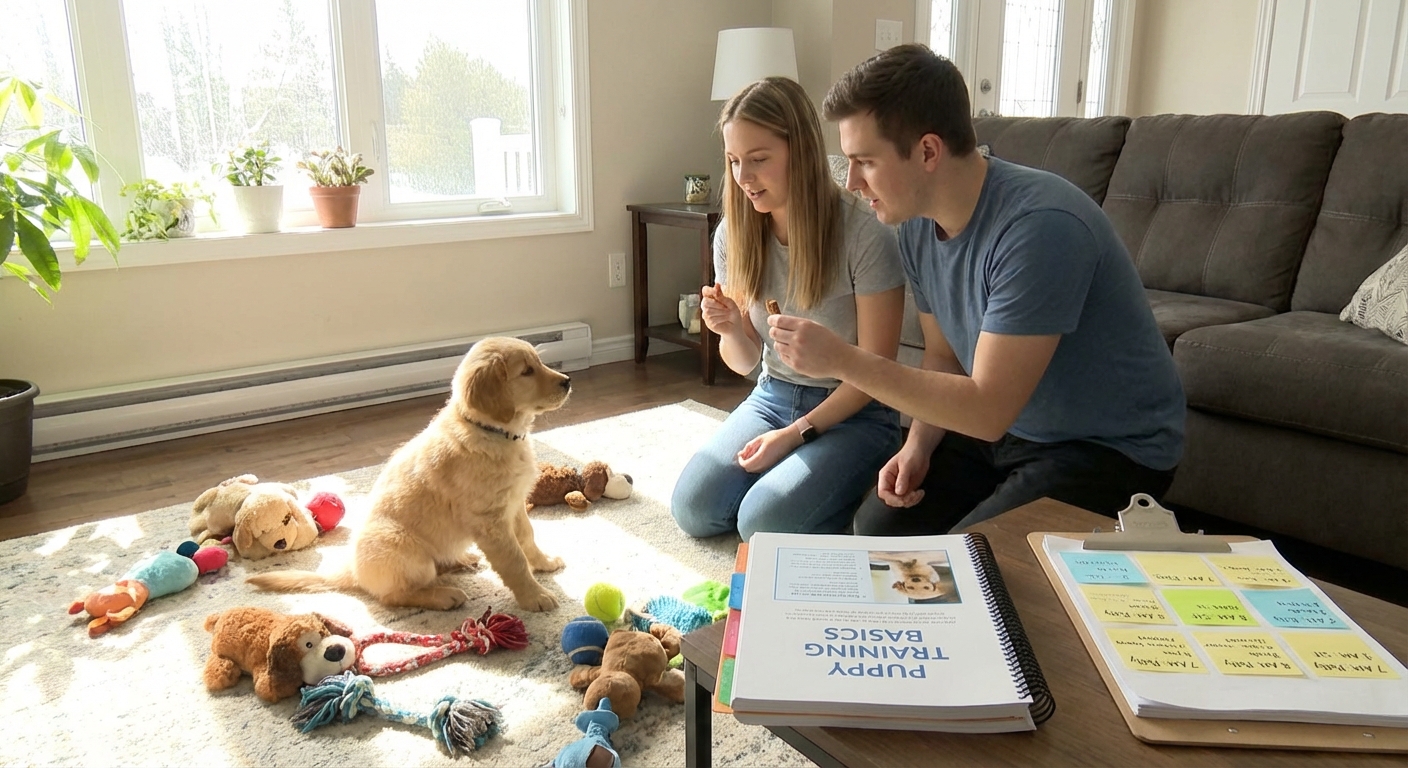
Short, fun training sessions build communication and confidence.
Day 1–30 Training Priorities
Name recognition
- Say their name and when they look at you, mark with “Yes!” and reward.
Sit
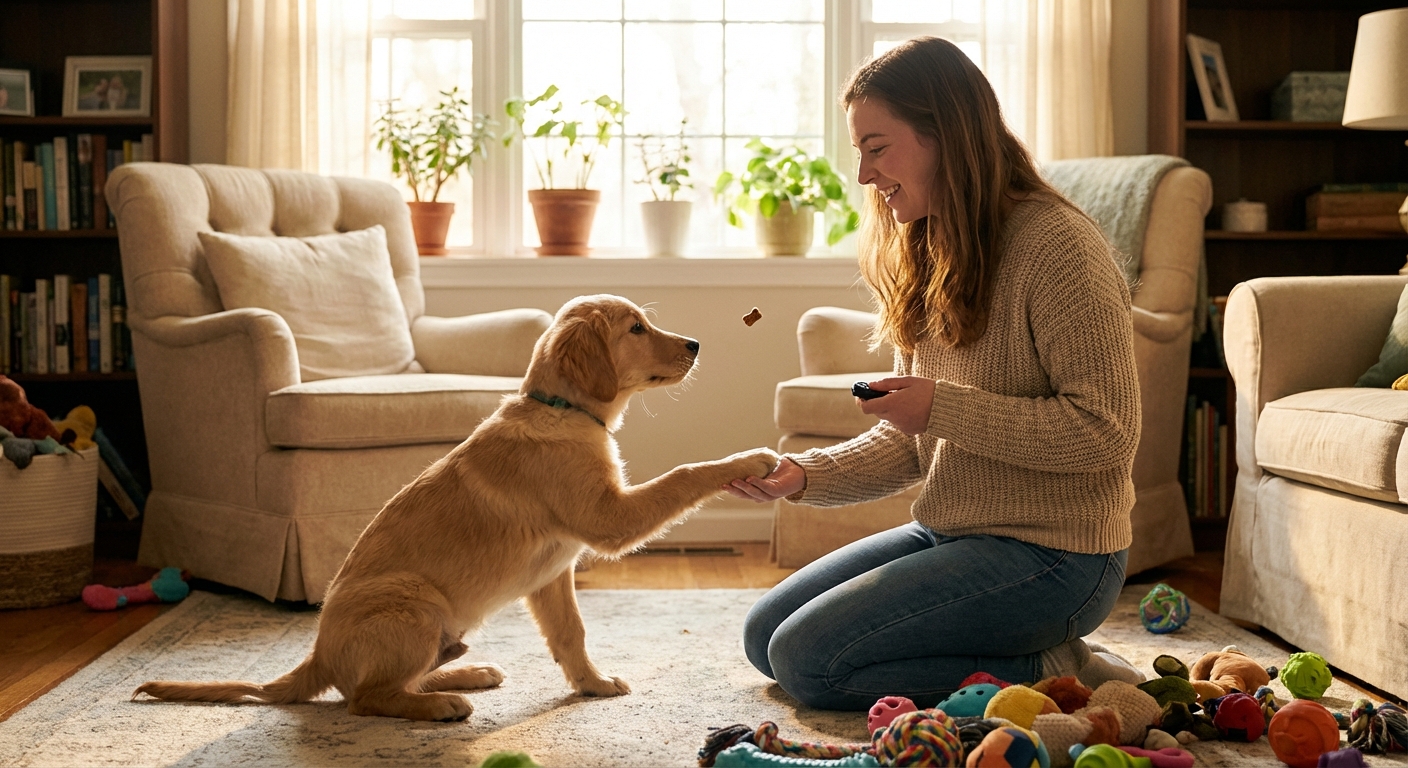
- Lure the head up with a treat; when the butt hits the ground, mark and reward.
Come (Recall)
- At home, kneel and say “Come!” in a cheerful voice. - Reward generously when they reach you.
Handling practice (vital for vet visits)
- Gently touch paws, ears, tail while feeding tiny treats.
Keep sessions 3–5 minutes, 2–3 times per day.
Health: Vet Visits and Preventive Care
First Vet Visit Checklist
Schedule within the first week home. Ask about:
- Vaccination schedule
- Deworming
- Flea/tick and heartworm prevention
- Spay/neuter timing
- Any records from the breeder/shelter
- A list of questions or concerns
Bring:
Watch for Red Flags
Contact your vet if you see:
- Persistent diarrhea or vomiting
- Lethargy, loss of appetite
- Labored breathing or coughing
- Swollen belly, pale gums
Early intervention is often easier and more successful.
Heartwarming Habits to Build Your Bond
Beyond the logistics, your puppy needs emotional security.
Try:
- Quiet cuddle time every day—no phone, just soft petting
- Gentle brushing with a puppy brush, paired with treats
- “Talk sessions”—sitting on the floor and speaking softly while your puppy explores you
These small rituals teach your puppy that you’re a safe place in a big, confusing world.
A Gentle Reminder for Pet Parents
The first month can be messy and tiring, but it’s also magical. Progress isn’t linear—there will be accidents and setbacks—but every calm, consistent response is shaping a loving companion.
Be patient with yourself as much as with your puppy. You’re both learning, and that shared learning is the heart of your bond.
Key Takeaway
The most important thing to remember from this article is that this information can change how you think about Puppy Care.