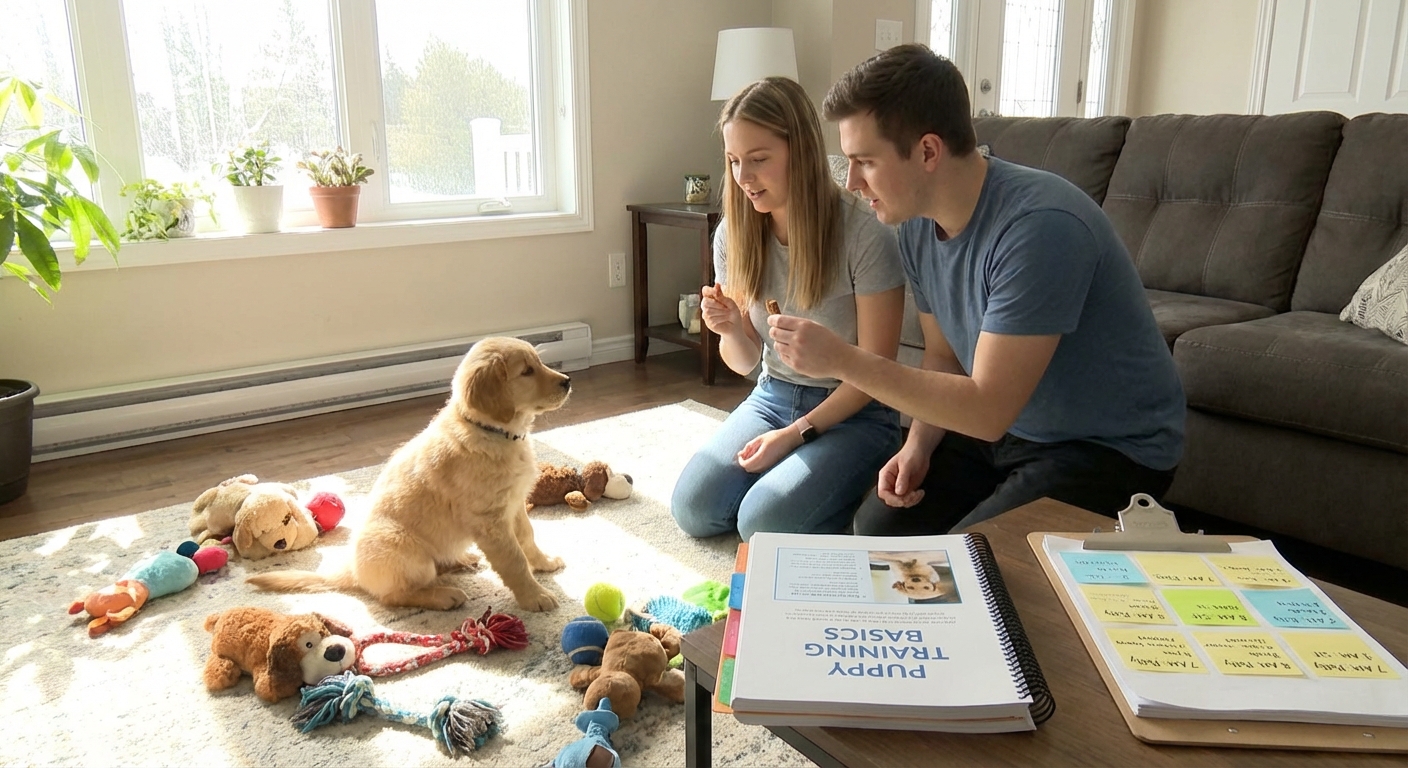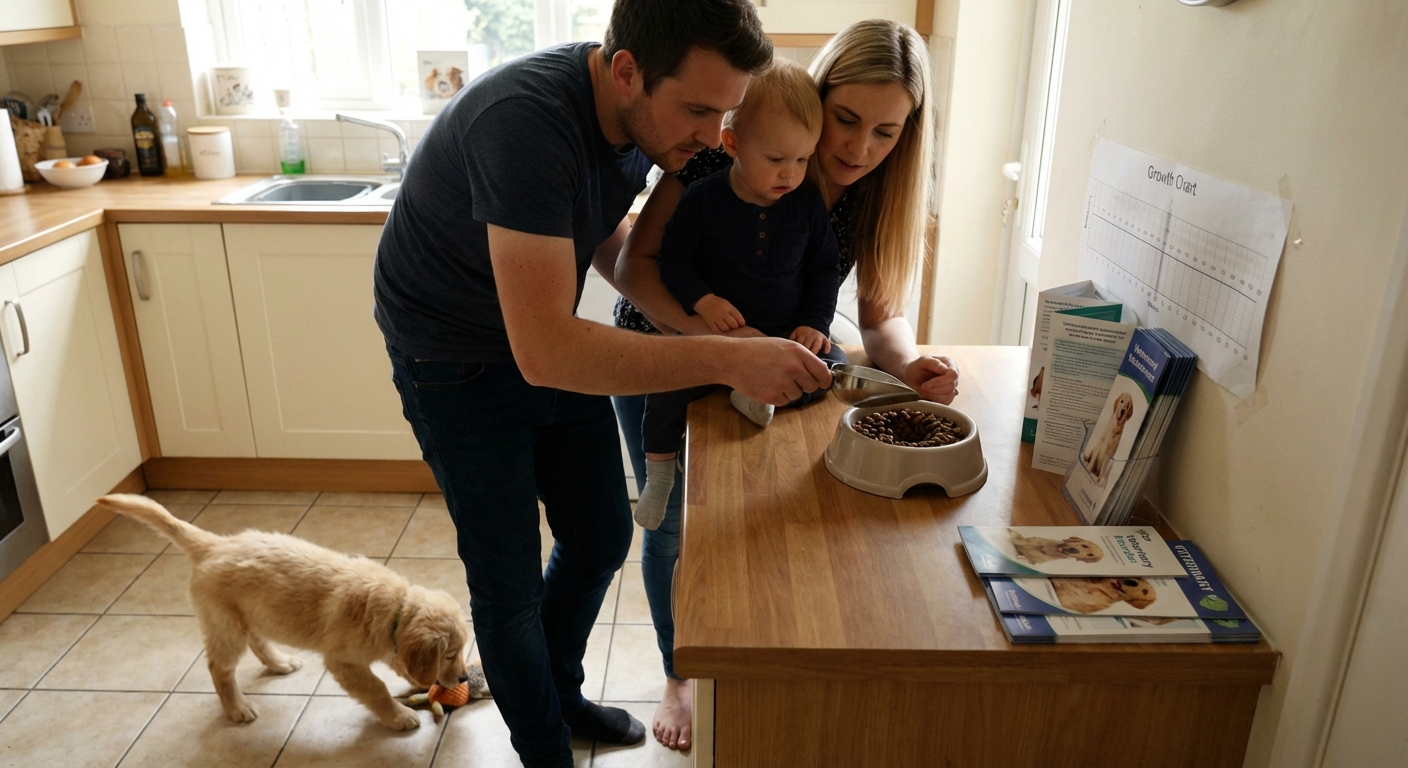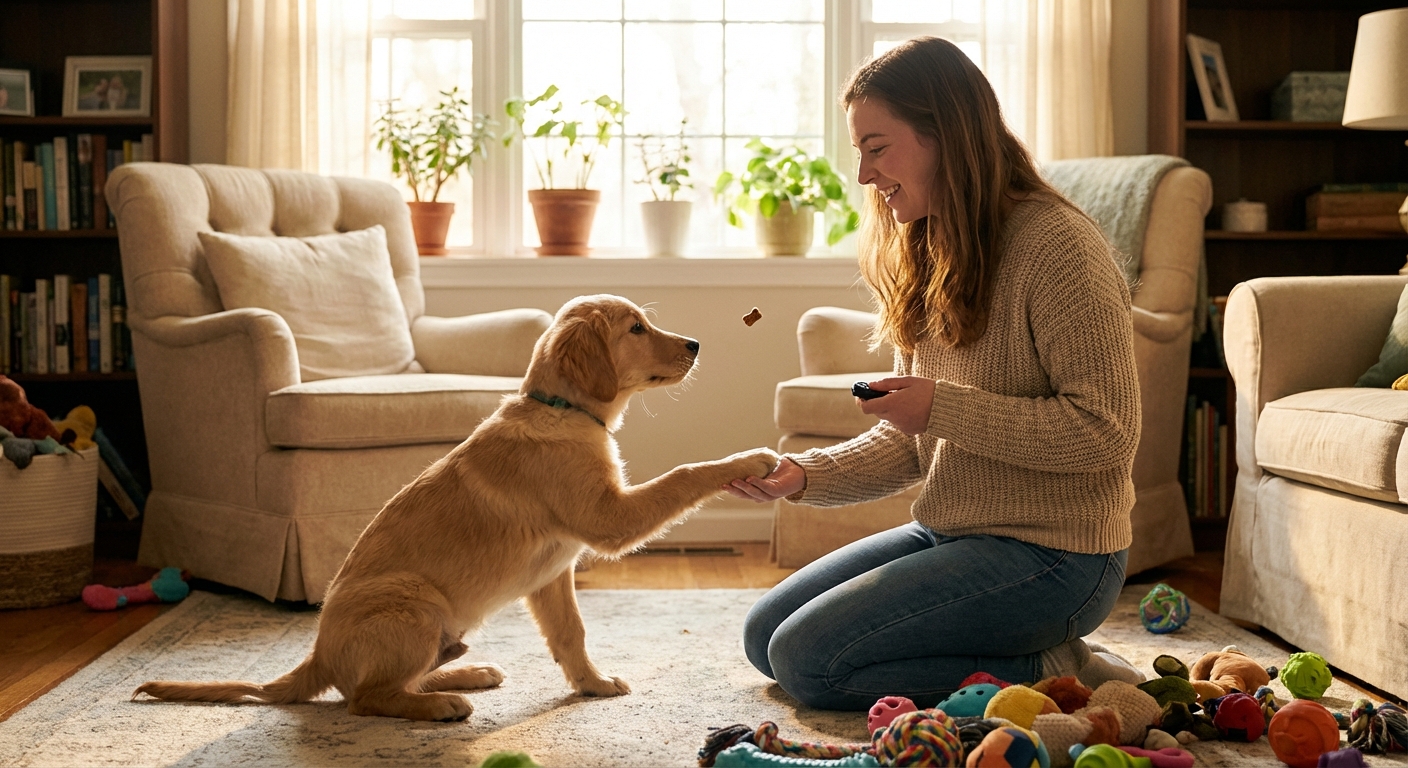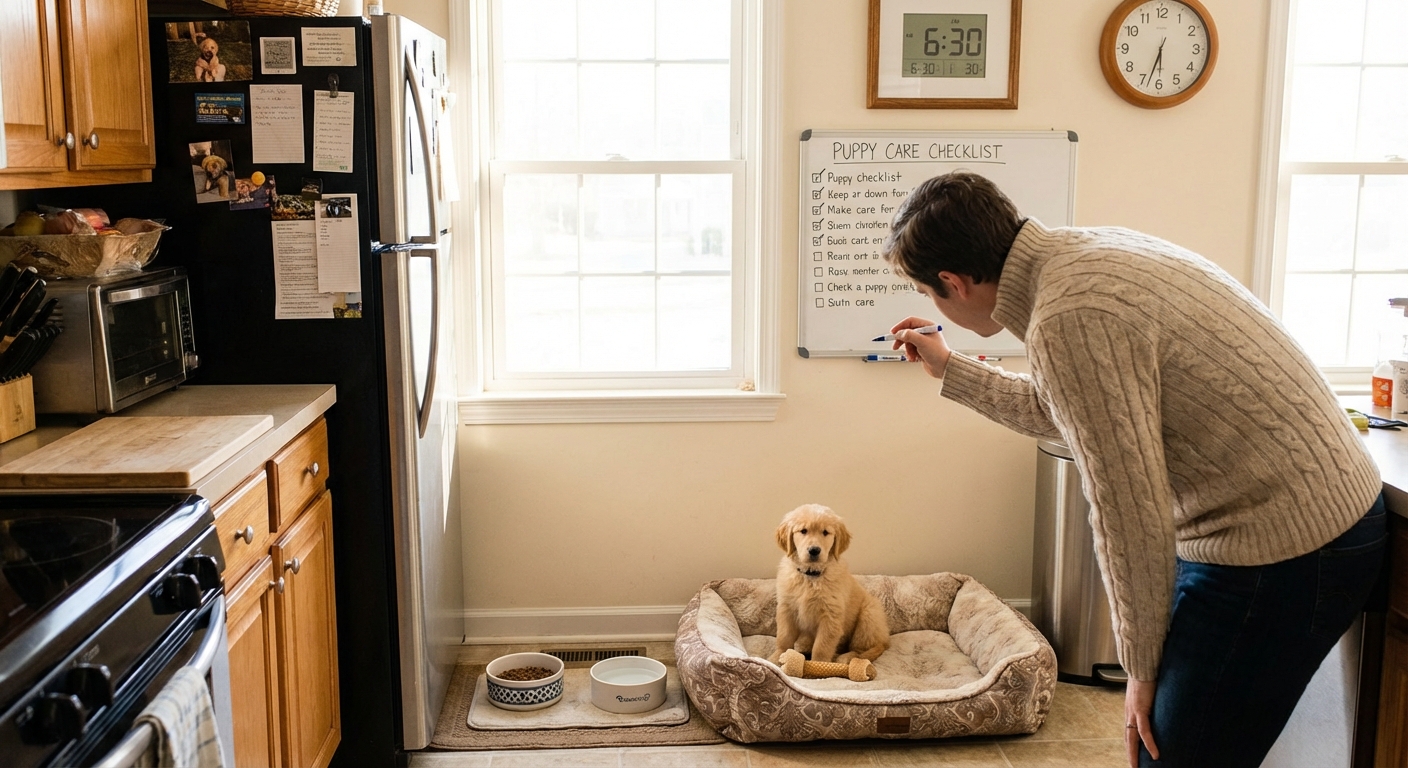
Puppies experience a world full of new sights, sounds, and sensations. A predictable routine acts like a safety net, lowering stress and helping them learn where they fit in your family.
Routines: The Secret Ingredient in Puppy Care
Behavior studies show that dogs with stable, structured days tend to be less anxious and easier to train. This guide helps you design a daily schedule that works for your household while meeting your puppy’s physical and emotional needs.
What Every Puppy Day Should Include
Regardless of your schedule, aim to include these core elements:
Sleep and quiet time
Structured meals
Regular potty breaks
Training sessions
Play and exercise
Calm bonding time
Balancing stimulation with rest is critical. Over-tired puppies are more likely to bite, zoom, and struggle with self-control.
Sample Schedules by Age
Use these as templates and adjust for your puppy’s breed, energy level, and your lifestyle.
8–12 Weeks Old: The Baby Stage
Puppies at this age are like toddlers: short bursts of activity followed by long naps.
Approximate day:
- 6:30 am – Wake, potty outside, brief praise
- 6:45 am – Breakfast, then a short play session (5–10 min)
- 7:00 am – Potty break, then into crate/pen for nap
- 9:00 am – Potty, short training (name, sit, come), gentle play
- 9:30 am – Potty, nap/crate time
- 12:00 pm – Potty, lunch, light play, simple socialization (new room, new toy)
- 12:45 pm – Potty, nap/crate time
- 3:00 pm – Potty, short walk or yard time (5–10 min), training game
- 3:30 pm – Potty, nap/crate time
- 6:00 pm – Potty, dinner, play with family
- 7:00 pm – Quiet chew time (in pen near family)
- 8:30 pm – Potty, low-key cuddle, wind-down
- 10:00 pm – Last potty, bedtime in crate (expect 1–2 nighttime potty trips)
3–6 Months Old: The School-Age Stage
Slightly longer wake times and fewer naps.
- 2–3 meals/day
- 3–5 potty trips during waking hours, plus first thing and last thing
- 2–3 short training sessions (5–10 min)
- 2–3 play/exercise blocks (10–20 min)
6–12 Months Old: The Teen Stage
More stamina but also more independence.
- 2 meals/day
- 3–4 potty breaks
- 1–2 longer exercise periods (20–40 min, age-appropriate)
- Continued daily training to channel adolescence energy
Designing Your Puppy’s Personalized Routine
Step 1: Map Your Non-Negotiables
List your fixed points:
- Work hours
- School runs
- Sleep schedule
Then fit puppy needs around these, not the other way around. Aim for consistency, even on weekends, within 1–2 hours.
Step 2: Anchor Points for Your Puppy
Pick times you can mostly keep steady for:
- Wake-up and first potty
- Meal times
- Bedtime
Puppies quickly learn these anchors and feel calmer knowing what comes next.
Potty Break Rhythm (By Day and Night)
Daytime Rule of Thumb
A rough guideline is age in months + 1 = average maximum hours they can sometimes hold it during the day (with 4–5 hours as an upper limit for most young puppies). But this is a maximum, not a goal. Frequent opportunities help prevent accidents.
Nighttime Support
At night:
- 8–12 weeks: likely 1–2 potty trips
- 3–4 months: may manage 1 trip
- 5+ months: many can sleep through the night
Use a quiet, minimal-stimulation approach for nighttime potty breaks: no play, just business and back to bed.
Balancing Activity and Rest
Chronic over-stimulation can lead to:
- Nipping and rough play
- Difficulty settling
- “Zoomies” and barking
Ideal Activity Cycles
For young puppies:
- 15–30 minutes awake (potty, eat, train, brief play)
- Followed by 1–2 hours of rest or crate time
- Ignoring cues they know
- Getting extra mouthy or wild
- Sniffing aimlessly and not engaging in play
Signs your puppy needs a nap:
Guide them to their crate or pen with a chew toy and soft words.
Building Calming Rituals
Rituals help puppies transition from excitement to relaxation.
Pre-Bedtime Routine Example
Gentle play or short walk
Calm cuddle or light brushing
Last potty break
Quiet phrase like “Bedtime” while you bring them to their crate
Special nighttime-only chew or stuffed KONG
Keep lights dim and voices soft. Over time, these cues will signal “time to sleep” to your puppy’s brain.
Incorporating Training into the Routine
You don’t need long formal sessions; weave training into daily life.
Easy Habit Pairings
- Before meals: practice sit and wait for the bowl
- Before doorways: ask for a sit or watch me
- During commercial breaks: 3–5 reps of come across the room
- After potty trips: 1–2 quick cues, then praise and play
These micro-sessions keep training upbeat and effective.
Supporting Alone Time and Independence
Teaching your puppy to be comfortable alone reduces the risk of separation anxiety.
Start Small
- While you’re home, put your puppy in their crate or pen with a chew.
- Move to another room for 1–2 minutes.
- Return calmly, no big fuss.
Gradually increase duration, mixing short and slightly longer periods.
Helpful Tools
- Food puzzles (KONG, West Paw Toppl, snuffle mats) to occupy them
- White noise or soft music to mask outside sounds
Always return before your puppy becomes frantic. The goal is to pair alone time with safety and comfort.
Example Workday Routine (For a Full-Time Worker)
If you work outside the home, planning is key.
Morning:
- 6:00 am – Wake, potty, breakfast
- 6:30 am – Short walk/play, quick training
- 7:00 am – Potty, then crate/pen time with safe toys
Midday:
Arrange one of the following:
- Trusted dog walker or pet sitter
- Neighbor/family check-in
- Doggy daycare (for vaccinated, social puppies, 1–3 times per week)
- Potty break
- Short play/interaction
- Small snack if appropriate
- Potty as soon as you return
- Dinner and structured play/training
- Calm wind-down routine
They should provide:
Evening:
Even if your time feels limited, quality and consistency matter more than quantity. Ten focused minutes of connection beats an hour of distracted half-attention.
Gentle Reminders for You
- Your routine will evolve as your puppy grows—review it every 4–6 weeks.
- There will be off days: teething, growth spurts, and fear periods can temporarily disrupt schedules.
- Aim for progress, not perfection.
By offering your puppy a predictable, thoughtfully designed day, you’re not just preventing accidents or chaos—you’re giving them the emotional stability they need to grow into a calm, confident companion.
Key Takeaway
The most important thing to remember from this article is that this information can change how you think about Puppy Care.