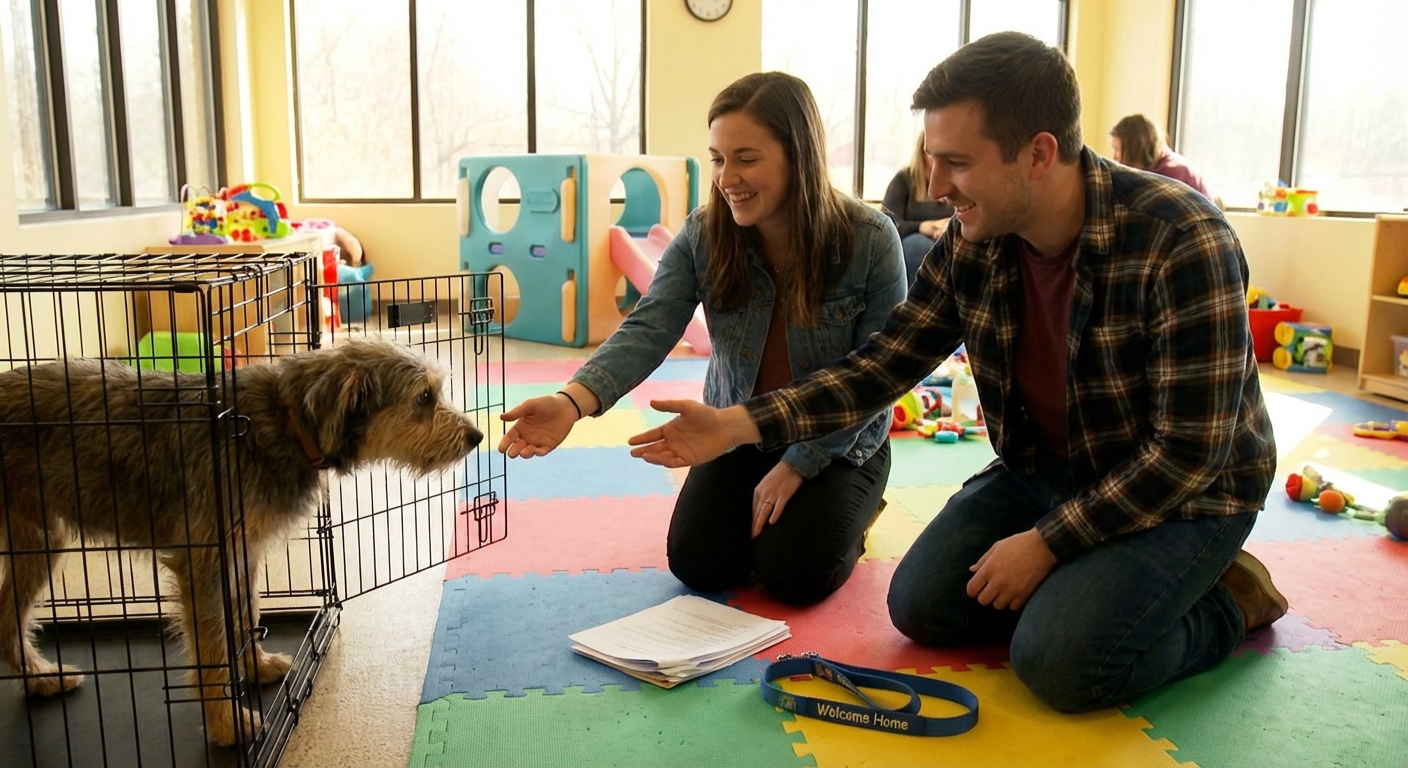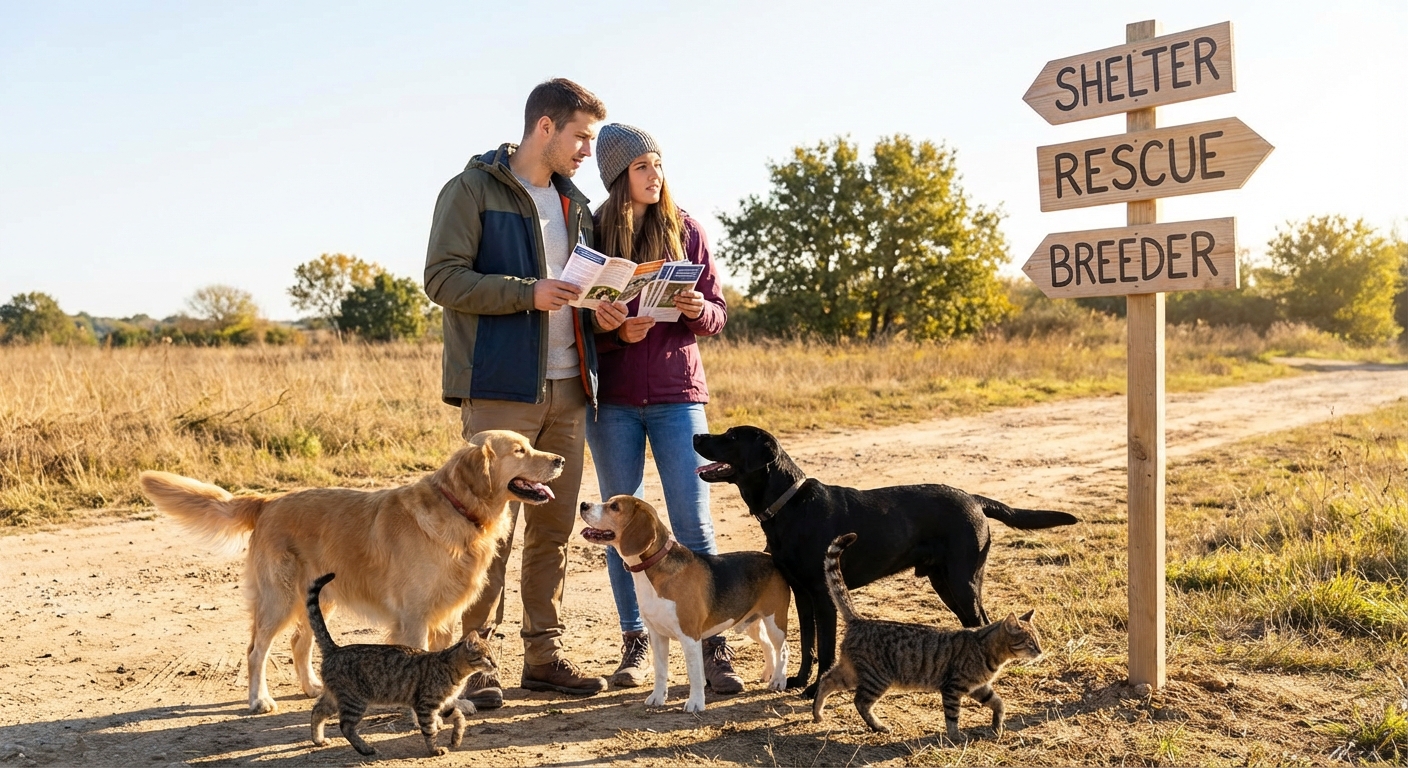
When you’re ready to welcome a new animal into your home, you’ll quickly encounter different options: municipal shelters, foster-based rescues, and breeders. The choice can feel overwhelming—and emotionally loaded.
Different Paths, Same Hope: Finding the Right Source for Your New Pet
This guide won’t shame you for any thoughtful, ethical choice. Instead, it will walk you through what each option typically offers, what to watch for, and how to keep the pet’s welfare at the center of your decision.
Option 1: Municipal and Open-Admission Shelters
These are often city- or county-run facilities that must accept many (or all) animals in their area.
Pros
- You’re directly saving a life. Overcrowding means your adoption can make room for another animal.
- Lower fees that often include spay/neuter, vaccines, and microchipping.
- Wide variety of breeds, ages, and personalities.
Possible Challenges
- High-stress environments can make pets seem more shut down or reactive than they’ll be at home.
- History may be incomplete or unknown.
- Limited staff time for in-depth behavior work.
How to Choose a Good Shelter
Look for:
- Cleanliness and obvious efforts to reduce stress (toys, blankets, quiet hours).
- Staff who ask about your lifestyle before recommending pets.
- Transparent medical and behavior records when available.
- Post-adoption support or return policies.
Option 2: Foster-Based Rescues
These are typically nonprofit groups that house animals in private homes until adoption.
Pros
- Real-home behavior insight: fosters can tell you how the pet acts in a typical household.
- More individualized matching: they may know which pets are great with kids, cats, or other dogs.
- Often specialize in specific types (e.g., seniors, special-needs, breed-specific rescues).
Possible Challenges
- Limited number of animals available.
- Sometimes longer application processes and home checks.
- Distance: the perfect match may be in another city or state.
How to Choose a Good Rescue
Look for:
- Clear mission and transparent use of funds.
- Written adoption contracts and return policies.
- Honest descriptions, including quirks and challenges.
- Proof of vetting: vaccines, spay/neuter, and documented medical care.
Option 3: Ethical, Responsible Breeders
While millions of pets need homes, there are cases where adopting from a breeder can still align with animal welfare—if done thoughtfully and ethically. This is especially true for people needing predictable traits (e.g., service dog prospects, specific allergies, or compatible temperaments for complex households).
Pros
- Known lineage and health history. Reputable breeders screen for genetic conditions.
- Predictable size and general temperament trends.
- Usually early socialization in a home environment.
Possible Challenges
- Higher upfront cost.
- Wait lists and detailed applications.
- Risk of supporting irresponsible or cruel practices if not carefully vetted.
How to Identify an Ethical Breeder
Red flags aside, here’s what good breeders tend to do:
- Prioritize health over appearance.
- Provide health clearances for breed-specific conditions.
- Allow you to see test results, not just verbal assurances.
- Raise animals in a home-like environment.
- Pups or kittens are handled gently and exposed to normal household sounds.
- No overcrowded, hidden kennels or barns.
- *Screen you carefully.
- Ask about your lifestyle, plans, and experience.
- Willing to say no if they feel it’s not a good fit.
- Offer a lifetime safety net.
- Require that animals be returned to them if you cannot keep them.
- Stay available for questions.
- Limit litters and prioritize the moms.
- No constant breeding cycles.
- Breeding females retire to full-time pet life.
Clear Red Flags (Walk Away)
- Selling through pet stores, flea markets, or roadside stands.
- No vet records, contracts, or health guarantees.
- Won’t let you see where animals are raised.
- Will release puppies or kittens before 8 weeks old.
Option 4: Special Cases – Rehoming from Individuals
Sometimes people need to rehome pets directly due to life changes.
Pros
- You can meet the pet in its current home.
- The current family may provide detailed history.
Risks and How to Reduce Them
- Medical unknowns: ask for vet records and consider a pre-adoption vet exam.
- Behavior surprises: ask specific questions (how do they handle guests, grooming, being alone?).
- Always use a written agreement and update microchip info.
Whenever possible, coordinate with a reputable rescue to help manage the transition.
Comparing Options: Which Is Right for You?
If Your Priority Is Directly Saving a Life
- Best fits: municipal shelters, high-intake rescues.
- Consider: adult and senior pets, or those overlooked due to age or appearance.
If You Need More Behavior Information Upfront
- Best fits: foster-based rescues, some individual rehomings, ethical breeders.
- Ask for: detailed daily routines, reactions to common situations, videos.
If You Have Very Specific Needs
For example: severe allergies, a working or service-dog prospect, or complex multi-pet dynamics.
- Best fits: carefully vetted breeders or specialized rescues.
- Still consider adopting an adult from a rescue that knows the animal extremely well.
What Matters Most in Any Path: Questions to Ask
No matter where you adopt from, these questions help protect you and the animal:
Medical Care
- What vaccinations and tests have been done? - Is the pet spayed/neutered, or when is that planned? - Any known health concerns or medications?
Behavior and History
- How does the pet react to strangers, children, other animals? - Any resource guarding, fear, or aggression issues observed? - How do they handle being alone, grooming, and car rides?
Support and Returns
- What happens if the adoption isn’t a fit? - Is there post-adoption support (training advice, behavior consults)?
Look for honesty over perfection. A source that admits quirks and challenges is more trustworthy than one that claims an animal is flawless.
Simple, Helpful Products for Any Newly Adopted Pet
Regardless of where your companion comes from, these items ease the transition:
- Pheromone diffusers (Adaptil, Feliway) for stress reduction.
- Interactive feeders and puzzle toys for mental enrichment.
- High-value treats to build positive associations with new experiences.
- Soft bedding and safe hideaways (covered beds, crates, quiet rooms).
- Sturdy ID tags and updated microchip registration.*
These tools support the real goal: creating a sense of safety in their new world.
A Compassionate Bottom Line
Choosing a shelter, rescue, breeder, or rehoming situation isn’t about moral perfection. It’s about thoughtful, informed decisions that center animal welfare.
If you:
- Vet the source carefully,
- Commit to lifelong care, and
- Are willing to adjust and learn,
then you are walking a deeply kind path—no matter which door your future pet walks through to reach your home.
That first night, when they curl up in a bed that’s finally theirs, they won’t know the label of where they came from. They’ll only know this: here, I am safe, and I am loved.
Key Takeaway
The most important thing to remember from this article is that following these steps can lead to great results.