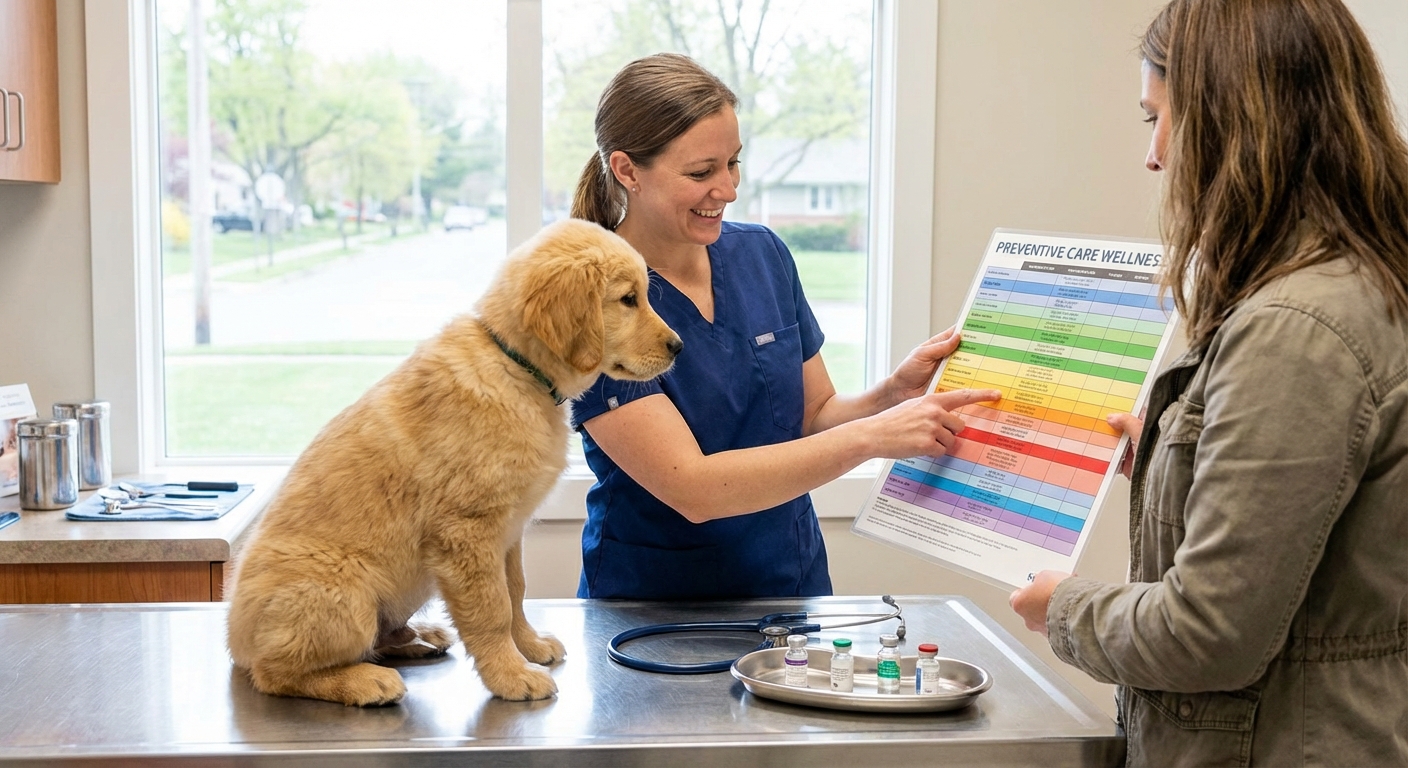
Healthy adult dogs start as well-cared-for puppies. Proactive, science-based preventive care can prevent suffering, lower long-term costs, and extend your dog’s life.
Building a Health Plan for Your Puppy
This guide compares the main preventive care options—vaccines, parasite control, spay/neuter timing, insurance, and more—so you can make confident, compassionate decisions for your puppy.
The Core of Puppy Preventive Care
Most veterinarians agree on these core pillars:
Vaccination
Parasite prevention (fleas, ticks, worms, heartworm)
Spay/neuter planning
Nutrition and weight management
Dental health
Regular wellness exams
Each area has choices; understanding them helps you and your vet tailor a plan to your puppy.
Vaccinations: Core vs Non-Core
Vaccines work by safely exposing the immune system to disease components, prompting protective antibodies. They’ve dramatically reduced serious illnesses in dogs worldwide.
Core Vaccines (Recommended for All Puppies)
Most vets and organizations like the American Animal Hospital Association (AAHA) recommend:
- Distemper
- Adenovirus (hepatitis)
- Parvovirus
Often combined as DA2P or DHP
- Rabies (usually required by law)
- 6–8 weeks: DA2P
- 9–12 weeks: DA2P booster
- 12–16 weeks: DA2P booster + Rabies (timing varies by region)
- 1 year later: booster
- Then every 1–3 years, depending on local guidelines and vaccine type
Typical schedule:
Non-Core (Lifestyle-Based) Vaccines
These depend on where you live and your puppy’s activities:
- Leptospirosis: For dogs in areas with standing water/wildlife exposure; protects against a bacteria that can also infect humans
- Bordetella (kennel cough): For dogs in group settings—daycare, grooming, classes
- Canine Influenza: For high-risk areas or frequent boarding/daycare
- Lyme: For dogs in tick-dense regions
Discuss your puppy’s expected lifestyle honestly with your vet to weigh benefits and risks.
Parasite Control: Comparing Options
Parasites can cause anemia, digestive issues, skin disease, and even heart and organ damage. Preventive products differ in coverage, format, and frequency.
Internal Parasites
Common culprits: roundworms, hookworms, whipworms, tapeworms, and heartworms.
- Deworming: Puppies are often dewormed multiple times (e.g., at 2, 4, 6, 8 weeks, then monthly, depending on origin and vet guidance).
- Heartworm prevention: Monthly oral or topical medications start as early as 8 weeks in many regions.
- Chewable tablets (e.g., Heartgard, Interceptor)
- Topical drops (e.g., Revolution, Advantage Multi)
Formats:
External Parasites
Fleas and ticks can carry diseases and cause allergies.
Prevention options:
- Oral chews: (NexGard, Simparica, Bravecto) – convenient, some cover both fleas and ticks
- Topical treatments: (Frontline, Advantage, Revolution) – applied to skin, may cover multiple parasites
- Collars: (Seresto) – long-lasting flea/tick protection
Comparison Snapshot
| Product Type | Pros | Cons |
|---|---|---|
| Oral chew | Easy dosing, no residue on fur | Vomiting possible; some dogs dislike taste |
| Topical | Good for non-pill-takers | Can wash off if not fully absorbed |
| Collar | Long duration, set-and-forget | Can be chewed; rare skin sensitivity |
Your vet will help you select based on age, weight, region, and other pets at home.
Spay/Neuter: Timing and Options
Spaying (females) and neutering (males) prevent unplanned litters and can reduce certain health risks, but ideal timing may vary.
Traditional Early Spay/Neuter
Historically, many shelters/vets recommended surgery around 4–6 months, before puberty.
Potential benefits:
- Eliminates heat cycles and risk of pyometra (uterine infection)
- Reduces risk of testicular cancer
- Helps prevent some behavior related to mating drive (roaming, mounting)
Delayed or Age-Tailored Surgery
Recent studies suggest that for some large and giant breeds, delaying spay/neuter until skeletal maturity (often 12–18 months) may reduce risks of certain joint issues and some cancers.
Factors influencing timing:
- Breed and expected adult size
- Sex-specific health risks
- Household ability to manage an intact dog responsibly
- Traditional spay/neuter vs
- Alternative procedures (e.g., ovary-sparing spay, vasectomy in some regions) with a vet who understands your puppy's breed.
Discuss:
There is no one-size-fits-all answer; shared decision-making with your veterinarian is key.
Dental Health: Starting Early
Dental disease is extremely common in adult dogs, but early habits help prevent it.
Daily Toothbrushing
Use:
- Dog-specific toothbrush or finger brush
- Dog-safe toothpaste (never human toothpaste)
- Gently lifting lips and touching teeth with your finger
- Pairing each touch with a tiny treat
- Gradually add the brush and paste over several days
Start with:
Supportive Dental Products
Look for VOHC (Veterinary Oral Health Council)-approved items:
- Dental chews (e.g., Greenies, Virbac C.E.T. chews)
- Water additives (vet-recommended)
Brushing remains the gold standard; chews are helpful extras.
Pet Insurance and Wellness Plans: Are They Worth It?
Unexpected vet bills can be stressful. Insurance and wellness plans provide different types of support.
Pet Insurance
Covers unexpected illness and accidents.
Pros:
- Helps with large, unforeseen costs (e.g., surgery, emergency care)
- Encourages choosing best treatment, not just cheapest
- Doesn’t typically cover routine care or pre-existing conditions
- Monthly premiums, deductibles, and co-pays
- Nationwide, Trupanion, Healthy Paws, Lemonade, Embrace
- Annual limits
- Reimbursement percentage
- Deductible type (per-condition vs annual)
Cons:
Popular categories of providers include:
Compare:
Wellness Plans
Covers routine care like vaccines, exams, and sometimes dental cleanings.
Pros:
- Predictable monthly costs
- Encourages consistent preventive care
- May cost similar to paying out-of-pocket if you’re already diligent
Cons:
Some families choose both: insurance for big events, and a simple savings plan or wellness package for routine visits.
Home Health Checks: What to Monitor Between Vet Visits
Regular, gentle check-ins help you catch issues early.
Weekly At-Home Scan
- Eyes: clear, bright, no discharge or redness
- Ears: clean, no foul odor, minimal wax
- Mouth: pink gums, no ulcers or excessive bad breath
- Skin/coat: no bald patches, redness, or heavy dandruff
- Paws/nails: no cracks, swelling, or overgrown nails
- Weight: feel for ribs under a thin layer of padding
- Appetite
- Energy levels
- Thirst and urination
- Stool and vomiting
Note changes in:
Any persistent or sudden changes warrant a vet call.
Building a Team for Your Puppy’s Health
Your vet is your primary health partner, but your “team” may also include:
- Credentialed trainers or behaviorists for mental wellness
- Groomers who alert you to skin or ear issues
- Boarding/daycare staff who notice behavior changes
Share information between them when relevant; early collaboration can solve small problems before they become big ones.
A Preventive Care Mindset
Proactive care doesn’t mean your puppy will never get sick, but it dramatically shifts the odds in their favor.
When you:
- Stay current on vaccines and parasite prevention
- Make thoughtful spay/neuter decisions
- Invest in dental and routine checks
…you’re not just “avoiding bad things”—you’re actively creating the conditions for a long, comfortable life.
The most important piece of any health plan is you: the caring, observant person who knows your puppy’s normal. If something feels off, trust your instincts and seek professional guidance. That attentive partnership is one of the greatest gifts you can give your growing dog.
Key Takeaway
The most important thing to remember from this article is that this information can change how you think about Puppy Care.